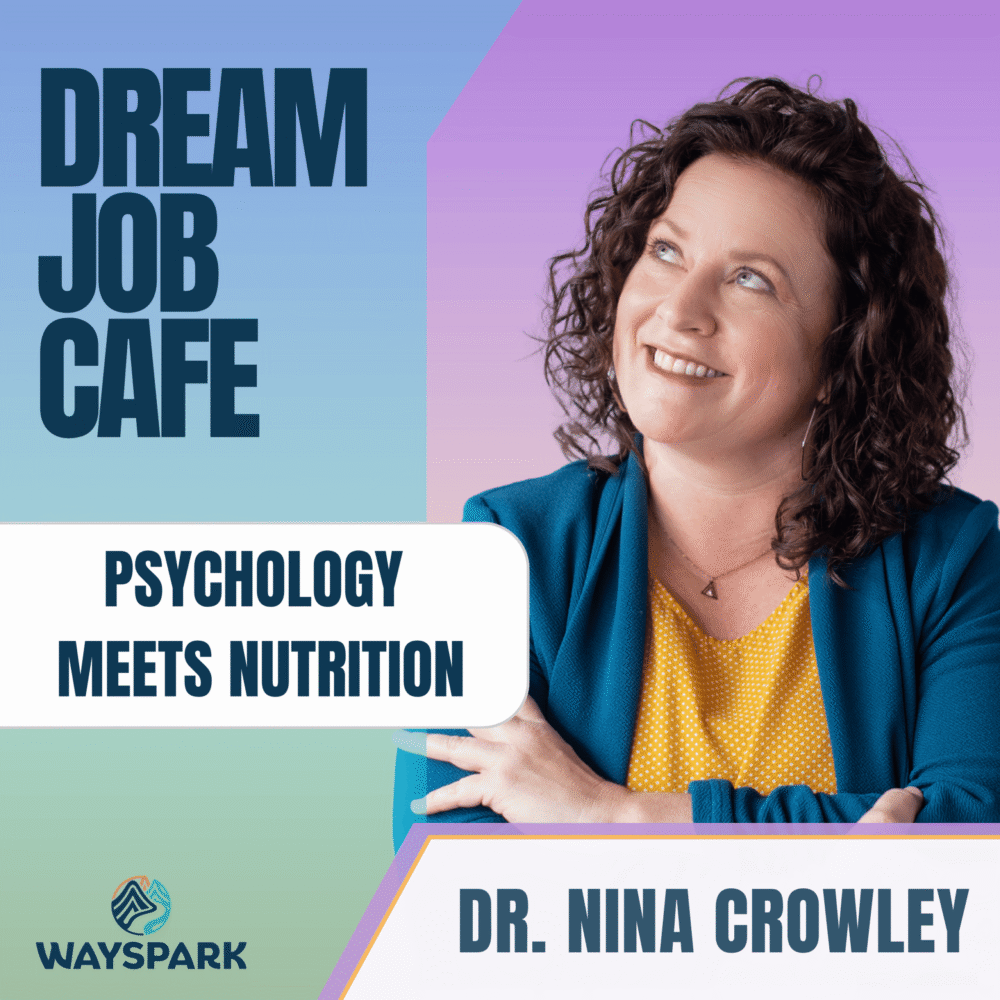
In this episode of Dream Job Cafe, I’m sitting down with Dr. Nina Crowley to discuss how she’s revolutionizing obesity care as the Director of Clinical Education and Partnerships at seca. We explore the shift from clinical counseling to corporate thought leadership and why the future of health isn’t found on a traditional scale, but in the intersection of biology and behavior.
Earlier this month, the Wall Street Journal reported that healthcare jobs are the primary force behind the March labor report. But when we think of “healthcare,” we shouldn’t just think of surgeons and nurses. We are seeing a boom in specialized roles that address the chronic disease epidemic—specifically, obesity.
I’m joined by Dr. Nina Crowley, a Registered Dietician (RD) and PhD in Health Psychology, who currently serves as a bridge between technology and clinical practice. Her work at seca involves educating healthcare providers on why “weight” is a lazy metric. By using bioelectric impedance—sending a small current through the body to measure muscle vs. fat tissue—seca’s equipment gives clinicians the data they need to have more meaningful conversations with patients.
There is a lot of “garbage” advice on social media from self-proclaimed nutritionists. Dr. Nina clears the air on the credentials: every dietician is a nutritionist, but not every nutritionist is a dietician.
After six years directing a bariatric program and navigating the “soul-crushing” insurance requirements for surgery accreditation, Dr. Nina transitioned into a corporate role. At seca, she found her “dream job” by combining research, education, and social media.
Dr. Nina is a self-proclaimed “big conference energy” persona. We often think of conferences as a way to get out of the office, but for Dr. Nina, they are the backbone of her career.
Peer-to-Peer Learning: Conversations that start in a session often continue over drinks, leading to “fossilized” friendships and professional collaborations.
Job Opportunities: Many of the best roles in healthcare thought leadership aren’t posted on job boards; they are found through the “family away from home” you build at annual meetings.
Thought Leadership: Presenting research posters and leading webinars allows clinicians to find their voice and eventually pivot from seeing 15 patients a day to educating thousands of providers.
Dr. Nina’s career checks a lot of boxes for the “Dream Job” checklist. On the Family Dinner Test, she rates the dietician/health psychologist path a 10/10. With virtual counseling options and structured hospital shifts, it’s a career that allows for coaching Little League or being home by 6:00 PM.
However, she warns that this isn’t for everyone. “If your goal is to learn the science and tell people what to do, it’s not for you,” she says. “Our behavior is not that simple.” The “sweet spot” of this career is for those who are curious, compassionate, and ready to help people move the needle on their own terms.
seca is a leader in medical-grade body composition technology. By providing clinicians with the tools to look “under the hood” of a patient’s weight, seca helps move the conversation toward functional health, cardiometabolic wellness, and long-term behavior change.
Ready to move the needle on your own career? Listen to the full episode or connect with Seca today. Be sure to visit Legal Broadcasting Company often for our latest podcasts.
This article was written by Legal Broadcasting Company, and is based on the episode of Dream Job Cafe hosted by Larry Port.
“Dietician” is a protected title requiring specific education, a supervised internship, and board certification. “Nutritionist” is a general term that anyone can use, often without any formal medical background.
No. While Dr. Nina’s PhD in Health Psychology gave her a unique edge in research and thought leadership, an RD credential alone opens doors to clinical, community, and sports nutrition roles.
Dr. Nina suggests that a mid-career dietician salary supports a “medium” hotel lifestyle. For those in leadership or industry roles, the “Grand Floridian” might be in reach, but she recommends the “psychologist’s route”: invite your friends to share the room and have more fun for less money.