In this episode of Dream Job Cafe, I’m joined by my cousin Lauren to discuss her radical pivot from business analytics to becoming a Registered Nurse in the world of home healthcare. Sponsored by Wayspark.co, we’re exploring why the Wall Street Journal recently dubbed nursing the new surefire path to American prosperity and how to navigate the mental hurdles of a total career 180.
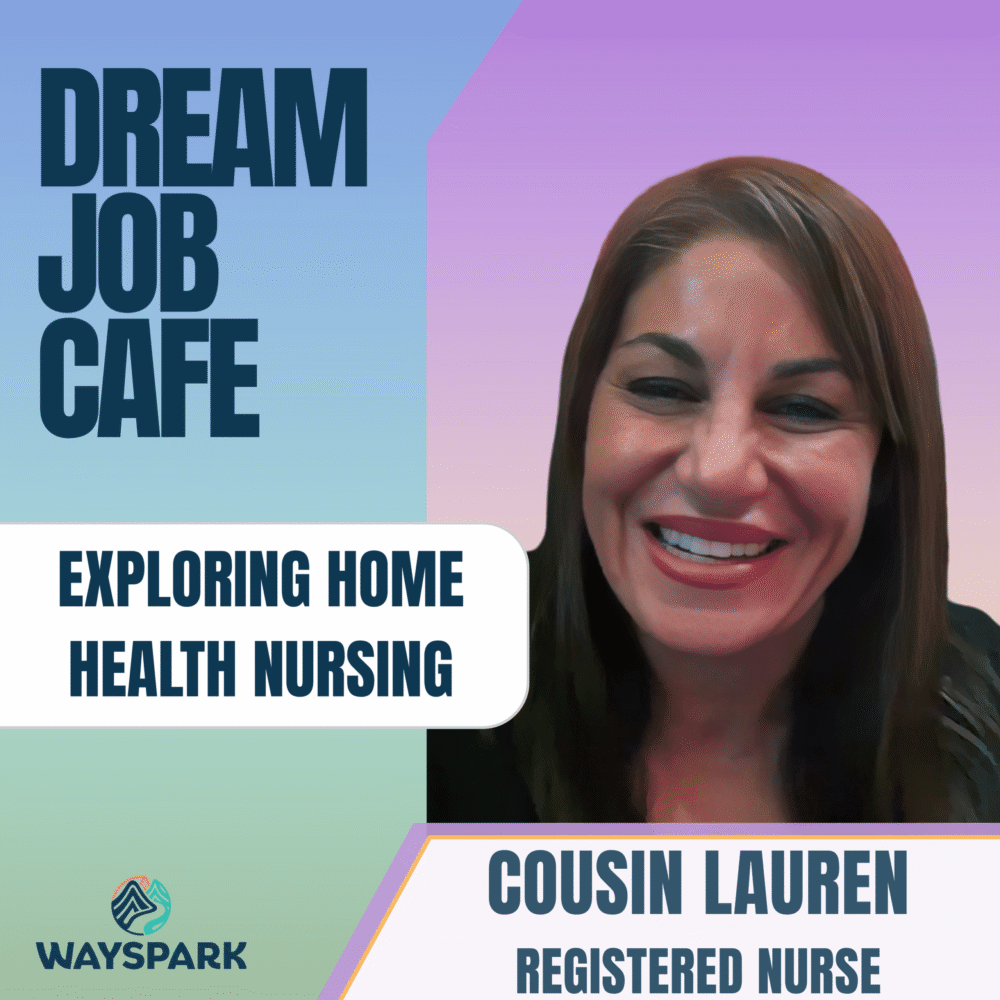
Most people think of career paths as linear, but Cousin Lauren’s journey was anything but. She started with a business degree, grinding away at reporting and analytics for a specialty pharmacy. She had reached a ceiling where her days were defined by Microsoft Access and Excel spreadsheets. It was the nurses she worked with who first planted the seed, telling her, “You should be a nurse.”
Getting over the mental block of “I’m a spreadsheet person” was the first hurdle. But after moving back to Florida and finding the job market for office roles stagnant, Lauren decided to take the plunge. In her 30s—an age when many feel “locked in” to their choices—she went back to school. Because she already had a bachelor’s degree, she qualified for an accelerated program, proving that it’s never too late to trade a desk for a stethoscope.
Make no mistake: nursing school is a job in itself. In Lauren’s accelerated cohort, students were told they couldn’t work while in the program because of the intense academic and hands-on requirements. Semesters are a mix of classroom lectures and “labs” where you practice skills like wound care or IV changes on mannequins before ever touching a patient.
The transition to the hospital happens almost immediately. “The first week they have you in the hospital,” Lauren recalls. “You start by shadowing, and by the end of your practicum, you’re taking over full responsibilities under an instructor’s eye.” It’s a baptism by fire that quickly weeds out the “squeamish.” Lauren’s litmus test for the job? “You have to like people, and you have to be okay with disgusting stuff.” If you can handle a body “exploding” on you but still get dizzy at a paper cut on your own finger, you might just be a natural.
Most new nurses start on the “main floor,” known as med-surg (medical-surgical). It’s where you see every health issue imaginable. While many nurses dream of “cushy” gigs in maternity, those spots are usually held by “lifers.” However, the med-surg floor is the ultimate training ground, providing the foundational experience needed for high-paying advanced roles like Nurse Practitioners or Nurse Anesthetists—the latter of which can require an additional three years of full-time study but offers a massive financial payoff.
After a back injury made the physical demands of hospital work (lifting and moving heavy patients) too taxing, Lauren pivoted again to home healthcare. This is where the lifestyle benefits of the profession really shine.
In home health, you are in the driver’s seat of your schedule:
With an aging population (especially in South Florida, where Lauren jokes that all her “friends” are 70+), the demand for safe hospital discharges and home monitoring is through the roof. Insurance companies and hospitals want to ensure patients don’t fall or regress once they go home, making the home health nurse a vital “cover your butt” asset for the healthcare system.
At Wayspark.co, we understand that navigating a career change in your 30s or 40s can feel like wandering through a maze. We help professionals find their “spark” by providing the data, strategy, and mental frameworks needed to pivot into high-prosperity fields like nursing. Whether you’re looking for stability, flexibility, or a sense of purpose, we help you map out your path to prosperity.
Ready to find your own path to prosperity? Listen to the full episode or explore your options at Wayspark.co. Be sure to visit Legal Broadcasting Company often for our latest podcasts.
This article was written by Legal Broadcasting Company, and is based on the episode of Dream Job Cafe hosted by Larry Port.
It requires effort, but it’s not impossible. Lauren notes that being part of a “cohort” provides a support system where everyone helps each other through the grueling anatomy and physiology requirements.
Not within the profession. Lauren says fellow nurses are happy to have men on the team, though they may get “recruited” more often for the manual labor of lifting heavier patients.
Research is key. Since these companies are “a dime a dozen,” check online reviews to ensure the company has a reliable boss and a track record of paying employees on time.