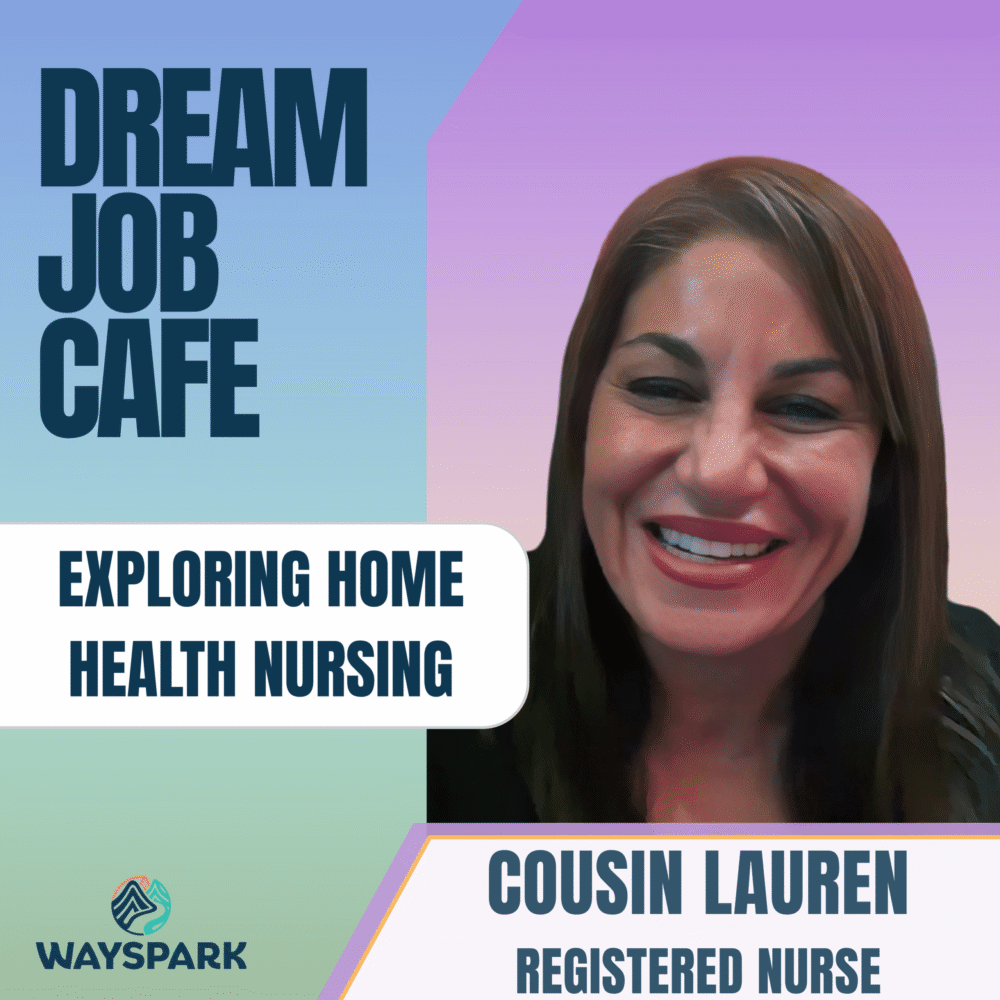
Cousin Lauren, a Registered Nurse in the home health sector, joins the show to share her journey of leaving a business analytics career to find stability and flexibility in healthcare. Following Larry’s analysis of the high-demand labor market, Lauren reveals how an accelerated nursing degree can open doors to a recession-proof profession.

The modern labor market frequently experiences volatility, but one profession remains in consistently high demand: nursing. As healthcare needs grow due to an aging population, the role of the Registered Nurse (RN) has expanded far beyond the hospital floor.
This conversation features Lauren, an RN who left a career in specialty pharmacy analytics to enter the nursing field in her 30s. She shares the “hiding in plain sight” reality of nursing as a stable career where opportunities are often brought directly to you through strong professional networks.
The discussion provides a deep dive into the educational requirements for a career pivot, specifically the benefits of an accelerated nursing course for those who already hold a bachelor’s degree. We also tackle the “Family Dinner Test,” evaluating how home healthcare offers a level of schedule flexibility that traditional hospital shifts cannot match. From overcoming the “gross factor” of the job to understanding the different scopes of practice between medical assistants and licensed RNs, this episode serves as a comprehensive guide for anyone considering a future in healthcare.
What We Cover:
Larry Port (00:00):
Dream job or nightmare? It’s hard to know if a career that looks great on paper will actually lead you to the life you want to live. So welcome to Dream Job Cafe. I’m Larry Port. I’ll be asking different professionals the questions you won’t find anywhere else. So grab a coffee, settle in. This is Dream Job Cafe. Sponsored by Wastepark.co, where we help people navigate careers in a crazy world. Hey
(00:25):
Everybody, and welcome back to another episode of Dream Job Cafe. Today, we have very special treat. I got my cousin in the house. Hey, hi, cousin Lauren. How you doing?
Cousin Lauren (00:33):
Hey, good. How are you?
Larry Port (00:35):
So I’m excited to have cousin Lauren here because she is a registered nurse. She’s actually in home healthcare because you can be a nurse and you can be in a hospital. And what’s cool is that on April 2nd, just recently, there was an article in the Wall Street Journal and it said nursing is the new surefire path to American prosperity. So cousin Lauren is on the way to American Prosperity. Congratulations. Thank
Cousin Lauren (00:59):
You very much.
Larry Port (01:01):
Right. So all right. First of all, so I know I remember when you were in college that you were studying something like accounting or something like that. Or I don’t remember what it was, but it was not nursing. So how did you end up becoming a nurse?
Cousin Lauren (01:17):
So I have a business degree and I was working kind of like temp jobs and then I started doing reporting and analytics for a couple of years at a specialty pharmacy. So I kind of reached as high as I could in that. And I worked a little bit with the nursing department and they’d always be like, “You should be a nurse.” And it was just so different that I never really thought of it. But then when I was looking for new jobs in healthcare, nursing kept coming up and it sort of just became a good idea to me. The more that I got past the block of like, no, I need to be doing reports all day and on Microsoft Access and Excel. Once I got over that hurdle, it just made sense to me that I wanted to do nursing.
Larry Port (02:03):
But it was pretty much of a, you had to go through a pretty big mental shift, it sounds like, right? Yeah,
Cousin Lauren (02:09):
I had a couple.
Larry Port (02:12):
Yeah. Right. But even before you went back to school, so it really did feel like out of left field, right? They’re telling you, why don’t you take a look at nursing and here you are working in spreadsheets. So was there something about you, were you applying tourniquets to people that came into the pharmacy? Why did they think you should be a nurse?
Cousin Lauren (02:31):
Well, I had moved away, so that’s why I ended up leaving that job. So when I moved back down to Florida, I kind of was in a whole new boat anyway. I just moved back down here. I needed a new job. I was having trouble, so I was just brainstorming other things. I was like, “What if I wanted to be a teacher or what’s something that I could do that’s just out of left field?” Nursing kept popping in my mind and I started talking with the nurses I used to work with just to get a better idea of like, all right, I don’t want to just jump into this and now I’m in school again full-time and I don’t have the right mindset for it. But it just started to become more natural. And especially once I started school and got back into it, it just felt like a perfect fit.
(03:22):
So I think I just kind of lucked out with a big change. And at that point I was in my 30s, no one in my family does it. In our family, there’s no nurses, there’s no doctors on my side. So it’s not like I had anyone being like, “Oh yeah, that’s great. I know this person, this person.” I really just dove right in and it ended up being a good fit.
Larry Port (03:46):
Let me ask you this, I wonder if it was similar to my experience, because when I first went into the workforce, I wanted to be working photography and film and stuff like that, and there’s zero jobs. And then when I became a software engineer, at least back in the early 2000s, you could just pick whatever job you wanted. The shift from
Cousin Lauren (04:07):
Having
Larry Port (04:08):
Trouble to find a job to just having your pick. Was that a similar thing for you?
Cousin Lauren (04:13):
Well, yeah, I would always look for jobs in healthcare, trying to be more on the office end, and then nursing kept popping up. So even I initially worked in the hospital and then I needed to leave. I had a back injury, so I was like, “I need to switch to something that’s not as physically taxing.” And I got into home healthcare within a week I was able to get a job in home healthcare.
Larry Port (04:36):
Oh, okay. Wow, that’s crazy.
Cousin Lauren (04:38):
Yeah, nurses were kind of like our own unit, so there’s always somebody who left here to go someplace else who knows somebody. So it’s easy to at least have opportunities brought to you. And then if they interview and they want you, then they want you.
Larry Port (04:54):
So nursing, it’s like an alumni network or some sort of club. There’s nurses look out for one another kind of?
Cousin Lauren (05:01):
It kind of is, yeah, because it’s still mostly women. So I think you do kind of look out for each other, and especially when you’re working the long shifts in the hospital and it’s like you see stuff that you can’t even explain to other people. So it’s like you have that connection with them. And I think just the long shifts and the weirdness of it, it becomes a bonding experience. So through that, you become friendly and then you just keep in touch with each other. Nobody wants to stay on the hospital floor for more than a few years, so we start helping each other out.
Larry Port (05:36):
Oh, that’s interesting. So all right, well, let’s circle back around. So was there any one thing that made you nervous or held you back before you went to school? Did you have to take entrance exams? I’m thinking about all these things. If I had to go back and go to nursing school, I’d be worried about my memorization’s not so strong, so I’d be concerned about anatomy classes. What were your concerns?
Cousin Lauren (06:00):
Yeah, it’s different going to school when you’re 18 versus in your 30s. And this was a full, it was an 8:00 AM to 3:00 or 4:00 PM a day. You’re at the school sitting at your desk taking classes and doing homework. So it’s very the traditional school sense and it was stuff that I really had no background in because a business degree versus anatomy, it’s not exactly hand in hand.
Larry Port (06:30):
Not at all.
Cousin Lauren (06:30):
The only good thing, if you have a bachelor’s degree already, no matter what it’s in, you could do an accelerated nursing course. So I was able to do that. And it’s just, again, it’s all day, every day, and they have you shadowing in the hospitals immediately. So at least right when you start, you get a feel for, all right, this is the stuff you’re going to need to know. This is what the job is like. Do you like this or is this not a good fit?
Larry Port (06:57):
So the schooling is … All right. So if you have the bachelor’s degree, an accelerated program is what, like a couple years or how does it work?
Cousin Lauren (07:06):
It’s usually about two years, maybe a month or two less than two years. But again-
Larry Port (07:12):
And if you don’t have the bachelor’s degree, is it more like a three-year program or?
Cousin Lauren (07:16):
I think it might be four years. It might be four years. Bachelor’s because they used to let you have associates. Now they want to do away with that where you need to have a bachelor’s in order to get licensed or some hospitals will only hire you if you have the bachelor’s. So they’re making it more of like this is an actual degree. So in that regard, yeah, for some people it would be the full four years if you have no other college background.
Larry Port (07:44):
Yeah, I know. At my kids’ school, they have a four-year nursing degree. So is the schoolwork, how much of it is like you’re sitting at a desk, but you also work in the hospital immediately in the accelerated program that you’re in?
Cousin Lauren (07:57):
Yeah, the first week they have you in the hospital and you’re not doing much, you’re mostly just kind of watching them and getting the feel for how a hospital runs.
Larry Port (08:06):
Interesting. Okay. And is that how it kind of works? Like you do some hands-on stuff and then some academic stuff the whole way through, or is it you spend six months doing academic? Okay.
Cousin Lauren (08:18):
Yeah. Well, it’s like semesters. So say you take four classes a semester and then you have labs and as you go through the labs, you’ll do checkoffs. So they’ll teach you a skill like wound care or changing an IV bandage and you do it in lab and once they say you’re good, then you could start practicing in the hospital under your instructor.
Larry Port (08:43):
So there is a first time you have to do this, like the first time you have to draw blood or first time you have to give somebody an injection. Is that like-
Cousin Lauren (08:50):
The draw- The blood is weird. Okay. I think at this point they don’t want nurses in nursing school to draw blood, but it’s like you need the practice, but they used to let us go to the ER at trauma centers and practice because there’s just so many people in and out and sometimes they may not notice, oh, it took her two tries instead of one. So it’s one of those things, I don’t think they allow nursing students to actually do that anymore, but your instructor will find a way for you to practice that it’s still legal and fits within the program.
Larry Port (09:33):
Okay. Well, and it’s also you’re in the ER. So if you like, whatever, you severely injure the guy, then
Cousin Lauren (09:38):
Yeah, no problem. No worries. Yeah, he’s already there. He’s
Larry Port (09:40):
Already there.
Cousin Lauren (09:43):
Okay. And then who did this and you just point right to your instructor. Oh, it was her.
Larry Port (09:49):
How hard is the schooling? Is it
Cousin Lauren (09:51):
Really hard? It is in that it’s basically having a job. So they told us beforehand you can’t work if you’re in the program because there’s no time to. Gotcha. Everything builds on the classes you took before. So even if you go in not knowing too much, you start to build confidence and it makes it easier to understand the higher level lessons.
Larry Port (10:17):
Gotcha. Okay. What about, how should a man think about this that if he wanted to go into nursing? Because I don’t know if there’s a stigma, but I know certainly more … I have seen male nurses, but there’s certainly more women. Can you talk a little bit about what a man should maybe consider
Cousin Lauren (10:33):
Before going into
Larry Port (10:34):
This
Cousin Lauren (10:34):
Field? There’s stigma from the other nurses.
Larry Port (10:36):
Okay.
Cousin Lauren (10:37):
So that’s just if your family feels a certain way, once you’re in the profession, we’re happy you’re there, you’re part of the team.
Larry Port (10:46):
Gotcha.
Cousin Lauren (10:47):
Okay,
Larry Port (10:47):
Great.
Cousin Lauren (10:47):
Differently of you. I mean, you do end up doing maybe a bit more manual labor than the girls do. If you have an extra heavy patient you need to carry, everyone’s going to be grabbing the dude to help.
Larry Port (11:00):
Gotcha.
Cousin Lauren (11:01):
Right. But besides that, there’s no …
Larry Port (11:06):
So just so people know, if you’re a young person and you haven’t had much experience with people in and out of the hospital, a lot of these people can’t move very well, so they have to be lifted in and out of bed and stuff. And
Cousin Lauren (11:18):
So there
Larry Port (11:18):
Is a lot of physically demanding work.
Cousin Lauren (11:21):
Yeah, that’s why I eventually left the hospital because I got an injury, but some people are there for years and years and they’re fine. They teach you body mechanics. So they even teach you how to pick up patients, what to do if a patient is substantially larger than you, a safe way to move them from here to there so they don’t get injured. That’s the only difference with being a male nurse once you’re actually in the occupation. But yeah, it’s good to work there for at least a couple years because you see everything. Any health issue anyone could possibly have, especially if you’re on the main floor. So that’s you go into the ER or if you have a surgery afterwards, everyone gets put up to the main floor, you see everything.
Larry Port (12:11):
Now tell me about when you work as a nurse, there’s so many different areas of the hospital and different fields to go into. How does it play out? So how do you end up in the cancer ward or the maternity ward or … I mean, I don’t even know what the options are. I don’t even know what I don’t know here. So can you talk a little bit about after school, how things play out career-wise?
Cousin Lauren (12:37):
So after school, pretty much all of us, there’s a postgraduate, like a practicum. So it’s six weeks where you go to the hospital, they know that you’re fresh out of school, there’s a group of you, and you all have somebody that you work with. So this will be on the main floor. So you’re shadowing another nurse, and then you start to take over their responsibilities, and then by the end of the six weeks you’re doing everything, and the nurse you’re working with, just make sure you’re doing it correctly. So most places want you to do the main floor, so it’s called med-surg. If you get hired into maternity right out of school, you knew somebody. That’s not going to happen unless you-
Larry Port (13:24):
Oh, is that like a cushy gig or something, maternity?
Cousin Lauren (13:27):
The women don’t want to leave maternity. It’s like the best floor. Everyone loves it. They’re like lifers there. They stay there once they get those jobs.
Larry Port (13:35):
Gotcha. I remember reading that the nurse anesthetist, is that a different job or does it require additional schooling? Because I know that the pay is high in that profession.
Cousin Lauren (13:45):
Yeah, so that’s an extra three years of school.
Larry Port (13:49):
Oh, wow.
Cousin Lauren (13:49):
Okay. We’ll do schooling for the bachelor’s in nursing, and then it’s an additional three years of school. And I believe that’s full-time too. So the pay off is good, but you really do need to give up a few years of working in order to get to that point.
Larry Port (14:04):
Geez. Okay. So there’s a lot of different options. So there’s a lot of advanced degrees. So it sounds like though that if you wanted to get into this field and you’re interested in particularly types of nursing, then you’re going to need to do your research a little bit and find out if there is an additional schooling on top of the nursing degree.
Cousin Lauren (14:23):
Yeah. So a nurse practitioner is an extra two years, that’s a master program. The nurse anesthetist, that’s a master’s. So they’re different licenses completely, but if I want to go work on the cancer floor, I’m able to do that with my current license and my current experience.
Larry Port (14:44):
Now you’re a registered nurse. Are there unregistered nurses? I mean, pretend I don’t know anything.
Cousin Lauren (14:50):
So I guess a medical assistant would be an unlicensed kind of nursing. When you go to the doctor’s office and they take your blood pressure, that’s usually a medical assistant. I see.
Larry Port (15:02):
Okay.
Cousin Lauren (15:02):
Registered nurse, it’s a state license, we have to renew it and do all the continuing education courses, and that has its own scope of practice. So if you want to look into different scopes of practice, if there’s something that you’re just really specific on, but registered nurse does cover maternity, but they might give you extra training once they hire you on the floor.
Larry Port (15:26):
One question before I get into what the life is like as a nurse, but with nursing, obviously you’re dealing with maybe blood, maybe all these bodily functions, lots of different people. Were you squeamish before you went into this, or is that something that just goes away with exposure to it?
Cousin Lauren (15:43):
I was not squeamish. I’m still squeamish if it’s my own blood. A paper cut, I see it like I’m dizzy, but a body can explode on me and it’s nothing.
Larry Port (15:54):
Really? Okay. Okay.
Cousin Lauren (15:56):
So I always think you want to get into nursing, you have to like people and you have to be okay with disgusting stuff.
Larry Port (16:04):
Gotcha.
Cousin Lauren (16:05):
All right. The two main things with nursing. Some people get in it and they are very squeamish till they quit and some people get in it and they hate people, but you have to be around people all the time and you have to help them on their not best day.
Larry Port (16:21):
Well, by definition, right? Yeah, I would think you’d have to want to help people, right?That’s the
Cousin Lauren (16:27):
Job. Some people don’t really think that’s a part of it and they usually get weeded out.
Larry Port (16:33):
And the gross stuff, people don’t get used to it or is it a barrier that people can overcome or can you talk a little bit about that? Because I know you didn’t have an issue with it, so that’s fine.
Cousin Lauren (16:48):
Yeah, it does weed people out. You do get used to it for sure. And your mindset gets more into, all right, how am I going to help this patient then ooh, they went poo-poo on their bed and I have to clean it. So you think about it as, all right, I got to help this person, what do they need instead of like, oh no, I don’t want to touch that. Gotcha. So everyone, once you get to the point where you finish school, you’ve been through all your training at the hospital, if you’re still grossed out by it, I don’t know how you got that far.
Larry Port (17:25):
You’ve worked as a hospital nurse, you’re a home healthcare nurse. Why work as a home healthcare nurse? What is that like as opposed to working in a hospital?
Cousin Lauren (17:32):
Well, home health, it’s obviously, it’s so much more flexible, especially if you get with a good company. If you want to take 15 patients a day, you could do that. If you want to take one patient a day, you can do that and you get to schedule yourself. So at times I’ll have a larger load of patients that I see every day. For a while, I was doing just the start of cares. So that means when someone gets discharged from the hospital, I go over and I do the initial visit, I explain the program, we talk about everything that happened in the hospital, and then another nurse will do the follow-ups. I
Larry Port (18:12):
See.
Cousin Lauren (18:12):
The different visits have a different point value. One point might just be wound care, and then one and a half points might be given an IV medication, so you got to treat the PICC line and get the medication going, make sure there’s no infection. And then the start of care, which is setting them up with the program and doing a whole assessment, and that’s also the most charting, that one’s a higher point system.
Larry Port (18:40):
And so this gives a lot of schedule flexibility. Is hospital nursing, is that shift work where you work nine to five or whatever shift you have and then you work five days a week? Or is it like you work 24 on, 48 off? Can you talk a little bit about that?
Cousin Lauren (18:59):
So for hospital, it’s 12-hour shifts and it usually ends up being around 13. So you’ll do 7:00 AM to 7:30 PM and you do three days a week. So you could have more days off, but that even if you want to take vacation, you could stack all your days in the beginning of the week and then you have the rest of the week off and then you might not work till the next Thursday, Friday, Saturday. So in that regard, it’s flexible, but it is the set 7:00 AM to 7:30 PM. You’re not leaving earlier, and then there’s the day shift and the night shift.
Larry Port (19:41):
Yeah, they’re long shifts. And I’m guessing part of the reason that is, is just the continuity of care. And I know that
Cousin Lauren (19:49):
There’s a
Larry Port (19:50):
Period of time where the night shift has to hand off to the day shift and communicate issues. Is that kind of why that the shifts are 12 hours?
Cousin Lauren (19:59):
Yeah, so that’s why there’s the half hour of overlap because you do go around with the night shift nurse to discuss the patients. And then if the patient wants to add anything they can, we do them in the room. So that’s about half an hour of that. That’s why they overlap a little bit.
Larry Port (20:15):
Okay. So in terms of, all right, let’s get into, we don’t like to talk about financial specifically on the Treating Job Cafe podcast so that people aren’t uneven, but let’s say that as a home healthcare nurse, let’s say you want to go on a trip to Disney World. Okay. Can you go to Disney World? Do you have to stay at the budget hotel? The medium hotel or can you splurge on the super fancy hotel?
Cousin Lauren (20:42):
I mean, the responsible thing would be the medium hotel. Gotcha. If you want to splurge, no one’s going to stop you. You won’t be destitute, but it might not be the best decision for you.
Larry Port (20:55):
And is it the same for a hospital nurse or is the pay for a home healthcare nurse similar to a hospital nurse?
Cousin Lauren (21:01):
See, this again depends on how many patients you’re taking as a home health person.
(21:06):
So the girls who are seeing 15 patients a day, they could stay wherever they want. Gotcha. But if you’re just doing … The average companies want you to do is like six or seven. Some places will just overload you, and then some they just might not have a big patient load. So if you say the average is six or seven, then you’re staying in the medium hotel. If you’re one of those girls who just waits up and at 70 AM is already seeing patients, goes all day, then you make more money. So it’s definitely the amount of patients you see affects how much money you get.
Larry Port (21:42):
I got you. Whereas if you’re in a hospital kind of situation, it’s like fixed. You don’t have that
Cousin Lauren (21:47):
Flexibility. So home healthcare.
Larry Port (21:50):
I would think with the aging population, is that one of the reasons why nursing is in such high demand, especially home healthcare nursing, because everybody’s getting older and living so much longer? Is that why?
Cousin Lauren (22:02):
I think so. And also they want to make sure patients have a safe discharge. So that means the hospital doesn’t want to send someone home, they have no care, and then they fall when they’re back in the hospital because then insurance might be like, “Well, we’re not going to pay for that. You should have known to not send them
Larry Port (22:22):
Home.”
Cousin Lauren (22:22):
Well, sometimes people get sent home from the hospital and they might not need home health, but they still get it prescribed to them or ordered for them. So they want to make sure everyone who goes to the hospital is safe once they’re home.
Larry Port (22:38):
It’s almost like a cover your butt thing.
Cousin Lauren (22:40):
But yeah, in Orange South Florida, it is a ton of old people. At this point, all my friends are 70 and older because it’s all my cases.
Larry Port (22:53):
Okay. Let’s see. So it sounds like if you’re a home healthcare nurse specifically, for the family dinner test, on a scale of one to 10, how likely are you or how able are you to do a family dinner? It sounds like it would be high unless you want to take a gazillion patients a day, right?
Cousin Lauren (23:11):
Yeah,
Larry Port (23:11):
Unless
Cousin Lauren (23:11):
You want to. But yeah, you could be home every night for dinner.
Larry Port (23:15):
And it sounds also like you could do even deeper involvement. So it sounds like the work-life balances pretty well. Another thing is, I know that you don’t have any kids in Little League, but if let’s say that you did have a kid in the Little League, on a scale of one to 10, how likely would you be to be able to coach that team? Sounds also pretty high.
Cousin Lauren (23:34):
Yeah. I was saying before, some girls start at 7:00 AM and they’ll say, “But I’m done at 2:00. I cannot take anyone else after 2:00.” And I typically do the afternoons because I don’t want to do the morning. So I start at noon and I just go … If there’s people who are like, “I can only have the home health nurse come at 7:00 PM, they have coverage, I’ll go so the people who only work till 2:00 don’t need to worry about it. ” I gotcha.
(24:01):
Sagger the shifts between the nurses so you can work when you want to. I mean, there’s always going to be where they just throw extra stuff at you and you end up missing something you wanted to go to, but for the most part, you could decide what your schedule’s going to be because they just give you the list of patients, you schedule them how you want, and then the office knows, all right, this nurse usually does the early morning patients. This one does the later in the afternoon patients or these patients don’t care, just give them to anybody. So it’s flexible in that regard too.
Larry Port (24:37):
It sounds like an amazing career because when looked at from a lifestyle perspective, you’re not going to have the problem getting jobs that you owe in other professions.
Cousin Lauren (24:47):
You
Larry Port (24:47):
Have flexibility over your schedule, you make a decent amount of money, so you have this work-life balance and you have a fulfilling career that you’re helping people. So it sounds like it checks a lot of boxes.
Cousin Lauren (25:00):
If you work for a good home health company, then it’s like a dream job. Some of the companies, you don’t know when you’re getting your check. So if you go online, there’s always reviews of these home health companies because they’re just a dime a dozen down here and some you don’t stay away from and then some you know, “All right, my boss is going to be available if I have questions. I know I’m going to get paid this day every two weeks.” You might need a- Interesting. Yeah.
Larry Port (25:31):
Wow. So it sounds like it pays to do research there for sure. So we talked a little bit about how you kind of have to like people and you can’t be too squeamish to go into nursing. In terms of academically, I would kind of be nervous about the memorization, but I figure I could probably gut it out. Do a lot of people get weeded out from the academics? They can’t hack the anatomy classes or can you get through it if you’re not the strongest student with memorization?
Cousin Lauren (25:59):
So for our courses, we were a cohort. There’s 22 of us. We all took the same classes, so they make sure that everybody is following along and passing. If you just sign up for one course at a time at a community school, you don’t really have that support system from the school.
Larry Port (26:22):
I see.
Cousin Lauren (26:22):
So again, you don’t need to be a genius to do it, but you need to put in some effort and some of the schools will help you along, and then some of them you’re just on your own.
Larry Port (26:34):
Gotcha.
Cousin Lauren (26:34):
So at least know that you need to take the classes seriously and that everything builds on the classes you took before, but it’s by no means impossible.
Larry Port (26:44):
Awesome. All right. Hey, Lauren, unless you have anything else to say or drop in about nursing, this has been a great conversation. I thank you so much.
Cousin Lauren (26:52):
No problem. Thank you for interviewing me.
Larry Port (26:55):
Yeah, absolutely. So everybody, if you like this conversation, please like this podcast, share it with your friends, and if you can, be grateful for something today.
Larry Port (27:03):
Thanks for listening. Don’t forget to like and subscribe to Dream Job Cafe on Spotify, Apple Podcasts, or wherever you listen. And don’t forget to check out Wayspark.co, where we help people navigate careers in a crazy world.
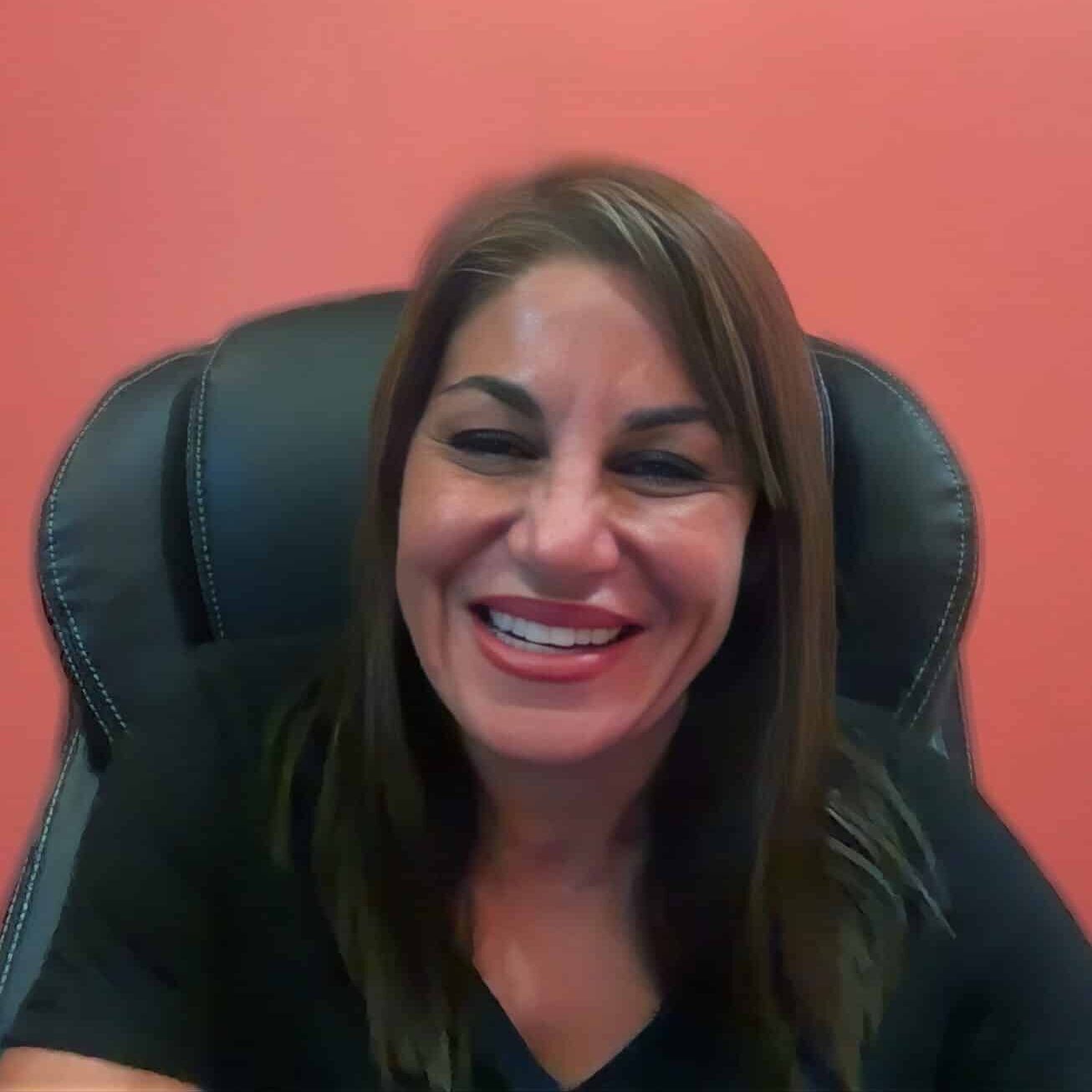
Lauren is a Registered Nurse specializing in home health services in South Florida. After a successful start in business reporting and analytics, she transitioned into healthcare via an accelerated nursing program to find greater career stability and flexibility.