Answering Legal marketing strategist Tony Prieto joins the show to dissect the multi-million dollar intake mistakes costing law firms up to 60% of their prospective clients. This episode moves from a deep-dive exploration of Michael Penn’s obscure 1989 power-pop album March to a frontline masterclass on treating phone intake teams as high-converting first impression officers.


Jared Correia kicks things off with a deep-dive monologue into Michael Penn’s brilliant but highly obscure 1989 power-pop album, March. From navigating life as Sean Penn’s brother to winning an MTV Video Music Award, Michael Penn briefly captured a flawless sonic time capsule right before Nirvana’s grunge revolution shifted consumer tastes forever. Jared breaks down why this quirky, instrumentation-heavy record remains a perfect alternative pop artifact of a bygone musical era.
Transitioning from pop history to the frontline mechanics of law firm revenue, Tony Prieto, Marketing Strategist at Answering Legal, joins the show to expose the multi-million dollar mistakes holding modern firms back. Shockingly, industry data reveals that up to 60% of legal phone calls go completely unanswered, leaving massive revenue on the table.
In this interview, we cover:
The 60% Failure Rate: Exposing the industry data behind unanswered legal calls and how it actively derails your marketing investment.
The 24-Hour Lead Window: Why the vast majority of practices lack a structured follow-up architecture to secure high-value personal injury and litigation leads before they move on to a competitor.
The AI Uncanny Valley: Why relying strictly on fully automated AI answering services leaves vulnerable clients stranded and alienated when they need a human touch.
First Impression Officers: How redefining and treating your front-desk intake staff as conversion drivers radically transforms client acquisition rates.
Jared Correia (00:00:00):
Hello again. We’ve got a show that promises to be at least mildly interesting for your listening and watching enjoyment. I’m your host, Jared Correia. I’m the CEO of Red Cave Law Firm Consulting. For the monologue, I’ve got maybe the most obscure perfect album we’ve ever done. In fact, it’s so out of pocket. I’m not even going to tell you what it is because you probably won’t know it anyway. In the interview, we’re talking with Tony Prieto of Answering Legal. In the counter program, we’re bringing back one of my favorite games with new questions and a new title, Take This Job. Now, let’s March.
(00:00:45):
Yes, the rumors are true. I’ve teed up another perfect album just for you and this is definitely the most obscure one I pulled from the deck. But before we begin and to build a suspense, let’s first recap our prior selection starting with our most recent coverage. Paul McCartney’s Ram from 1971, that’s our latest edition to the list until now. The Who? Who’s Next from 1971? Gordon Lightfoot’s sundown from 1974. Billy Joel’s Street Life Serenade also from 1974. Billy Joel’s an innocent man from 1983. Paul Simon’s Graceland from 1986. Tom Petty’s Full Moon Fever from 1988. Uncle Tupelo’s Anodyne from 1993. Snoop Dogg’s doggy style from 1993 also. Cheryl Crow’s The Globe Sessions 1998. Cole plays Viva Levita or Death and All His Friends from 2008. And lastly, Taylor Swift’s folklore bringing us into this decade with a 2020 release. Now, let’s get our next one on there.
(00:01:56):
In late 1990, Michael Penn was set up on a path to become a huge pop star. If that name sounds familiar, yes, he is Sean Penn’s older brother and also the older brother of Chris Penn, another actor. At this point, by 1990, Sean Penn had been acting in movies for almost a decade, but Michael’s debut album March did not release until September of 1989. The same year that his brother’s movie, Casualties of War had come out and after Sean had already married and divorced pop star Madonna. Michael’s March yielded three charting singles, No Myth, This and That and Brave New World. Although I didn’t buy the album right away, I remember that I did have the cassette single for No Myth, which was backed by B Sidetrack Big House, another song on the album. The video for No Myth was great. It was Michael Penn and his keyboardist in an apartment and the camera pans into two other apartments throughout the video.
(00:03:01):
I distinctly remember this one lady during the video just tearing through all this stuff beneath her sink, looking for something she couldn’t find. There’s probably some symbolism there. I still don’t know what it would be. And despite the fact that Michael Penn had set out to make the anti-video, meaning in his words, no breaking glass, no cleavage and no cars. I find that to be an odd list. He still won the Clumsily Titled Award for Best New Artist in a Video at the 1990 MTV Video Music Awards back when those were still a big deal. He lost in Best Mail Video to Don Henley’s End of the Innocence though. What the fuck is up with these award titles? Does the video have a gender? The March album was also roundly praised by critics. Many mentioned favorable Beatles comparisons, not bad, and it was viewed as an achievement in power pop.
(00:03:55):
As the 1990s kicked off or the beautiful decade, as I like to call it, everything was coming up Michael Penn. And all the praise for March at that time was pretty much deserved. I mean, hey, I wouldn’t be talking about it if it wasn’t a perfect album, right? No Myth is an instance where the main single from an album, Marsh doesn’t have a title track, but the song would be it if it did. It’s easily the best song. No myth is pretty much the perfect pop song on a perfect pop album. It’s a little transgressive. The label won a Michael Penn to call it Romeo in Blue Jeans after a line from the chorus, but he refused. Though it also has tambourine in it, Davey Jones style. There’s a weird little piece of lyrics in the middle of the song where he sings about a Chinese speaking private investigator who dances like Fred Astaire in the ocean.
(00:04:45):
Okay. But the guitar parts are insanely slick. There’s even an electric cello in here if you listen closely. Percussion, including a large Persian drum called Adaf is used perfectly and the sound just fills the room. Pen also deployed a Chamberlain keyboard, which is sort of like an analog predecessor to synthesizers, which appears throughout the album offering a symphonic contrast to the acoustic guitars and live drums, but mostly drum machines. It really is a highly unique sound. This is a great song to listen to with headphones on. There’s just a lot going on. The vocals are strong but not overbearing and the lyrics are just quirky enough, but don’t sound like they’re written by a Scientologist exactly. The outro is just tremendous as the track slinks off. No myth is the earworm to end all earworms. It’s so fucking catchy. I don’t think I’ve ever to listen to this song without listening to it a second time immediately thereafter.
(00:05:42):
If you listen to it, you won’t be able to get it out of your head. Okay, you’ve been warned. But a lot of what makes No Myth great. Interesting lyrics, Yoman-like guitar work, timely percussive beats is present throughout the rest of the album. The next track, Half Harvest, kind of picks up where No Myth leaves off. Persistent percussion before additional instrumentation kicks in and then here comes the guitar. The song slowly builds and this may be some of Penn’s best guitar playing on the entire record. One of the interesting things about Pan is that he writes some really inscrutable lyrics like I have no idea what the fuck he’s getting out of the top of this song, but he’s very good at bringing things back around by the chorus, which almost always sounds comparably normal. The first three songs on this album are just bangers.
(00:06:29):
This and that is Zippy from the start with lots of high speed acoustic guitar strumming that steps right into the chorus, which gets something of a 60 style overlay featuring some more prominent tambourine. This and that is sort of a breakneck pop song. The Chamberlain keyboard sounds great here as a mid-song interlude and also used to good effect throughout the second half of the track. This song was the second single from the album and reached number 10 on the modern rock tracks chart, which I guess was a thing in 1990. The video for this track is sort of like a sequel to the No Myth video. Again, Michael Penn is playing guitar and singing in a room, except more of his band is in there. Then we’re looking into other rooms to see what’s happening. Sounds familiar. What’s happening? You ask. A purported suicide attempt where the person apparently is just able to float on air when leaning over a balcony.
(00:07:25):
A home invasion perpetrated by someone who looks like Bill Nye, the science guy, I’m not making any of this up and who avoids getting his ass kicked by an angry husband by simply walking in air. A man trapped underground for some reason. A lady sleeping on a bed for Lily the old video, she never wakes up. Then a man dressed up to look like one of the War Boys from Mad Max hitting a single drum in the room with the band. Is he part of the band? I don’t fucking know, but Michael Penn seems cool with him. Though this does mimic the album art on March where a similar looking man bangs a drum on the left side while a similar looking woman cradles an hourglass on the right side. The album artwork is actually quite striking. I think Michael Penn just really hated making music videos.
(00:08:12):
He even makes a questionable choice to wear a puffy shirt here a full three years before Jerry Seinfeld was ruthlessly skewered for doing the same thing on an iconic episode of Seinfeld. Sadly, this video has no comments on Reddit. Perhaps we can come together to change that. Now Innocent One is the song at the Dead Center of the album and is probably the most straight ahead pop song on the album is almost a ballad, but not quite. As I think about it, I really hate ballads almost as much as I hate musicals, unless they’re done tremendously well. And March has no traditional ballads on it, which is probably one of the reasons I like it so much. This song is really well done and I think it would’ve been a better choice for a single released and Brave New World, which was the third single off the album.
(00:08:58):
We’ll get to it. There are rising notes of musicality here, but the song is pretty tempered and it represents a nice departure point from the rest of the album. This is also maybe the best single set of lyrics on this record. As you can tell by now, if you’ve listened to any of these album breakdowns, Perfect Album for me is one that is experimental in some capacity. It’s not just a vibe wholly, it’s got to be something that sounds different. One of the things I love about March is that all the songs are pretty well differentiated from each other. It’s hard to say, “Oh, that sounds like a Michael Penn song because stylistically all these songs bring something different to the table, some more successfully than others. Invisible is another great track which starts off after the drumsticks count us in like it might be a standard pop song, something Counting Crows might have done, but then it goes off the rails in a good way with all these wild instrumental flourishes.
(00:09:52):
Usually Penn songs are a good match in terms of inventedness of lyrics versus inventiveness of instrumentation, but in Invisible, the Instrumentation Cup run it over. This is a really cool song which has sound segments that are like multiple songs being smashed together, like a stew of sweets. The album Finishes Strong with a couple of tracks that do not very much sound like each other, sensing a theme here in Battle room and even fall. And I should pause for a second here and say that Michael Penn is also really great at naming songs, just some super unique shit here and more to come. This was certainly a man who had a great deal of trouble listening to his label. Battle room is sort of an understated tune with one big flourish that completely works. It’s a melancholy tune about fighting in relationships, which he seems to imagine in some kind of gladiatorial event done in a group setting, kind of like backrooms before relationship battles with a nice electric guitar flourish at the end, which is not utilized very often on this album.
(00:11:01):
Even Fall starts off like a chubby checker song. It’s very 50s coded. Again, this comes out of nowhere. It’s like, ” Hey, here’s another song. Let’s try an entirely different genre. “He’s even throwing some horns in there. And again, there’s a nifty little actro here before the song pauses and hits another big flourish at the end. I can’t tell you what an even fall is and I can’t figure it out from the lyrics, but I even fell for it. Big House, the B side of the No Myth single sounds just like a Midnight Oil song. And this was right around Midnight Oil Time, the period When Beds Are Burning and Blue Sky Mind were video hits. I always felt like Peter Garrett looked like Angry Cayu, but that is neither here nor there nor Down Under. I like Big House. It’s a cool song, but it’s probably the least interesting song musically on this album.
(00:11:52):
The most interesting things happening here are when the drums sound like someone knocks at the door of The Big House. The track Disney’s a Snow Cone/Bedlum Boys has really weird intro, which is just a horn and a keyboard that sound like a funeral dirge in which I think is a reference to Walt Disney having his head frozen so it could be reanimated just typical pop record shit. And I couldn’t confirm that because there’s not a lot of information online about this album tragically. That was just a rumor, by the way. Disney was cremated. By the way, for me, Disney is an overpriced popcorn bucket, although I believe they sell Snowcomes there as well. This song listens like an anthem and could easily have been another hit had it been released. Additionally, this is the only time on the album when backing vocals are used extensively, which makes it a unique outlier on this record full of unique outliers.
(00:12:47):
Of course, there is certainly a reference in here to the derivation of the term Bedlam, which is a bastardization of Bethlehem as in the hospital of St. Mary of Bethlehem in London, one of the most notorious psych wards in history, which gave rise to a term describing uproar and confusion. Certainly Michael Penn brings orders to all of that with another finely crafted pop song. See what I did there? Brave New World was the third song released from March, but it’s not one of my top songs on the album. It starts off like a riff on Bob Dylan’s iconic fast talking subterranean homesick blues, which it reverts to between some of more standard paced lyrical sections. I understand why they thought to release this as a single. This one did chart, but while this track is catchy and you could probably exercise to it with its flares of interest, it’s kind of bringing up the rear on March.
(00:13:42):
I would say that one of the things I like so much about March is that there’s pretty much a lot going on within every song without it sounding overproduced. Brave New World probably gets the closest to getting there being overproduced, that is, without quite crossing the line for me. Cuba’s got a brand new gun, comes the closest to any song on March to becoming a traditional ballast. That’s probably why I least like it. It’s my least favorite track here. And the lyric, You’ve been shot down, Wounded Unto Death by Something Called Love just rates at me. Something called Love or We Series here. I feel like Michael could have workshopped that a little bit more. Usually his lyrics are really good. Even so, this track sounds very different from all the other tracks on the album as usual. It’s got sort of the skivy vibe with some of the grimier guitar parts and I like just how it ends abruptly.
(00:14:35):
Another differentiated track on a really variable album, perfect album as it were. Now, a perfectly variable album. Yeah, that sounds good. Now, while I’ve listened to every track on March, more times than I can count. I’ve never actually listened to any other Michael Penn songs. I don’t want to. March is just such a perfect time capsule of 1990 for me. No myth takes me back to being 12 years old and placing that brand new cassette single unwrapped into my cassette holder, which is such a different feeling than just firing it up on Spotify. A little more effort went into that. But if you’re inclined, there is other Michael Penn to listen to. Post March, Penn recorded album in 1992 called Free For All, which is supposed to be very good in a lot like March, but it was not nearly as successful. After it, his album output, Peter Dow, he put out Resigned in 1997 and more albums in 2000 and 2005, but that was his last album and his singer, songwriter, career effectively ended over 20 years ago.
(00:15:45):
Since then, he stayed busy for sure. He married still active singer songwriter, Amy Mann. He’s also spent a lot of time scoring films and television shows. He scores and has cameo in Boogie Knights and Paul Thomas Anderson, the director of Boogie Knights, one battle after another, which was clearly inspired by Battle Room and other films. Even directed the video for Penn song Try, which was basically a three minute long tracking shot along a quarter mile inside one of the longest hallways in America. I was after a fun fact. The last single Michael Penn published was called A Revival in 2018. Ironically, he hasn’t done anything similar since, so it wasn’t quite a revival. When the questions brought up about why Michael Penn didn’t become a bigger star with a longer career in pop music, usually people reference timing. In between the release of March and Michael Penn’s second album, a little song called Smells Like Teen Spirit released.
(00:16:45):
Now, everybody was out on traditional pop and very into the grunge sound. Instantly, Michael Penn seemed like even more of a pussy than Richard Marx and that was basically it for his career. It’s too bad that Michael Penn’s career could not have coexisted alongside Nirvanas, but times change and consumerism is a fickle mistress. Of course, I like to think that Michael Penn perfected the ’90s pop sound and like a brilliant comment was just never meant to persist into the ’90s. He could never have done better. It was a moment in time and it was no myth.
(00:17:24):
Kind of like we perfected podcasting, but we’ll be back next persisting past the mid 2020s with Tony Prieto of Answering Legal with whom we’ll talk about intaking and podcasting. It’s all next. Well, I’ve effectively run out of things to say, which is awkward because this is a podcast. I’m going to run away. Actually, I won’t run away, mostly because I’m not fast and likely could not escape even if I tried. So since I’m kind of stuck here, let’s just interview our guest. My guest today is Tony Prieto, the marketing strategist at Answering Legal. Tony, welcome to the show. How are you?
Tony Prieto (00:18:14):
I’m very grateful you didn’t run away because I’m not sure I could host the show on my own.
Jared Correia (00:18:18):
Oh, you’d be great. In fact, relieve me from my prison. No. You got your own show, which we’ll talk about in a second, but I wanted to start by asking you, you like me were an English major, English and creative writing. So may I ask you, why did you decide to do that other than making your best attempt to be unemployable?
Tony Prieto (00:18:43):
So I know you usually ask your guests on here like, “How did you end up in law school?” I can tell you the exact opposite, how I didn’t end up in law school because it’s a fun story. Oh yeah.
Jared Correia (00:18:52):
Tell me that.
Tony Prieto (00:18:54):
When I was like 12 illegally employed, my mom, who’s a court reporter, knows every civil litigation attorney in Miami, found one who needed some files organized before he digitized them and so she volunteered me and it was supposed to be a four-day job. I got it done in like a day and a half.
Jared Correia (00:19:15):
Look at you, damn.
Tony Prieto (00:19:16):
And the guy very nicely says, “I’m not going to punish you for working hard, so I’m going to pay you for the full four days.” So we’re in the elevator heading back down to the lobby where he’s going to hand me off to my mom and he says, “Do you want to be a lawyer?” And as any son of immigrants or I believe Jewish parents would know, the answer is yes, because the two options are- Or a doctor. … lawyer and doctor. And I said, “You know, or a doctor.” And he says, “Don’t.” And I go, “What?” He says, “I’m miserable. I hate my job and my life.” So he hands me the money. I immediately hand it to my mom. I tell him what he said and my mom says, “Don’t listen to him. He’s crazy.” But it stuck with me. Is he? Is he?
(00:20:00):
I don’t know. I don’t know. But my father, when he eventually listens to this podcast, will curse his name because ever since then he’s cursed his name for it.
Jared Correia (00:20:10):
Your dad was like, that just threw you off. You could have been on the lawyer path.
Tony Prieto (00:20:15):
My dad says that ruined me. Yeah.
Jared Correia (00:20:17):
That’s so funny. Okay. So how do you end up deciding on English? Are you like, “I just like to write or do
Tony Prieto (00:20:24):
You like to
Jared Correia (00:20:25):
Read?”
Tony Prieto (00:20:25):
I like both of those things and- Okay,
Jared Correia (00:20:28):
Good. Good star.
Tony Prieto (00:20:30):
I’ve been a voracious reader my whole life so I get to college and my first year where I went to school, luckily you don’t have to do Clara major until the end of your sophomore year. So you get two years to kind of play around. And in my first year I was an econ major and I hated it. So I decided am I going to spend all four years here miserable and then end up on Wall Street miserable there or am I going to do something I enjoy? So I picked the unemployable track and so I picked English and I had taken one creative writing course in like my first semester of freshman year and I was terrible at it, but I loved it. And the double major was so easy because I’d already … It’s like eight classes to get a major in creative writing at my school.
Jared Correia (00:21:23):
What was the econ thing, like too much math? Because that’s why I would have been out. I would have tapped out.
Tony Prieto (00:21:27):
No, I’m okay at math. Although I did get like a really bad grade in Calc four. It was so boring. No offense to any econ majors up there. When they show you a supply and demand graph, say it. All of econ as they teach it in Western universities is supply and demand and then you adjust that. Okay, this is the labor market. This is how a minimum wage affects supply and demand. And once you see that graph, you’re like, okay, I got it. The rest of this is boring.
Jared Correia (00:21:59):
So do you have a favorite book?
Tony Prieto (00:22:02):
Wow, that is a really tough question. There’s a lot of- You can
Jared Correia (00:22:05):
Give me a few. I probably have like a top five that I can never decide
Tony Prieto (00:22:10):
On. Yeah. It’s almost impossible. I read A Personal Matter by Kenzaboro Oe who’s always- I don’t know that one. Tell me a little bit about it. Noble Lorit. Yeah. A man marries his wife and he doesn’t really have a job. He teaches at a cram school, which is like a Japanese institution for children who already do 12 hours of school to do four more of them to try and raise their entrance exam. Just like America. Statistics. Yeah. 12 hours of school and six days a week. But he teaches at a cram school and he hates his job and his wife is pregnant. She gives birth to a baby with a birth defect and that sends him into this spiral where he goes and hooks up with his college girlfriend. He considers abandoning his whole life to move to Africa and then eventually he comes back to his family and the message of the book is kind of a sort of lecture at Japan, which is Kensingburg Oil is a pretty conservative guy.
(00:23:16):
He says, “Instead of turning away from your tradition and honor and your family and towards something new and exciting, you should stick with what has worked.” I took the complete opposite lesson, of course, but there’s a moment where when he is with his ex- girlfriend there, when he sort of visualizes the life he could lead if he abandons his responsibilities and realizes that in that life he could be happy, but it would also be tough. It would be a difficult life and he chooses an easy and unhappy life instead. And so I decide instead I want a more difficult, but happier life.
Jared Correia (00:24:00):
And our theme so far in this show is the hatred of jobs. So let’s talk about your current job. You end up at answering legal. How did that go down? How did you end up there? Because that’s a pretty close knit team from what I understand.
Tony Prieto (00:24:16):
Yeah. I mean, I was only the third person to join the marketing department since then we’ve added on a couple of people or rather I wasn’t the third person to join the marketing department. I was the third member of the marketing department. There had been other third members of the marketing department, much like the Fifth Beatle. There’s a-
Jared Correia (00:24:35):
Billy Preston? Some debate over the fifth Beatles, but yes, go on.
Tony Prieto (00:24:41):
I think that sociologically in not very long there’s going to be a sort of micro generation defined of people who had their careers or educations disrupted by COVID. So this is going to make me sound-
Jared Correia (00:24:57):
That’s a good point. I think that’s fair.
Tony Prieto (00:25:00):
This is going to make me sound like a baby, but I graduated college in 2017 and- Me too. I went home to help my parents with something, figuring that I could start my career at any point. And then I was helping my dad renovate a house because the idea was to move my grandparents in my mom’s parents to take care of them in their old age. That took so much longer than my dad said it would. So there’s three years between when I graduate college and when COVID hits where I could have started a career and I still think that even if I had immediately gone to a job, I would have lost it in the COVID recession, right?
Jared Correia (00:25:44):
Yeah, possible
Tony Prieto (00:25:46):
For sure. And basically would have had to start over. So after COVID, my brother, being the more practical and commonsensical of the two of us, had a job answering the phone for the New York Department of Labor helping them manage their COVID unemployment. And that job taught me a lot about intake because everyone calls that place desperate, you know what I mean? Where’s my money? I’m owed my money. It hasn’t come in yet. A lot of calls I’m sure during that period. I’m homeless. How do I get my money? Oh, I’m sorry you need an address. It’s all kinds of problems. When that winds down, I applied to content writer jobs and I think that the fact that I had been on the other side of the phone, even if it was in an unrelated sort of business, I’d worked at a call center, kind of gave me a leg up on other interviewees for the job because I had like an intimate knowledge of what we were selling kind of.
Jared Correia (00:26:44):
Yeah, that’s really interesting. That’s cool. Okay. So you’re at answering legal and just give me, for people who don’t know, just give me that quick pitch about what answering legal does and why virtual receptionist services are valuable to law firms.
Tony Prieto (00:26:59):
Yeah. The answer is that we at Answering Legal answer for all kinds of lawyers, but especially attorneys who have very high value clients, like for example, personal injury clients when let’s say the average case value of a motor vehicle accident is $6,400, missing a phone call is minus $6,400 in your revenue line, period. Right. It’s a big deal. And so that’s our sales pitch is, hey, we pick up the phone, we talk to them, human beings talk to them as opposed to like, I guess nowadays the other option is AI, but even when I started four years ago, it was still voicemail and take down their information so that you can call them back and secure their business because the idea is you probably paid for that lead via marketing and so if you want to improve your revenue, grow your firm, et cetera, you hire us answering legal.
(00:27:55):
And our key pitch is that we only answer for lawyers almost every other answering service out there-
Jared Correia (00:28:02):
Be pretty fucked up if you didn’t given the name of the company.
Tony Prieto (00:28:06):
Yeah. Yeah. Well, the name of the company ends up with a lot of people coming to us to ask us legal questions because they think we answer legal questions.
Jared Correia (00:28:14):
Right.
Tony Prieto (00:28:14):
Are
Jared Correia (00:28:14):
You lawyers?
Tony Prieto (00:28:16):
We have a whole thing. We are not lawyers. We cannot provide legal advice.
Jared Correia (00:28:20):
What is the approach for you guys on AI? How do you feel about it in the construct of reception? So I think it’s a hot topic. Some people are like, “It sounds great, it’s cheap,” and then some people are very concerned about it.
Tony Prieto (00:28:36):
It’s cheap I think is the strongest selling point for it because- As of right
Jared Correia (00:28:41):
Now, I think that’s right. Yeah.
Tony Prieto (00:28:43):
You don’t have to pay a human being to answer the phone. Our position on it, I mean, we have an AI chatbot. Our position on it right now is that even if you have an AI service, it should never only be the AI service. It’s just going to be less effective than a person in the same way that voicemail’s less effective than a person because people know when they’re talking to a robot. It doesn’t matter how nice it sounds. Oh, definitely.
Jared Correia (00:29:14):
Yeah.
Tony Prieto (00:29:14):
There’s the uncanny valley that we still haven’t quite crossed, but we have our own sort of take on AI that’s in development, but it’s probably still a while out.
Jared Correia (00:29:31):
Yeah. So you’re taking your time trying to develop it correctly, which is probably what I would do if I were in your position. I get
Tony Prieto (00:29:36):
That. Yeah. This company Answering Legal, we own our own answering service software. We don’t white label it or whatever. And the company has a strong vision of making sure that you own everything you sell so that you are never at the behest of someone else. And so that’s the sort of ethos behind developing it ourselves.
Jared Correia (00:29:59):
You’ve seen a lot Not intake. What is the most common intake mistake that law firms make?
Tony Prieto (00:30:09):
It’s so funny. I think we asked you the same question on our show, Legal Intake Experts.
Jared Correia (00:30:14):
Right. I’ll talk more about this in a second, but we’re doing the podcast swap, so I wanted to get you back.
Tony Prieto (00:30:26):
It’s like choosing
Jared Correia (00:30:26):
Your favorite book, right?
Tony Prieto (00:30:28):
Yeah, exactly. Let’s assume that you picked up the phone, which is a big assumption. I know that there was a statistic that I would cite from a website that you wrote for, I don’t remember what it was, that said that a third-
Jared Correia (00:30:44):
So many.
Tony Prieto (00:30:47):
A third of law firm phone calls are answered. Recent sort of statistics from the Clio Legal Trends Report say 40%. Assume that this is one of those 40% that it gets answered because-
Jared Correia (00:30:59):
It’s not
Tony Prieto (00:31:00):
Good. No, it’s not good. I would say that’s a big one. So I guess you could say
Jared Correia (00:31:03):
Problem number one is not picking up the phone.
Tony Prieto (00:31:05):
That is the biggest one, but there’s such an obvious solution answering legal, that we can go beyond that. I think the next biggest one, the one that’s going to cost you the most money is follow up. If this person represents a good case for you, you need to get back to them and secure their business within 24 hours ideally. And that is tough because-
Jared Correia (00:31:31):
I can attest to this. Yeah.
Tony Prieto (00:31:32):
That’s tough because you have a
Jared Correia (00:31:33):
Million cases. Well, I would say that most law firms have zero follow-up architecture
Tony Prieto (00:31:38):
Whatsoever. I mean, you want to talk tech when a potential new client gets logged in hopefully your CRM or whatever it is, you should have a reminder to ping you the next morning, “Hey, call this guy.” Even if they don’t answer, right? Let’s say they work, they can’t answer the phone, they will see that you called them and that will make them more likely to stay with you instead of a competitor.
Jared Correia (00:32:05):
So starting small, pick up the phone, one.
Tony Prieto (00:32:08):
Yeah.
Jared Correia (00:32:09):
Follow up on the phone call. Two.
Tony Prieto (00:32:12):
Yeah.
Jared Correia (00:32:13):
Now I have a really important question for you, Tony.
Tony Prieto (00:32:16):
Yeah.
Jared Correia (00:32:16):
Why the fuck don’t you have a LinkedIn? What’s wrong with you?
Tony Prieto (00:32:20):
So here’s another reason why I had difficulty starting my career. I’m really bad at two things that you really need to be good at in this job market. Self-promotion and social media. Call it networking. I hate talking about that. Sometimes they
Jared Correia (00:32:39):
Go hand in hand
Tony Prieto (00:32:41):
As well. Yeah. I hate talking about myself. Nothing personal or psychological about it. I feel much more comfortable in sort of this example as the interviewee learning about someone else than talking about myself. I get that. And I have always been really bad at social media. So that’s why I don’t have a LinkedIn because I wouldn’t do anything with
Jared Correia (00:33:06):
It. You getting one or no, you’re out. You’re out on LinkedIn.
Tony Prieto (00:33:10):
Well, Nic, my boss- Nick Worker. Yeah, Nick Worker. So when you were on our show, he said he had a surprise, which was he was going to force me to make a LinkedIn on the podcast.
Jared Correia (00:33:25):
And we never got to it because
Tony Prieto (00:33:26):
I never have too much. At the end of the podcast, you said, “I think that we’re forgetting something. Now we got it all. ” That was it. You were on top of it. We were not. So I have dodged a bullet like Neo in the Matrix, but- Happy to help, man. Eventually I think that … I mean, I have a great idea for a LinkedIn post, but I would need to make a LinkedIn to make it. All
Jared Correia (00:33:49):
Right. Everybody wait for that. No, the self-promotional stuff is awful on social media. I can’t stand. I’ll be honest with you, one of the reasons I do so much podcasting is because it allows me to make posts on social media without talking about myself constantly. I can center other people. And I think that’s great. And it sounds like you’re doing something similar. You’re just not on LinkedIn. I was reading through your bio page at Answering Legal and I came across this interest you have in film, including horror films. Sure. So this is a good time to ask this because currently as of the recording, there are two kind of new wave horror films that are making waves in the theaters. So there’s Backrooms with Cain Parsons, who’s a really young filmmaker. And then there’s Obsession, which is Curry Barker, I think just crushing it at the Box Office, both of them.
(00:34:48):
What do you think about these movies? Because they’re sort of different than the traditional horror movie, right? Have you seen them?
Tony Prieto (00:34:57):
I haven’t seen either of them. I know that … Okay. So Cain Parsons is The Backrooms is this whole, it was a huge- It’s a whole war,
Jared Correia (00:35:06):
Right?
Tony Prieto (00:35:06):
Creepy
Jared Correia (00:35:07):
Pasta type of
Tony Prieto (00:35:08):
Shit.
Jared Correia (00:35:08):
Yeah.
Tony Prieto (00:35:09):
And when the studio that went to produce it, bought the rights to produce it, they brought the original creator, Kane Parsons, on to make it, which I think is rare in this day and age.
Jared Correia (00:35:21):
Yeah. But maybe becoming less rare because the movie’s kicking ass.
Tony Prieto (00:35:25):
It’s so interesting because horror movies release at two times of the year. They release in the summer if they don’t think it’s going to make a lot of money and they release in October if they think it’s going to make a lot of money. And I’m pretty sure, I mean, both of these are killing it. These studios made a horrible miscalculation with what the popularity of these movies would be.
Jared Correia (00:35:50):
Clearly.
Tony Prieto (00:35:51):
Yeah. I mean, I think Obsession beat out … What was the other movie? Oh, beat out
Jared Correia (00:35:56):
The Mandalorian.
Tony Prieto (00:35:57):
The Mandalorian and Grogu. Yeah.
Jared Correia (00:35:59):
Basically, Mandalorian was number one. And then I think Obsession’s been number one for like two weeks now and Mandalorian just fell. But the Obsession one is interesting to me because it’s based on the Monkey’s Paw story. But the dude who created the movie didn’t learn about the Monkeypaw from the book. He learned about it from the Simpsons episode about the book.
Tony Prieto (00:36:21):
Yeah. The Monkeys Paw Curls.
Jared Correia (00:36:24):
Which I find to be hilarious.
Tony Prieto (00:36:27):
You could say something about the degeneration of culture, but you could also say it’s about the sort of long tail of The Simpsons.
Jared Correia (00:36:35):
Well, also the Monkeys Pop book was inspired by something else that no
Tony Prieto (00:36:39):
One knows about. A genie grants you a wish. I get it. But it also becomes your worst nightmares. It’s an ancient story. Right.
Jared Correia (00:36:47):
I’ll ask you the same question I did about books. Do you have a favorite horror movie that you would recommend to people?
Tony Prieto (00:36:51):
Favorite horror movie. I’ll go with two. One of them is a little older. It’s called It Follows. I’ve heard of that one. I
Jared Correia (00:37:02):
Haven’t
Tony Prieto (00:37:02):
Seen it. Yeah. It’s about a sexually transmitted killer. In this story, the main person has a one night stand with someone and then he ties them up, ties her up and presents her, “Hey, if this ever catches you, it will kill you and then come back from me. ” And so the whole story is- Like
Jared Correia (00:37:27):
A STD that’s a serial killer?
Tony Prieto (00:37:29):
Exactly. It’s like a ghost. It’s a spectral force. Only the person currently targeted can see it. And one of the things that makes the movie so much fun and also terrifying is that there’s only a couple of confrontations with the killer, but while they’re going around trying to solve this problem, there will be a wide shot as the car drives by and on top of a house behind them is the monster. It’s just sort of in the background always lurking. It has like a really high- That’s cool. … creepiness factor. Yeah. And then more recently, people call it a horror movie. I don’t really think it is and not in a negative sense is I saw the TV Glow, which is by a director Jane Schonbrone and it is a phenomenal film about sort of identity. The director is who’s trained. I’ve heard of this one too.
(00:38:22):
I
Jared Correia (00:38:22):
Also have not seen it.
Tony Prieto (00:38:24):
Yeah. The director’s trans and tells a story about played by a young man played by Justice Smith, I believe is his name, from the Detective Pikachu movie. Classic. That’s classic
Jared Correia (00:38:38):
Shit right there.
Tony Prieto (00:38:40):
He falls in love with a show that he would watch with this girl in his high school or whatever and the boundary between the reality of the show and his life starts to thin and he discovers things about himself. And it is one of the most distressing movies I’ve ever seen, but it’s a powerful film, I think.
Jared Correia (00:39:04):
Good recommendations. Okay. Let’s talk about another recommendation, your podcast called The Legal Intake Experts Podcast. And the good news is that you can listen to it right on Legal Broadcasting Company.
Tony Prieto (00:39:21):
That’s right.
Jared Correia (00:39:21):
We are syndicating the show. So check it out. Why did you guys start that podcast? It’s you and Nic. And what is it about for people who haven’t listened to it yet?
Tony Prieto (00:39:31):
Yeah. So the legal intake experts, we at Answering Legal produce a few podcasts and our other sort of flagship podcast was everything against the law. Whoops, everything except the law where
Jared Correia (00:39:45):
Maybe that’s your next podcast.
Tony Prieto (00:39:47):
Yeah. Everyone against the law is sort of an anarchist podcast. Everything except law is an interview podcast where we would bring in lawyers, sort of legal industry experts, ask them questions. And we decided to do another one that didn’t require guests so that we could produce content on a regular basis without also needing to work around other people’s schedules and stuff. Now we have had guest hosts on legal intake experts.That’s our gimmick because we don’t have any guests. We have guest hosts. Oh,
Jared Correia (00:40:21):
Gotcha. Okay.
Tony Prieto (00:40:22):
And Nick also loves to be on the podcast. He loves podcasts. Stuff like that. Yeah. And so finding one that we could make just the two of us means that we could just podcast whenever we want.
Jared Correia (00:40:38):
That’s as good a reason as any. And you talk about intake strategies for the most part, broadly speaking, kind of riff from the headlines.
Tony Prieto (00:40:50):
I should have talked what the show is about. It’s obviously about intake. Go ahead. Now’s your opportunity. Yeah. Our producer, Joe, here’s how the format of the show works. Our producer, Joe, does a lot of research, comes up with topics. We try to explore these topics on the podcast and Nick tears us off onto a tangent. It’s sort of like the color commentary and the play by play. I’m the play by play. My job is to pull Nick back to the topic we’re supposed to talk about, but usually it is intake.
Jared Correia (00:41:19):
Yeah. I have to say, obviously I think the show is good and one of the best things about it is the thumbnails you guys create. The thumbnails are probably my favorite podcast thumbnails out there. Would you like to tell people a little bit how that process works? Because that’s a Joe thing, right? Yeah. Can I shout out Joe here? Okay.
Tony Prieto (00:41:42):
Absolutely. Shout out to our producer, Joe. Joe is the man behind the curtain on all of our stuff. Joe obviously is in the studio with us when we’re recording and listens to think of anything that we really came up with and tries to find a way to make it a fun thumbnail. And then at the end of the show, we take a picture of our faces or whatever doing funny faces. And then our designer, Tyler, this is the best part of his job. Once the video is fully edited, our designer Tyler will just get a note in Slack that says, “Hey, we want you to do the Mario Brothers. Here’s these pictures.” I love the Mario
Jared Correia (00:42:26):
Brothers one. That
Tony Prieto (00:42:27):
Was great. I don’t know if … There was one with an extended baseball analogy we were playing around with Nick Batting and I was the baseball screaming. I don’t know if that one ever made it to production, but yeah, they are the most fun that Joe has and they’re the most fun that Tyler has, our designers. So I’m glad that they’re a hit.
Jared Correia (00:42:51):
I got to say, the podcast is worth it for the thumbnails alone. So definitely check it out. Let me spin back a prior question on you because you hear a lot about lawyers and you’re like, I get it. People are like, “Lawyers suck. They’re awful people. They do bad shit.” Lawyers don’t have the best reputation and a lot of it is unearned, frankly.
Tony Prieto (00:43:18):
I believe lawyers have the same sort of reputation as credit card companies and airlines.
Jared Correia (00:43:24):
Right. So not great. So let me ask you this, have you seen some cool instances of lawyers doing unique and innovative things in terms of intake through your role?
Tony Prieto (00:43:39):
Yeah. I’ll shout out Chris Early. Chris Early hosts a podcast for us here at Answering Legal, the early show. Incredible name, but when you have that kind of name, you just sort of work with it. You got to use it. And Chris is a personal injury attorney based out of Boston. When we first met him was to interview him on the Everything Except Law podcast and we talked about intake and he talked about how his front desk people, his secretaries, receptionists, et cetera, he thought of them as first impression officers. Yeah, that’s cool. And whenever that a case came in, whenever they got a win, he would celebrate the person who answered the phone for it first and foremost because he thought of that as their win. It was the firm’s win, but the person who drove it home was the person who answered the phone and gave the first impression.
(00:44:48):
And I thought that was as someone, again, who had worked on phones in a rather uncelebrated role.
Jared Correia (00:44:55):
I did this. I
Tony Prieto (00:44:56):
Thought that was really cool of him. I don’t know if it was exciting and innovative, but it worked because- I think
Jared Correia (00:45:02):
That’s exciting and innovative. And then he has the podcast on your network.
Tony Prieto (00:45:08):
Correct.
Jared Correia (00:45:10):
So was that like you approached him, he approached you? How did that go down?
Tony Prieto (00:45:14):
Chris Early loves to podcast. Who doesn’t love to talk
Jared Correia (00:45:18):
To you? If you don’t have a podcast, but you’re just listening to this, start your own podcast.
Tony Prieto (00:45:23):
Start a podcast. It does not take that much setup to get a decent sort of audio visual setup. He goes to a lot of masterminds and such and he’s constantly networking, meeting other lawyers. And I believe that we came to him to ask him if he wanted to do a podcast. And I think he liked the idea at first, but I was just telling the producer of this show, Evan. Evan. He has filmed episodes all the way out to December and we released two a month. So what he does is he meets people and he says, “Hey, do you want to come on my podcast?” And then he asks them about their lives and careers, et cetera, but it was definitely we reached out to him because we wanted to … I mean, a podcast is such a great piece of content because it’s 30 minutes, 45 minutes long and you get to just cut it up into other pieces of content and put those on and just constantly have just sort of a long list of stuff that you are constantly uploading to keep the algorithms happy.
Jared Correia (00:46:31):
Yeah. I think a lot of people don’t podcast because they feel like they got to be like Joe Rogan or some shit for it to be viable. But if you’re a lawyer and you’re just looking to provide content for your clients and some number of new clients, the numbers don’t have to be crazy for you to be successful
Tony Prieto (00:46:50):
At that. I mean, they’ll come up if you let’s say record a podcast talking about your specific practice area and just talking about details about these things, what happens in a case, how does this case move from new matter to resolved and what are likely outcomes and stuff like that You put it on your YouTube channel when people Google you, that will come up and they’ll click it and they’ll say, “Wow, this guy knows what he’s talking about. ” While Google’s still alive, that is.
Jared Correia (00:47:24):
Oh my God, you think Google’s gone away? Remember, Google owns YouTube, YouTube’s not going anywhere.
Tony Prieto (00:47:30):
What was it? I think that it was an AHRF study that said that the top result on a search query with AIOs gets 56% less clicks than the ones without them. So they’ll Google you, but the Google AI is going to be the one that tells you, “Hey, check out this video,” not the results, but-
Jared Correia (00:47:53):
Right AI overview for sure or AI mode. Tony, this has been stirring and delightful, but will you stick around for one final segment before you go?
Tony Prieto (00:48:04):
I didn’t think I was allowed to leave.
Jared Correia (00:48:06):
No, you’re not. All right. Everybody will be back with Tony Preto who’s imprisoned here on the podcast Welcome to the Counter Program. It’s a podcast within a podcast. This is a conversational space where we can address usually unrelated topics that I want to explore at a greater depth with my guests. Expect no rhyme and very little reason. Tony, welcome back. How you doing?
Tony Prieto (00:48:32):
Glad to be here. And in case the audience wants to know, I have no idea what’s happening right now. Just a little bit behind the curtains. I don’t know what’s about to happen.
Jared Correia (00:48:41):
That’s the plan. Okay. So I decided that I was going to bring back a game that I’ve run before. In fact, I’ve run it with your co-host of legal intake experts previously, Nic Worker.
Tony Prieto (00:48:56):
Sure.
Jared Correia (00:48:57):
But I’ve been having a hard time labeling this game. I’m trying out another title for it. I’m going to call it Take This Job. Let me
Tony Prieto (00:49:07):
Tell you how it works. Oh, okay. I remember this now. Yeah.
Jared Correia (00:49:11):
So when I did this with Nick, I had a job that I described to him called Panda Fluffer, which is basically like getting your Panda ready for a sexual engagement.
Tony Prieto (00:49:24):
Very important to
Jared Correia (00:49:25):
Us. He was so excited that I was talking about Pandas because apparently he loves panders. He didn’t hear the second thing I said, which made for some great thumbnails of our own. So here’s what I’m going to do. I’m putting a little twist on it. I am going to read you the description of a historical job. So no current jobs because at some point current jobs are just going to be, I interact with AI. Historical job description and you just need to tell me whether or not it’s real or if I’m making it up.
Tony Prieto (00:50:00):
Okay.
Jared Correia (00:50:01):
Pretty simple. So if you’re ready, I’m going to give you the title. I’m going to give you the description and then you can tell me and feel free to iterate on the topic as well. Just try to figure it out. And I’ll keep track of your score. I will say ahead of time, I’ve been podcasting for 17 years, no one has ever gotten a perfect score on any of my quizzes. So you could be the first. No pressure.
Tony Prieto (00:50:22):
No pressure.
Jared Correia (00:50:25):
First job, whipping boy, whipping boy. This was a young boy educated alongside a prince who received corporal punishment on the prince’s behalf when the royal misbehaved. This was an official position in the 15th and 16th century in Europe. Because tutors were not allowed to hit royal children, a companion boy was punished instead in the hopes that the prince would feel guilty and remediate his own behavior. Was this a real job? Whipping boy.
Tony Prieto (00:51:01):
Yes. And it was entirely unsuccessful because the 15th and 16th century Europe had some really bad monarchs.
Jared Correia (00:51:08):
Yeah. They didn’t seem to learn the lesson.
Tony Prieto (00:51:10):
No, they did not.
Jared Correia (00:51:13):
Charlamagne’s over there like, “Yeah, just continue to beat the shit out of that kid. I don’t
Tony Prieto (00:51:18):
Care.” The only lesson the Hapsburg line learned about was inbreeding.
Jared Correia (00:51:23):
Yeah, they loved a little inbreeding for sure. All right. I see we have a very confident contestant on the show today. This is great. So you’ve heard of that before, I’m assuming.
Tony Prieto (00:51:34):
Yes. Yes, I have.
Jared Correia (00:51:39):
I always start with the easiest one, but go ahead.
Tony Prieto (00:51:40):
Yeah.
Jared Correia (00:51:41):
Keep
Tony Prieto (00:51:41):
Going. The European Royals, if you can imagine something that is worse than the Whipping Boy, I’m sure that it exists.
Jared Correia (00:51:50):
I feel like if you can imagine something fucked up that happened in medieval Europe, it probably happened.
Tony Prieto (00:51:55):
Sure did.
Jared Correia (00:51:57):
Let’s continue to test that theory. Job number two. Toad eater. Toad eater. This was a traveling quack doctor’s assistant who ate live seemingly poisonous toads and then was miraculously cured to show that the doctor’s patent medicine worked. Active in 17th and 18th century Europe these assistants essentially pretended to be poisoned for the benefit of their boss. And interestingly, this job gave rise to the modern insult Toadie. Is this real or false? The Toad
Tony Prieto (00:52:35):
Eater
Jared Correia (00:52:36):
Job.
Tony Prieto (00:52:38):
Oh, I’m going to go with false. I’m going to go with false.
Jared Correia (00:52:43):
This was a real job.
Tony Prieto (00:52:47):
You know what? Kind of crazy. I stuck with my gut. I was like, “This can’t be real.” And then you said Tody at the end, I thought, oh wow, it is real, but I had to stick with my guns. Yeah, this is for the snake on it. I wonder how
Jared Correia (00:53:00):
Large the tote is
Tony Prieto (00:53:02):
Honestly.
Jared Correia (00:53:03):
I feel
Tony Prieto (00:53:04):
Like they’re
Jared Correia (00:53:04):
Small. Yeah.
Tony Prieto (00:53:06):
Couldn’t even saute them or something.
Jared Correia (00:53:09):
No. I mean, that might kill the poison.
Tony Prieto (00:53:14):
Poison. Not that they knew how the poisons worked.
Jared Correia (00:53:17):
You’re a movie guy. Have you seen the ballad of Buster Scruggs?
Tony Prieto (00:53:21):
I have, yes.
Jared Correia (00:53:23):
They have that medicine man.
Tony Prieto (00:53:26):
Not
Jared Correia (00:53:26):
Eating toes, but that’s a good segment of that
Tony Prieto (00:53:28):
Movie. The snake oil salesman.
Jared Correia (00:53:31):
Right. Yes. All right. You won for two, which is respectable. So don’t feel bad. Now my third one is Gord patrol guards. Gord, G-O-U-R-D. This was a border guard active during the Mayan Empire whose job it was to suss out whether traders entering the empire’s borders were attempting to smuggle cacao beans and hollowed out gourds. Cacao beans were highly valuable to the Mayans and were even used as currency. These border patrol agents would tap the gourds listening for a hollow sound. Were there gourd guards in the ancient Mayan empire?
Tony Prieto (00:54:19):
Now that I can no longer get a perfect score, the
Jared Correia (00:54:21):
Pressure’s off. You can fuck around. You do whatever you want.
Tony Prieto (00:54:24):
I want this to be real so bad. So I’m going to say yes.
Jared Correia (00:54:29):
It is fake, sadly.
Tony Prieto (00:54:30):
Yeah. Thought so. Too good to be true. But it would
Jared Correia (00:54:32):
Have been amazing.
Tony Prieto (00:54:33):
Chocolate cops is too good to be true.
Jared Correia (00:54:36):
Chocolate cops. Oh my God. I didn’t even think of that. That’s beautiful. All right. If I do this again, if I rerun this at some point 15 years from now, I’m going to call it chocolate cops. Number four. Wow. We’re already at number four. Okay. Number four. Groom of the stool. Have you ever heard this before?
Tony Prieto (00:54:59):
I know what those words mean separately.
Jared Correia (00:55:02):
You are spot on. Groom of the stool. This role emerged in 15th century England during the reign of Henry the seventh.
Tony Prieto (00:55:11):
The
Jared Correia (00:55:11):
Job was to set up the queen or king’s toilet by providing toiletries and towels. Remember, there was no indoor plumbing for our listeners. The groom would analyze the monarch’s bowel movements along with the doctor in order to continually monitor the king’s health. Despite the nature of the position, the close proximity to the throne. See what I did there? Made this a highly sought after position. The groom of the stool bathroom attendant to the king. Real job.
Tony Prieto (00:55:47):
This is early modern at this point, but in Europe, people who dealt with poop were highly respected and say yes.
Jared Correia (00:55:56):
Correct.
Tony Prieto (00:55:57):
Yeah.
Jared Correia (00:55:58):
Real job. Really wild. I had not heard of this until I was researching stuff for this podcast.
Tony Prieto (00:56:09):
Our sort of cultural … We looked down on garbage men, sanitation workers and stuff like that. It was the opposite in the medieval era because those were the only people who made sure that the town didn’t smell like feces during the day. They went out at night, they scooped up the poop and they were very well respected.
Jared Correia (00:56:27):
And there was another medieval job, I don’t know if you’ve heard of this one, called a purifinder. And you had to find old white pieces of shit and collect them because it was used in some industrial process. That was their entire job. That’s not a job. I think I’d rather be the groom of the stool because of the- 100%. I’m like poking. Is this soft or hard? Not ideal.
Tony Prieto (00:56:53):
Your job is sit at the right hand of the king and tell them if it floats, it’s good.
Jared Correia (00:57:01):
All right. Number five. Cloud weaver. Cloud weaver. This role was occupied by medieval European artisans in support of the military. This job entailed the boiling of sheep tallow and pots in strategically positioned areas on the battlefield during live engagement. The smoke would be used to confuse the enemy or hide the presence of archers. Smoke screens have been utilized throughout military history, this being a very early use case. Were there cloud weavers present- God, imagine the smell. … of medieval battlefields. Have you ever cooked lamb? The stench. I call lamb the other purple meat. I fucking hate lamb. I think it is terrible.
Tony Prieto (00:57:48):
It smells so bad working with it.
Jared Correia (00:57:51):
I have tried to eat lamb. It’s awful. So I can’t do it. I have Greek friends who are like, “Hey, try lamb. Try it this way. It’s
Tony Prieto (00:57:59):
Different.
Jared Correia (00:58:00):
It’s not different.”
Tony Prieto (00:58:01):
Yeah. I’m picking chicken every time at a Middle Eastern restaurant. I’m picking chickens over lamb every time.
Jared Correia (00:58:09):
Yes. Me too.
Tony Prieto (00:58:11):
I’m going to go with false. This seems a little advanced.
Jared Correia (00:58:15):
This is false.
Tony Prieto (00:58:16):
Yeah.
Jared Correia (00:58:16):
Not real. Although I think it would be an effective military tactic since apparently the lambs would smell really bunk and then also there is smoke that it produces. All right, you got one more.
Tony Prieto (00:58:28):
That was the giveaways. It’s too effective. They didn’t know what they were doing back then.
Jared Correia (00:58:32):
Right. You are three of five, very well done. And I think you kind of threw on a wave, so I’m going to give you four or five. Last one. Knocker upper. It’s not what you think.
Tony Prieto (00:58:47):
Okay. I’ve seen the sucker movie. Knocker, upper.
Jared Correia (00:58:51):
This job required one to become a human alarm clock during the early 20th century in the United Kingdom and Ireland when actual alarm clocks did not exist. These people would wake up factory workers by tapping on their windows with long bamboo poles or using pea shooters to the same effect in part so they could reach upstairs windows from the ground. The knocker upper would not leave until the factory worker woke up and headed to work. Is a knocker upper or was a knocker upper a real job because now we all have phone alarms.
Tony Prieto (00:59:29):
You said the early 20th century?
Jared Correia (00:59:31):
Early 20th century in the United Kingdom and Ireland.
Tony Prieto (00:59:37):
That’s a tough one. They were real brutal those factory workers.
Jared Correia (00:59:42):
Right.
Tony Prieto (00:59:43):
They cycled through them like paper.
Jared Correia (00:59:46):
Yeah. I feel like they had a lot of turnover.
Tony Prieto (00:59:50):
I can imagine a more efficient way to wake up factory workers, just a big ass bell. So I’m going to say no.
Jared Correia (00:59:55):
Oh, true. That’s a good point. But apparently in Early 20th century Britain and Ireland, they had not thought of that and this was an actual job that you could hold.
Tony Prieto (01:00:06):
Yeah. I should have gone with my gut, which is if there’s a way to dehumanize the factory worker, the British knew how to do it.
Jared Correia (01:00:17):
That’s very true. Now you may be asking yourself who woke up the Knocker Uppers and there was actually a separate job for people who would stay up all night long to make sure that the Knocker uppers were awake in the morning and could go wake up the factory worker. So it was a whole cycle.
Tony Prieto (01:00:36):
It’s a tale as old as time. Who watches the Watchmen?
Jared Correia (01:00:40):
Tony, tremendous work. We’ll end on that note. Who watches the Watchman? I would ask who listens to Legal Intake Experts? Everybody or should be everybody.
Tony Prieto (01:00:50):
You certainly should if you’re not.
Jared Correia (01:00:52):
Catch up on the legal intake experts at Legal Broadcasting Company. Continue to listen to Legal Late Night. And Tony, thanks again for coming on. We’ll have you back some time.
Tony Prieto (01:01:01):
This was an absolute pleasure, Jared, so thank you for having me.
Jared Correia (01:01:04):
Thank you. Thanks to our guest today, Tony Prieto, who is a marketing strategist at Answering Legal. To learn more about Tony and Answering Legal, visit answeringlegal.com and to listen to the legal intake experts visit legalbroadcastingcompany.com. Now, because I’ll always be a ’90s kid whose DVD of Boogie Nights is in a bin in his basement somewhere gathering dust alongside a CD copy of March, but his true passion is burning CDs. For anyone who would listen, I’m not just doing the modern version of that, which is creating Spotify playlists for every podcast episode that I record where the songs are tangentially related to an episode topic. For this week’s playlist, we’ve got Michael Penn’s all- star band. That’s right. It’s a collection of Michael Penn’s songs only for March because those are the only ones I know and knows of other popular singers with famous Hollywood types as relatives.
(01:02:07):
And it’s all brought to you by Delta Airlines, America’s Best Airline. No, I really mean it. I love Delta and it would be dope if they would be willing to actually sponsor us before my next trip. Come on, Delta. Wheel’s up, baby. Join us next time when I need my neck roll.
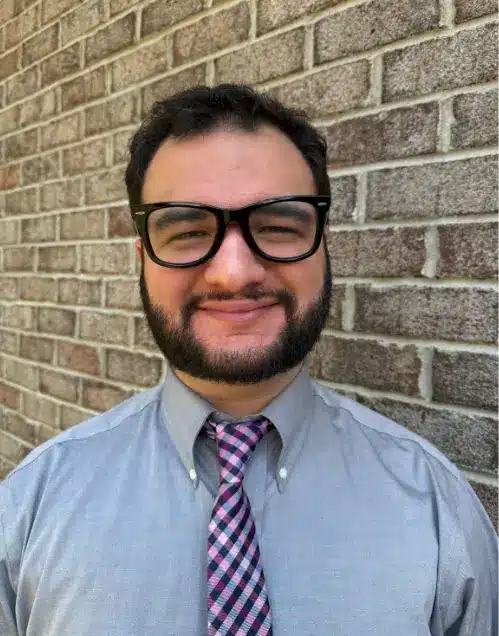
Tony Prieto is a marketing strategist at Answering Legal, a premier phone answering service built exclusively for the legal profession. He specializes in designing high-conversion legal intake architecture, eliminating missed opportunities, and helping law firms construct flawless first impressions for incoming leads.