Michal Petrzela, Partner at Lightyear Capital, joins the show to break down the multifaceted reality of working in private equity and how it differs from investment banking. Following Larry’s opening thoughts on non-traditional career trajectories, Michal shares his journey from Communist Czechoslovakia to Wall Street and explains how AI tools like Claude are reshaping due diligence.


What does it actually take to build a 20+ year career in private equity, and how does the industry truly differ from traditional investment banking? In this episode, Michal Petrzela, Partner and Management Committee Member at Lightyear Capital, demystifies the private equity playbook. He outlines how deep market research, executive relationship-building, financial modeling, and operational board oversight converge to build long-term enterprise value.
Michal shares his remarkable personal trajectory—growing up under Communism in Czechoslovakia, earning a swimming scholarship to Syracuse University, and climbing through accounting at Arthur Andersen and investment banking before finding his professional home at Lightyear Capital. He offers candid advice for aspiring financiers, proving that curiosity, resilience, and proactive networking often matter far more than an Ivy League pedigree.
Looking at the modern tech landscape, Michal provides a rare insider look at how private equity firms leverage cutting-edge AI tools like Claude to perform deeper due diligence faster. He also analyzes the macroeconomic risks and labor disruptions that automation presents to service-based portfolio companies.
What We Cover:
Private Equity vs. Investment Banking: Understanding why private equity focuses on long-term value creation and operational risk management rather than quick transactional advisory.
The Four Pillars of PE: Breaking down market research, executive networking, financial modeling, and operational board strategy.
From Communism to Capitalist: Michal’s journey from high school in Czechoslovakia to a US swimming scholarship at Syracuse University.
Bypassing the Ivy League Barrier: How non-traditional candidates can leverage accounting, lateral hires, and athletic networking to break into Wall Street.
Due Diligence Acceleration: How Lightyear Capital uses Claude to analyze vast datasets and deepen investment research in hours instead of days.
AI Risk in Portfolio Companies: Evaluating pricing pressures, labor automation, and structural disruptions in tech-enabled service businesses.
Larry Port (00:00):
Dream job or nightmare. It’s hard to know if a career that looks great on paper will actually lead you to the life you want to live. So welcome to Dream Job Cafe. I’m Larry Port. I’ll be asking different professionals the questions you won’t find anywhere else. So grab a coffee, settle in. This is Dream Job Cafe, sponsored by wayspark.co, where we help people navigate careers in a crazy world. Hey everybody. Welcome to another episode of the Dream Job Cafe podcast. Today, I have the pleasure of speaking with Michal Petrzela. He is a partner and a member of the management committee at Lightyear Capital, which is a big private equity company, and he is based in New York City. So Michal, thank you very much for joining us and welcome to the program.
Michal Petrzela (00:47):
Thank you for having me, Larry.
Larry Port (00:49):
So let’s get started. I mean, I think a lot of people that aren’t in the private equity industry only have a vague notion of what it is. Why don’t we start with what private equity is and how it might different from other forms of financing for companies?
Michal Petrzela (01:04):
Yes. So private equity is an investment business and there are other forms of investment companies, but we specialize on identifying privately held companies and trying to take an ownership position in those companies. And like any other investment sort of value proposition, we’re trying to work with the managers in those businesses to try to grow those companies, improve them, and then find potentially another owner, whether that can be a larger strategic, it could be an IPO, it could be another private equity firm.
Larry Port (01:41):
So it makes a lot of sense. And tell me a little bit about what your day is like. I’m guessing that some of it has to do with the actual operation of your business, but then there’s probably a lot of looking at other businesses and communication with other people. Could you tell us what that’s like?
Michal Petrzela (02:01):
Yeah, so a big part of my job is honestly is doing a lot of networking, trying to do research on what segments or sectors in the economy are attractive from an investment standpoint, and then really look and identify the businesses that we believe could be well positioned for receiving an investment and working with those and continue to build value. A big part of that is identifying those companies. It’s also networking with executives. So it’s sort of networking within those sectors to find successful executives, CEOs, and other executives that we could collaborate with and identifying those trends and then identifying the right businesses behind those trends. And ultimately it’s finding one of those opportunities or those companies that is willing to take an investment or is potentially interested in selling and doing the diligence work on how would we value this kind of business? If we were to buy this kind of a company, what would we actually do with it operationally working with the management team to drive continued value in the business?
Larry Port (03:16):
So there’s a lot of different moving pieces there and it sounds like there’s different kind of roles or interests that you might have. For someone who’s interested in research or equity research, it sounds like there’s a component of that. For those who like to work directly with people, it sounds like there’s a very strong component of that. Would you say that those are fair characteristics or what other people are drawn towards this role and would succeed in this kind of a role?
Michal Petrzela (03:45):
Yeah, that’s a good question. And I think one of the most interesting aspects of this job, it’s that it’s multifaceted and you’re really and using different muscles. And some you have strengths and some you benefit from having good teammates. I think this is a sport that’s much more of a team sport than an individual sport because we’re working in teams. But I think one of the muscles is research on markets and industries. So maybe like an equity research or macro research where you’re trying to size a market, you’re trying to identify the competitive dynamics in those markets, you’re trying to identify who are those businesses that are players in those markets, what kind of advantages they have in their market position. The second aspect of the job is relationship building. I mean, you got to go and sell the firm to owners of businesses that could be families, that could be professionally managed known businesses, and you’re trying to convince them that you could be the right partner and the right buyer for the business.
(04:53):
And so that’s another aspect. You’re trying to convince the management teams that you’d be a good partner to work with as an owner of the business to the business and to the people that are in the business. Third, I think there is a big aspect of the financial analysis that you’re doing on the business, trying to understand the P&L and the numbers and how to value the business and really assess the ultimate return on that investment that you could get if you were to invest in that business. So I think that’s another aspect of the work. And then finally, and this is where the team is important because not one person can do all of that well, is actually working with the team in somewhat of a board member partner capacity to really help them develop the operating plan. So it’s like what are we actually operating wise, what are we going to do with this business to continue to grow the product, expand the product, expand into new markets, whatever it may be, pricing strategies.
(05:57):
I mean, Larry, you’ve run a business, so you know what all those aspects are, but bringing those people and those expertise to the table and trying to grow in various different ways through best practices in those different functional operating elements.
Larry Port (06:15):
So it is a lot of hats and a lot of different kind of skill sets. And the one thing that I think is kind of interesting about what you do is how it’s almost like you take all these different elements of what’s going on. And I’d be interested in hearing about the research part of it because obviously there’s stuff that you’re reading in the business news and then you’re talking to CEOs and you have all these different things. And then it reminds me of that cotton candy machine. You’re just putting that cone in and you’re connecting all this stuff and creating something almost out of thin air when it comes to directions and a thesis about how to invest things. So can you talk a little bit about how the research is done without giving away trade secrets?
Michal Petrzela (06:59):
Yeah, I don’t think I would be giving out any trade secrets. I think it’s more about what do you come up with as the thesis for the right attractive kind of market conditions? But it could be a lot of reading, you’re taking third party reports and reading on the market and trying to really understand the dynamics of the market. So that could be just size of the market. It could be the basic things. It could be the growth of the market, the penetration, you get vended market and how much is it penetrated? Who are the competitors and all those aspects? But it’s really important, I think in our business that anybody can have access to those third party reports. So you want deeper insights and you really want to do as much of your own primary work versus the secondary sources of other people’s reports.
(07:52):
So you’re trying to do your own work. And that comes through really connecting with industry executives and those companies and really trying to get first party information on those businesses to try to deepen your thesis and around one of these markets. And ultimately, you’re trying to come up with a point of view on some of these statistics around the market size, the market growth, how much of the market is still available, for example, that people are still not using this product, but they should be using this product. And so there’s a good kind of what we like to call a green space within the market and really then trying to understand the competitive dynamics. What would make somebody’s company be able to compete better and therefore maybe grab more market share or grow above the market growth to create more value? And which are some of the companies that may have an inferior product that you could actually out compete?
(08:53):
And how durable are those advantages, those competitive advantages? What are the barriers to entry for the competition to effectively catch up or even get ahead? So how durable is that advantage as an important component as well?
Larry Port (09:08):
So these are so many different skills. Can you talk a little bit about what your journey has been like and how you ended up, whether it was from high school or college or how you went about getting to where you are right now?
Michal Petrzela (09:22):
Yeah. So I grew up in the Czech Republic, or back then it was Czechoslovakia. So it was
Larry Port (09:30):
Under communism at the time, right? It
Michal Petrzela (09:31):
Was under communism at the time. So you may find it interesting that I’m now a capitalist when I was growing up as a communist, but I sometimes like to say is when you’re growing up as a communist, you like to be a capitalist. I could
Larry Port (09:49):
Imagine.
Michal Petrzela (09:49):
Yeah. So I grew up there and then when the Cold War ended in 1990 and the Berlin Wall came down, things opened up. And I was in high school at the time. So I graduated from high school in 1992. And I really, at that time in that part of the world, things really opened up and we could travel freely for the first time in certainly my lifetime. And things were really exciting. And I was really, as a sort of a young person coming out of high school, very interested in going out and seeing the bigger world. And my interest was really in not studying and going to university in Czechoslovakia, but going and trying to go abroad. And I swam competitively and I got an opportunity to come to the US. I was recruited by Syracuse University on a scholarship, and that’s really what brought me to the US.
(10:39):
And that was now 1993, so 33 years ago, and I hadn’t returned back to Czechoslovakia. So I’ve been here ever since. But when I started at Syracuse, I actually wanted to be an architect because I had the scholarship. The coach said you can do anything but architecture. You won’t have the time to focus on swimming with the intensity of the architecture degree.
(11:04):
Overnight
Larry Port (11:04):
Projects.
Michal Petrzela (11:06):
What’d you say?
Larry Port (11:07):
They have a lot of overnight projects and all-nighters and stuff that they’re always pulling those guys. Yeah, I’ve seen
Michal Petrzela (11:12):
That. I think it was a five-year degree and he’s just like, “I’m only giving you a four-year scholarship.” So it was a couple of those things. And I think my second interest was in business, but I didn’t really know what to study within business, the Syracuse as a school of management. And I remember calling up my dad and saying, “I’m interested in business. What do you think I should study?” And he said, “Yo should study accounting. That’s the language of business. If you want to understand and learn business, you should have the basics of accounting.” And I think he drew from his own life where he was in business, but he really never trained as an accountant. He was trained more as an engineer, and I think felt like that was a big gap in understanding P&Ls and the financial aspects of business. And so I majored in accounting, I graduated, and the job to have with an accounting degree was to go join one of the big accounting firms.
(12:03):
And so I did that. I joined a firm called Arthur Anderson in New York City. And when I came to New York City, I learned about investment banking, about M&A, and I transitioned from Anderson into investment banking. And so I spent two years in investment banking, and then from there I went to business school. And in investment banking, I learned more about mergers and acquisitions. I learned about the investor side of the business, and I became interested in being in private equity. And so after business school, or actually during business school, I interned with Lightyear Capital, which was the firm that I’m currently at where I’m a partner, and I loved the job. I loved it for the variety of the different skills and muscles that you’re losing in that job. I feel like I was being challenged every day in a different way, and I liked that variety.
(12:52):
And I joined basically on the ground floor of Lightyear in 2005, and I’ve been here ever since. So I’ve been atLightyear now for 21 years.
Larry Port (13:01):
Wow. It’s a great story. And some of the things that when you talk about your journey, because I know a lot of kids who are currently in college and stuff, and they’re all concerned about internships and getting in at the right time and so on and so forth, and they feel like if they make a single wrong move, they’re doomed. Can you talk a little bit about, is that truly the way it is from the other side of the table, or is there room for people to explore or at least find paths in? What’s your take on it,
Michal Petrzela (13:34):
Getting
Larry Port (13:34):
Started in the business world?
Michal Petrzela (13:36):
I think when you’re young, I think there’s a lot of different ways you can get to places. I mean, I myself kind of faced some of those maybe obstacles. Number one would be coming out of Syracuse, none of the investment banks in New York City would recruit out of Syracuse. So I didn’t even know about investment banking. I didn’t know it existed. I wanted to be in New York.
Larry Port (14:02):
They go for Ivys, don’t they?
Michal Petrzela (14:04):
Yeah. They
Larry Port (14:04):
Go for Ivy League
Michal Petrzela (14:05):
Kids a lot of times. I think it changed a little bit now, but they used to go for basically Ivy League students. And it didn’t matter that you were earning your business degree. If you were a top student at an Ivy, even with a history major, you would get the job over the top accounting student at Syracuse. Gotcha.
Larry Port (14:24):
Okay.
Michal Petrzela (14:24):
They have more competition and they recruit out of other schools. So back then it was like that. And so I found my way into New York City. I found my way into an accounting firm. I then met somebody actually through swimming in New York City that worked in banking, and I was persistent in being interested in the job, and they gave me a shot and I came in as the lateral hire, which is not very common. And I spent two years in investment banking, learning that business. And so I think the networking aspect of for any young person coming out of school and just getting out there, connecting with good people or people that are successful that can help them, I think is really important. And I think you can find your way into the right field in a variety of different ways. You don’t have to be so focused on this is the…
(15:26):
I mean, you can argue it’s certainly an easier path if you go to an Ivy League to go into banking and then to go into private equity, but it’s not the only path at all. And I think many firms today will value the people that have maybe had to work a little harder to get. And I think when we recruit now, I often think about what kind of resiliency has this person had to face in getting into a certain industry. And I think that might make them even more loyal and maybe more hardworking person.
Larry Port (15:58):
That’s interesting. And the other thing that you said that I want to point out, which was kind of just a small aside, but I think it’s a huge deal, I can’t even begin to tell you how many people I’ve met through sports. You met this contact through swimming. And so even if you’re not an athlete, learn pickleball or join a gym or do something because when you’re offline and you’re not on your phone and you’re in an environment where you’re meeting people, conversations happen and as long as you’re in the stew, it can work. I guess let me ask you this question. What personality types really should not be in this field? I say this with when people think about entrepreneurship, I’m like, “Well, listen, if you can’t handle big emotional swings, it might not be the career for
Michal Petrzela (16:46):
You.”
Larry Port (16:49):
What’s your take on maybe who should run in the opposite direction?
Michal Petrzela (16:53):
I mean, it is a team sport, so you could argue that there’s value for different skill sets if you’re on a team. I mean, you can contribute in many different ways. But I would say if you’re not interested in investing, at the core of what we do is investing, which means you got to be really curious about businesses and how those businesses work. Curiosity is really, really important in that direction. Then I would argue you should think twice before wanting to be in private equity. If the draw is, I just want to make a lot of money, but I’m not really interested in… I could care less about investing, then I don’t think it’s going to be a good match. I do think it’s also an industry where you’re building a lot of relationships and connecting with people. So being naturally curious in getting to know people and learning from other people is an important skillset.
(18:00):
So I’d say those two come to the top of my mind.
Larry Port (18:05):
Okay. And I guess one distinction, there’s a lot of deals in your business and I know some of your… I mean, I don’t know how often deals happen, whereas with investment banking, they pretty much work on just deals. So can you talk a little bit about maybe if somebody’s thinking about who might go into investment banking versus who might go into private equity?
Michal Petrzela (18:33):
I think the difference between private equity and investment banking, investment banking is more of a transactional business. So you’re there to provide the advice and execute on the transaction. You’re not really thinking as much about the risk management, like is this a good investment and you’re putting your money behind that investment and then working on the value creation part of the investment strategy. So I think I would say that investment banking is probably much more of a relationship business even, and it’s all about relationships and connecting with people. I think private equity relationships are important, but there is a deeper intellectual, I don’t want to say investment bank, a deeper kind of intellectual thinking skillset that’s needed in private equity.
Larry Port (19:32):
Yeah. And it seems like also, I don’t know what the work-life balance would be in private equity, but the guys that I know in investment banking that are just constantly doing deals, it’s not very strong. In private equity, I’m sure during deals it can be intense, but would you say in general that you’re able to have… What I like to do is I say the little league test, on a scale of one to 10, how able are you to coach a little league team or a soccer team? And then the same with family vacations, are those things possibilities or is time
Michal Petrzela (20:08):
Scarce? I think time’s the scarce in both. These are highly competitive industries, and if you want to do well, you’re going to have a lot of pressures on your time. But I think it’s also, at the end of the day, it’s about how you manage your own time, whether you’re in banking or private equity. So I wouldn’t think that I would draw a line between work-life balance is better in private equity than investment banking.
Larry Port (20:40):
Okay. So they both have a lot of time commitments to them.
Michal Petrzela (20:44):
Yeah, I think it’s –
Larry Port (20:45):
All right.
Michal Petrzela (20:46):
In one end, you got the life cycle of a deal, and if you’re in a deal, you’re working at all hours. And in private equity, there’s always something happening at some portfolio companies, so you’re never quite off the hook.
Larry Port (21:00):
Oh, geez. All right. So how about this? Let’s finish the conversation with how AI is affecting the industry. Is it going to change how you work? Is it changing the type of people you hire? And how do you see all this playing out?
Michal Petrzela (21:15):
Yeah. I would want to AI in our industry and then AI and the impact on our investments and how we think about our investments. That’s two different lenses on it. So look, it’s having an impact on both. We are now using AI to due diligence where our analysts and associates and VPs that do a lot of the financial modeling are using Klot and mostly Klot in our shop to do a lot of the analytical work. I mean, it’s amazing the power of AI, stuff that would take maybe days or certainly many, many, many hours can be done very quickly on large sets of data. So I think that’s been a big use case. I think the ability to do due diligence on companies has been deepened by AI. I would say argue that we can now do more diligence because of AI. It’s not like we’re doing less, we’re actually doing more.
(22:20):
So it’s like an example of AI actually creating more work potentially or more ways to assess the companies. So we’ve put a strategy in place at what year we had an AI summit, we had an AI hackathon. We’re constantly trying to build different agents and workflows to continue to automate more of what we do. This has historically been a very paper intensive or Excel spreadsheet intensive industry. So I think there’s a lot of opportunity for automation and research efficiencies and things like that. And then on the investing side, it’s obviously made the decision making around new investments maybe more challenging because you got to think about the impact of AI and the impact on any company now. How much can it change over the next 10 years because of AI technology? So that’s made the decision a bit more complicated.
Larry Port (23:24):
Is it because there might be a lower barrier to entry for certain companies? When you look at a company now, how do you think about AI affecting those companies?
Michal Petrzela (23:38):
I think if you have companies like services businesses that have a lot of labor type of tasks, but a repetitive task that could potentially get automated by AI, you got to really think about the structure of that industry. I mean, on one end you could say, okay, all those efficiencies could accrue to the benefit of the company because you could automate a lot of that labor and increase your margin, but that’s also going to create potentially a pricing pressure. So it could put a lot of pressure on the revenue line, but it could also make maybe that type of service more likely to be enforced by the clients and they could now deploy AI themselves and do that work for themselves through AI. So it could have a disruptive effect on the company. Obviously there’s a lot of talk about software and the future of software with AI, and I would argue AI is just another piece of software, and so it’s more like there’ll be more software, not less software.
(24:43):
It’s just a question of how is that going to continue to evolve how the existing software companies are going to continue to evolve and grow in value.
Larry Port (24:55):
I’ll tell you what’s going to be a good job is software guys that are going to have to come in and clean up the mess that all this AI code has made, just similar to the kind of software crisis in the 1970s with the spaghetti code. So I think I can see, and I’ve heard reports already that people are going in and having to dig people out of the AI mess that they made.
Michal Petrzela (25:14):
I could see that.
Larry Port (25:15):
Interesting. Well, Michal, this has been a fantastic conversation and thank you very much for giving us a glimpse of the private equity industry.
Michal Petrzela (25:25):
Thanks, Larry. It was fun to be with you and I enjoyed the conversation too.
Larry Port (25:30):
Yes. So if you haven’t already, please like this podcast or share it with a friend. And if you can, please be grateful for something today. Thank you. Thanks for listening. Don’t forget to like and subscribe to Dream Job Cafe on Spotify, Apple Podcasts, or wherever you listen. And don’t forget to check out wayspark.co, where we help people navigate careers in a crazy world.
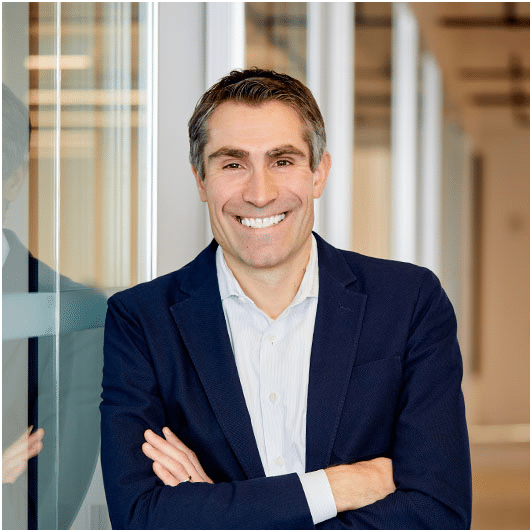
Michal Petrzela is a Partner at Lightyear Capital with over 20 years of private equity experience specializing in financial services and tech-enabled businesses. A former Syracuse University swimmer, he holds an accounting degree and an MBA, focusing on growth investments and operational strategy.