Dr. Tom Ingegno, a seasoned acupuncture practitioner and clinic owner, joins the show to discuss his escape from the grueling “weed-out” culture of traditional medical school paths. Following Larry’s commentary on the intellectual hazing of pre-med programs, Tom reveals how a pivot to East Asian medicine and Daoist philosophy led him to a career of sustainable joy.

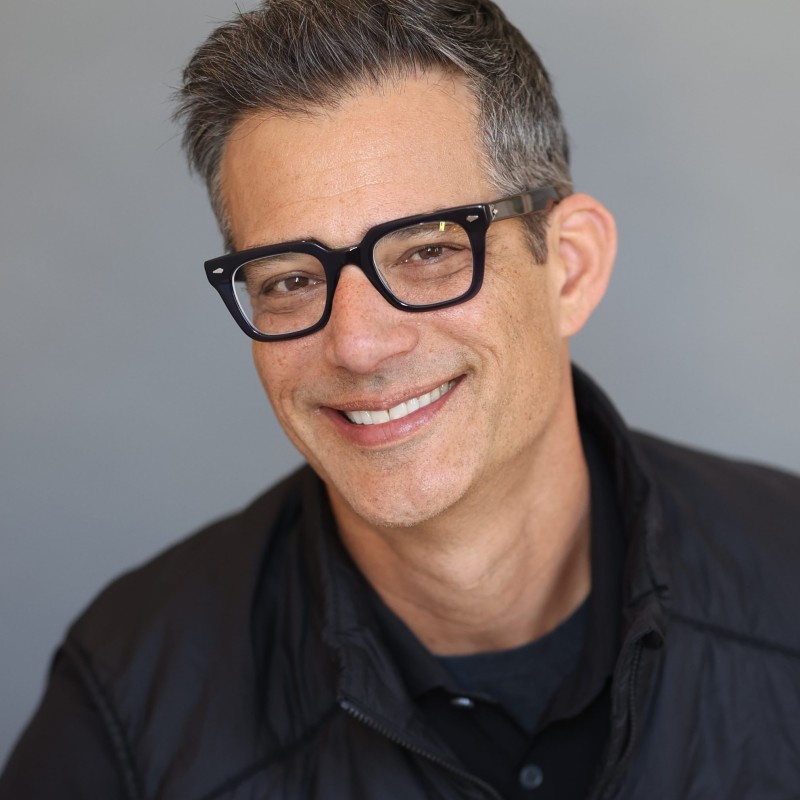
What happens when the “dream” of becoming an MD turns into a nightmare of intellectual hazing and organic chemistry? In this episode, Dr. Tom Ingegno shares his raw and honest journey from the brink of pre-med burnout to the fulfilling world of East Asian medicine.
Dr. Tom explains how he escaped the high-pressure “weed-out” classes—designed more for academic prestige than producing empathetic practitioners—and found his true calling through a serendipitous postcard and a love for Daoist philosophy. Today, he operates a thriving private acupuncture practice where he views health as a systemic balance rather than a series of reactive fixes.
This is a must-listen for anyone in the 2026 labor market who feels “stuck” in a traditional path and is ready to discover a career they would happily do for free. We dive into the mindset shift required to move from the clinical grind to the role of a “half doctor, half shaman” who treats the whole person.
Key Takeaways:
The “Weed-Out” Reality: Why Bio 101 and Organic Chemistry are often more about endurance than preparing you to be a good doctor.
The Power of Serendipity: How being open to “circular logic” and unexpected opportunities can change your career trajectory.
Systemic Health: Moving away from reactive medicine to treat the body as a balanced, interconnected system.
Sustainable Joy: Why Dr. Tom says you should “die with your scrubs on” because the work is so intrinsically rewarding.
Private Practice Ownership: The transition from student to successful entrepreneur in the holistic health space.
Larry Port (00:00):
Dream job or nightmare? It’s hard to know if a career that looks great on paper will actually lead you to the life you want to live. So welcome to Dream Job Cafe. I’m Larry Port. I’ll be asking different professionals the questions you won’t find anywhere else. So grab a coffee, settle in. This is Dream Job Cafe.
Dr. Tom Ingegno (00:19):
Sponsored by Wayspark.co, where we help people navigate careers in a crazy world.
Larry Port (00:25):
Hello, everybody, and welcome to another episode of the Dream Job Cafe Podcast. Today it’s my pleasure to interview Dr. Tom Ingegno. He’s an acupuncturist in private practice and he is in Baltimore, Maryland. So Tom, Dr. Tom, welcome.
Dr. Tom Ingegno (00:42):
Oh, thank you so much for having me, man. I’m super excited to be here. I’m glad you took a shot on the weirdo.
Larry Port (00:48):
All
Dr. Tom Ingegno (00:49):
Right. Yes.
Larry Port (00:50):
Me too. So let’s talk about this. So I don’t know that a lot of people, especially our audience because they tend to be younger people, have been to an acupuncturist. So what is it that you do?
Dr. Tom Ingegno (01:03):
So surprisingly, and I’ll comment on that and tell you what the hell I do in a sec. But more and more, I started 25 years ago to the day. I mentioned that in the pre-interview. Congratulations. Yeah, thank you. And when I started, they were estimating about one in 10 Americans have been to an acupuncturist. And I got to say after 25 years, that’s probably at least three out of 10. I don’t have the exact data on that, but no one ever does have it completely accurate. And more and more with the focus on health, we’re seeing the healthcare system not serving people the way it’s supposed to, and that’s everything from the drug companies to the insurance companies. And a lot of Western practitioners having their hands tied by those two organizations where they can’t do what’s best for the patient and they have to get them in and out in a certain speed to cover their costs and all that.
(02:03):
And more and more people are turning to traditional medicines. And you’re seeing a lot in young folks. I rolled my eyes when somebody asked me to give them a quote on ChinaMaxxing. What is that? And that’s vaxing with two Xs. And the Gen X in me went, “That’s the dumbest thing I’ve ever heard.” But the idea of that people are looking to East Asian medicine for a lot of these daily wellness routines and tips. So when people hear East Asian medicine, and I say I’m an East Asian medicine practitioner because I do Japanese style acupuncture, but I have a lot of stuff that comes from China and it’s not just acupuncture, it’s herbal medicine, it’s meditation, it’s qigong, breathwork and movement. It is dietary practices, it’s lifestyle practices. So when they said China maxing, they were actually referring to drinking warm water in the morning.
(03:01):
And you’re like, yeah, okay, that’s not bad. But once again, this medicine fits the container it’s raised in. So East Asian medicine is a living, evolving thing that changed during the eras it was in the changes as it moves from China to Korea to Japan to Laos to Cambodia. Everybody has their own little spin and certainly now in America we’re seeing some real evolutions even here that are unique including Tupac’s stepfather. I mean, it is so crazy to me. It’s so rich. It is the history. I’m not a history buff, but if you say something, “Hey, my acupuncturist said this. ” I can go, “Oh, I know where they trained. I know what that theory is. ” And I can tell you the time and country that might’ve originated in. So this great, rich thousands of years of history, but yeah, I mean, at the end of the day, I put needles in people to make them feel better.
(04:03):
I mean, if we want to dumb it down to the brass tacks.
Larry Port (04:07):
So you make people feel better, but do you do some of these other modalities
Dr. Tom Ingegno (04:11):
That you were talking about before? Absolutely. This is a weird thing when regulations came through. They didn’t know how to regulate herbs. How are you going to regulate meditation? How are you going to regulate diet and lifestyle? Yes, there are dieticians. There’s a board of dieticians and there’s clinical nutritionists, but how are you going to put the framework and say, “Well, this is the Asian take on it. ” So they couldn’t really regulate that. So putting needles in and out of people, yes, you can definitely regulate that and you should. So that is the part that my license kind of covers, but we have these discussions all day. I talk about meditation until I turn blue in the face. I’m over seven years of daily meditation without ever missing a day and I’ve been meditating longer than I’ve been an acupuncturist. So yes, these things infinitely improve people’s lifestyle, but when people come to me in clinic, they’re coming with an actual condition.
(05:10):
Right now I see a lot of chronic illness and injury, including chronic Lyme, diseases like MS, cancer recovery is a big one. And then everything from mental health issues, anxiety and depression being the two biggest ones.
Larry Port (05:26):
Yeah, I would think so. I know some people that have been treated for anxiety through acupuncture and it seemed to really help them. Now correct me here if I have this wrong, but I know that a lot of traditional Western medicine is reactive, meaning that you get sick, Western medicine will come and sort you out. My understanding from other different frames of thought when it comes to medicine, and I don’t know if this is Eastern or not, is that it’s more of a systemic type of thing that you do as an ongoing basis to prevent things from happening in the first place. Is that right? I’m
Dr. Tom Ingegno (05:59):
Glad you said that, Larry. There’s at least three or four different versions of this story. There’s a famous physician, he was a Daoist as well. Somebody asked him, “Well, you have brothers, they’re physicians as well.” They didn’t differentiate acupuncture or physician. The acupuncturist did surgery too. And they said, “Well, you got to be the best because you’re the famous one.” And he goes, “No, my brother’s the best. He treats the disease before it manifests, my oldest.” And he goes, “Well, you got to be better than your middle brother.” And he goes, “No, no, no. He treats the disease when the first symptoms show up.” And then they go, “Well, then how come you’re famous if those two are better than you? ” And he goes, “Well, because they come to me when the disease is full blown and they see me running around doing all these treatments so I look like I’m doing more.” But yes, you’re 100% right.
(06:53):
The idea is can we course correct before that disease sets up a big foothold? So before, what does that tap on the shoulder that says, “Hey, Larry, you got to make an adjustment and then we want to make that adjustment before that thing before you break the leg, well, maybe let’s take a look at your shoes, tie those shoe laces, right? What can we do that’s preventative to keep you from getting hurt?” Now what ends up happening in practice is people don’t want to invest the time or the money beforehand and they come to us after they’ve exhausted all the other options. So they come to us and they go, “The doctors don’t know what’s wrong. I have this working diagnosis. I’m on these medications. They’re not working.” And then they get to me and they kind of want a miracle and I’m not selling that.
(07:46):
I’m selling it, how can we get your body to help heal itself? And in a lot of cases, that’s actually what they need. It’s not a quick magic bullet. It’s not flipping a light switch, but slowly, progressively, we can move them back to health and you also have to be honest with people. So that health may not be, “Hey, you look like a Donnis and your brain is working perfectly and you never have a bad day in your life, but it can be functionally better than it is right now.
Larry Port (08:16):
So tell me what your day’s like. So you have an office, people come in. Is it nine to five? How many patients you see in a day?
Dr. Tom Ingegno (08:26):
So it’s varied over the years and now I’m a little older. I have an associate that I think the world of who’s probably seeing more patients than me. And I have these long-term patients that have been with me. I think the oldest or the longest patient, I shouldn’t call her the oldest. The longest patient has been with me over 13 years, probably about 14, 15. And I don’t see them every week. I see them when they need to come in. But on a good day, I work an eight-hour shift and I see two to three patients an hour. I’m averaging probably 16 patients a shift and everybody’s there for about an hour and whatever somebody comes in and tells me that day, we adjust the treatment. So it’s variations on a theme. People have a reason that drove them into the office, but while they’re there, they go, ” Hey, I wasn’t sleeping so good this week.
(09:22):
Okay, I ate something weird the other day, my stomach’s a little upset. “Or,” Look, it’s raining outside. I always get that squeeze in my head. It’s not a full-blown headache. What can you do about that? “And that’s really where I think its best use is in these kind of conditions. Maintenance, whatever that looks like for the person. And some people, it’s once a quarter. Some people go, ” Oh, allergy season in Maryland is a nightmare. Let me start coming in February before the pollen starts dropping and front load treatments. “So I love that and I love being able to educate patients in this is how you better quarterback your own healthcare. Can I get you doing the preventative things and know when to need me rather than just have me tell you what’s best, right? I want a treatment plan to be a living, breathing thing.
Larry Port (10:21):
Wow. So how did you get into this? When you were in high school, did you have a crazy acupuncture experience or
Dr. Tom Ingegno (10:29):
Something? No, no. I actually didn’t have my first acupuncture session until I was in school.
(10:37):
Like most people, your parents want the best for you. They tell you you’re smart and you’re going to be an MD or a lawyer or a banker, business executive like that little boxes song goes. But within that, I got to college, I was pre-med and there was a room full of really smart-ass people in Bio 101 and by the midterm there was half that size and by the end of that first semester there was about a quarter of that size. And now it wasn’t just who was the smartest, it was who can jam all this crap in their head. And I started to see it more as intellectual hazing than don’t you want your doctor to be refreshed and enjoyable. And this is all pre-med stuff. This is Bio 101.This isn’t anatomy, this isn’t physiology, this isn’t necessarily helpful to what a practitioner needs in a clinic.
(11:39):
This was weed you out so we can get you into med school and look really good as an undergraduate program.
Larry Port (11:44):
And organic chemistry is another
Dr. Tom Ingegno (11:46):
Big weed out for too. Exactly, right? And why? We’re just going to beat the hell out of you.
(11:51):
Ask a doctor the chemical diagram of any drug they’re giving and they’re going to say,” I don’t know that. “But they’re like, ” We need to know that. We need to know how this covalent bond holds this together. “And it’s like, ” No, that does not make you a better practitioner. “So I was starting to get burnt out there and I was at Loyola College here in Maryland. I ran out of money, so I moved to a different school, but I met a doctor, an internal medicine, a surgeon, a GI surgeon, Dr. Radish and he was teaching me vertebrate morphology and that’s everything from starfish to humans. And it was a 45-minute class three times a week and this guy lived on coffee and I don’t know what else, brilliant surgeon, extremely intelligent. And he said,” Look, for a 45-minute class, I’m doing eight hours of prep.
(12:46):
“And his class kicked my ass. But I said,” Look, man, I’m struggling here. Can we meet your adjunct? You don’t have office hours. “We sat down one Sunday in the quad for three hours.
Larry Port (13:01):
Really?
Dr. Tom Ingegno (13:02):
And he rocked my world. He said,” I just came from yoga. “I said,” What kind of yoga? “He goes,” The kind where you stand on your head, I don’t know. “But he told me a story of him being in the operating room as an intern or a resident early on and they put a human heart in his hand and he passed out and I said,” Oh shit, I don’t want to be a doctor. “It was very obvious. It’s like, look, man, I like the stuff on the inside, staying on the inside. Now while I was taking this killer vertebrate morphology class, I was in a philosophy class. It happened to be Eastern philosophy and I really loved these Daoist concepts of balance. How do we talk about balance in nature?
Larry Port (13:50):
Not to
Dr. Tom Ingegno (13:50):
Interrupt,
Larry Port (13:51):
But was this your first exposure to Eastern philosophy?
Dr. Tom Ingegno (13:54):
No, I had picked up a book called Opening the Dragon Gate, which was a Daoist sect in it’s still in China and I literally read it over winter break and I was like, ” Wow, there’s something here. This is pretty
Larry Port (14:13):
Cool. “So Eastern philosophy from the get- go kind of grabbed you.
Dr. Tom Ingegno (14:19):
I took a Tai Chi elective. I did Tai Chi when I went home for the summer and I guess I had that inclination in me and these weird serendipitous things happened. My junior year, I ran out of money. They gave me a bigger loan and took away some need-based scholarships and my parents were like, ” We’re not making you come out $40,000 more in debt. Why don’t you go to this DO program in our backyard? “I got into the undergrad and the idea was like you’ll just roll right into this DO program and who cares? Your DOMD, no one knows the difference. Great. Well, the junior year intersession over that winter break- Oh wait, by
Larry Port (15:06):
The way, just to back up for
Dr. Tom Ingegno (15:07):
Those that not
Larry Port (15:08):
In the note, that’s a doctor of osteopathic medicine.
Dr. Tom Ingegno (15:10):
Osteopathic medicine. Yeah.
Larry Port (15:11):
Which is more of a holistic approach than an
Dr. Tom Ingegno (15:14):
MD. Theoretically. Theoretically. But they’re kind of synonymous. Now they’re interchangeable with MDs. They’re in hospitals. They have the same rights. I know a lot of DOs down here. One of them’s the head of the emergency department at University of Maryland and yes, they take a couple of manipulation courses like chiropractors. Chiropractors don’t like them because you’re adjusting the spine and you’re only doing this kind of in two classes and DOs don’t think- But the whole idea is
Larry Port (15:50):
That it’s a litle bit
Dr. Tom Ingegno (15:51):
More of a broader deal. It definitely is a litle bit more holistic. I’ll give you that. In practice, it ends up that they’re doing what an MD would do in mostly hospital settings. Private practice may be different. So you’re
Larry Port (16:03):
In the DO program.
Dr. Tom Ingegno (16:04):
Well, I’m in the undergrad leading up to that in my junior year and winter intercession happens and I get a postcard in the mail for an acupuncture program. I go to the open house and I come home and I’m filling out the application before I even talk to my parents.
Larry Port (16:21):
Wow. That’s like the best piece of direct mail advertising I think I’ve ever
Dr. Tom Ingegno (16:25):
Heard of. And the crazy thing was the undergrad program was 10 minutes down the road, one direction from my parents. The acupuncture school was 10 minutes down the road from the other. And the acupuncture program was a master’s degree level that used to be entry level and I had enough undergrad credits between high school advanced placement, things I had taken at Loyola and things I had taken at this New York college to get entry into this master’s program. So my second semester, my junior year, I was taking 32 credits between the acupuncture program and the pre-med program. By the end of that semester, I convinced my parents that yes, this was a legitimate master’s degree. They also gave me a bachelor’s in professional healthcare science and I was able to drop my undergrad program and skip my senior year of college.
Larry Port (17:29):
Wow. So there is a lot of real serendipitous things that happened to you along the way and you lived in a place where there were options, which was great. That’s phenomenal. Let me ask you this kind of question. Are there certain people that you think would be good at this career and other people who would be terrible at this career?
Dr. Tom Ingegno (17:53):
Yeah. Some other acupuncturists in both cases. So I mean really this is not a job for people that are not people. Yeah, sure. You can get by in Western medicine and just give me the brass tacks. I think there’s some of that breeding of this kind of super computer. Let me remember everything that I was ever taught. You’re going to say things to me and that’s going to trigger an output response and boom, you’re going. Yeah. Well, a
Larry Port (18:30):
Lot of them are like science kind of nerds, not all of them, but
Dr. Tom Ingegno (18:33):
A lot of them
Larry Port (18:33):
Are.
Dr. Tom Ingegno (18:33):
And that’s great. And that’s great. But if you want to spend time with people, if you want to know what their families are like, if you want to know everything about people, this is a better career for you. And if you are okay with what I’ll call circular logic, A plus B does not always equal C. Sometimes you start at C, sometimes C is never part of the equation and you’re okay looking at the whole picture. It’s not, hey, this guy’s knee is messed up. Yes, he hurt his knee, but what else is going around with this whole person and how are we going to help that? Why? Because if I help the whole person, guess what? The knee gets better too. But yes, you should address some of the symptoms. Why? Because that’s what they’re there for. So it is a whole system that isn’t only unique to Chinese medicine, but martial arts.
(19:29):
I do an internal martial arts style called Shingy. It’s got five elements. Well, those are the same five elements we have in acupuncture. It’s the same five elements we talk about in herbal medicine. It’s the same five elements they talk about in Asian music. It’s the same five elements they use to balance in Feng Shui or art or calligraphy. So it is this thing that is a whole system that innovates East Asian culture as a whole and those people that really dig that, those people that really understand that do well in this field.
Larry Port (20:06):
So if some people are interested in maybe they’re some sort of East Asian studies variant
Dr. Tom Ingegno (20:13):
Major
Larry Port (20:14):
And they’re fascinated with the philosophy, they’re fascinated with the aesthetics that it might just be something for them to take a look at, you think?
Dr. Tom Ingegno (20:22):
Yeah, absolutely. And what I’m seeing now, the trend of newer acupuncture students, this has always been a second or a third career for people. I was the oddball. I graduated at 24, the average age of a student was 35. And what seems to be happening is a lot of nurses are going into it. They’re looking for a better way. They’re looking for more patient face-to-face time and I think they’re going to be amazing at carrying the torch because they’ve got a foot in both worlds. I had to learn the Western to kind of catch up and I had to be able to explain acupuncture in a way that wasn’t devaluing these concepts like chi and meridians, but could do it in a Western mindset that fits somebody coming in where their eyes are not just going to glaze over and they’re going to think I’m a nut job.
(21:17):
But let’s talk about chi flow in terms of autonomic nervous system regulation. Let’s talk about getting you out of fight or flight. Let’s talk about blood flow to areas and people in the West understand that and we say, “This is what we call qi. This is what we mean by that. ”
Larry Port (21:33):
Yeah. I feel like, and we touched on this earlier, when I was growing up, acupuncture was maybe kind of more on the Ugabuga side of things, but now it’s like the domain of people who work on Wall Street and lawyers and everybody.
Dr. Tom Ingegno (21:49):
So
Larry Port (21:49):
It’s like pervaded society, which would make me think that the field is growing, not just because of that, but also it’s an aging population. You got all these baby boomers
Dr. Tom Ingegno (22:00):
Coming.
Larry Port (22:00):
Is it the kind of thing where you see the field growing? Are there a lot of opportunities?
Dr. Tom Ingegno (22:05):
It is weird. I survived those first few years where I was cutting my teeth because I was okay being broke. I was young enough, I wasn’t married, I didn’t have kids. There aren’t so many jobs out there and part of that is the current economy, but most of us end up going into solo practice by ourselves. At my biggest, I had three subcontractors. I had three associates and now I have one and once again, a reflection of this sign of the current economic times, but it’s hard to wear so many hats. Some of us are really good at what we do and we know nothing of business. So the little I know about business was hard earned and I got punched in the face a lot, but because of this particulars around my coming up and evolution, I was able to survive.
(23:16):
If you become a nurse, guess what? There is a hospital somewhere. There is a lab, there is a private clinic that will hire you For acupuncturists, it’s a big gamble to hire a rookie acupuncturist as somebody that has been in the field for a while and there aren’t too many of those around. There’s hospitals that hire, but they have so many rules and regulations that not everybody loves those jobs either. Some people really do. It’s an amazing field. It’s super rewarding, but that getting your foot in the door and building a practice and figuring all that out, I will say there’s definitely a lot of people that have figured that out better than I have. I’ll put my clinical skill up against them, but they probably are better business people than me.
Larry Port (24:10):
Well, I observed this and prior to this, I did a software company that sold two small law firms and lawyers are in the same boat. They go to law school and the law schools, they know that 88% of them are going to end up in small firms, but they do nothing to teach them about running a business. So lawyers, doctors, a lot of these professionals that end up in private practice face the same kind of issues. So I always thought that in some of these schools where they know that this is going to be the fate, that there should be some basic business stuff where they teach a
Dr. Tom Ingegno (24:47):
Litle bit of accounting. My business class was a joke and we don’t need to talk about him, but I’ve got some words for him 25 years later. He still seems to be a charlatan. Within that, I think chiropractors really, they harp a lot on business when they’re in school and I rented from a chiropractor first and I owe a lot to those chiropractors- Isn’t that interesting? … for showing me, “Hey, look, here’s how you deal with insurance. Look, here’s how you book patients. Here’s how you do this. Here’s how you do that. ” And certainly the chiropractor I rented from retired, he had a couple that he sold to that were just a couple years older than me, but watching those systems in place allowed me to at least fail forward and I think that was important. And then when I came down to Maryland on my own, I had to do it on a shoestring budget.
(25:51):
But once again, I was married but we didn’t have kids so being broke was okay.
Larry Port (25:57):
Yeah. Well, I think that’s the best way to do it. You don’t want to go into it flush. You want to go into it like having to make your own way, I think. But
Dr. Tom Ingegno (26:04):
Again,
Larry Port (26:06):
I didn’t get Silicon Valley money when I did my software company, so it’s just my own personal
Dr. Tom Ingegno (26:10):
Beliefs. No, no, no. I told my associate who I absolutely adore, I mentioned that before I said, “Hey, look, we’re having this problem right now and I’m not telling you to scare you. I don’t want you to think, oh my God, we’re going under or anything like this. I’m just telling you for the day you own your own clinic.” And she goes, “Oh, why would I ever want to do that? ” And I’m like, “Fuck, you’re smarter than me too.” Oh, I didn’t ask if we could curse or not.
Larry Port (26:32):
Listen, these are people confronting the real world. They can take a swear word or two. That’s fine.
Dr. Tom Ingegno (26:37):
Yeah. Well, I’ve gotten in trouble for my mouth
Larry Port (26:41):
Before. Well, let me put it this way. It does sound though that if this is the kind of field that somebody is interested in going into, at some point they probably will end up in private practice.
Dr. Tom Ingegno (26:52):
Yeah, more than likely. And look, there are still some jobs around. There’s some great practices in the area. Mine’s better, but theirs might be bigger. I’ll say it. Actually, I’ll text those two after I get off. Let them know I made fun of them. But within that, there are some places that are hiring, but yeah, you should kind of figure it out on your own. A lot of people will rent a room that we’re starting to see this model come up where it’s shared space and I like that because it’s a low risk. There’s a lot of people that might have chronologically they’ve been out for a while, but they might be doing one or two shifts a week and not really seeing too many patients. They’re still acupuncturists, but they may not … For me, it’s a shame that entry level is not providing somebody enough to be a full-time practitioner and that’s external forces.
(27:53):
Some of us want to buck the system and we don’t want to take insurance and yes, that’s its own ton of problems. But within that, it’s an amazing field that’s been great for me. I mean, I could list things that I never thought I would’ve done.
Larry Port (28:12):
How would you say your … This is how we quantify work-life balance on this show. So on a scale of one to 10, how likely are you to be able to attend a family dinner at night?
Dr. Tom Ingegno (28:21):
Well, being self-employed, you set your own schedule. My hours have changed since my kids have gotten older and things like that. And 2024 was a record year for me and I was working two days a week. I was still recording three podcasts a week and I was promoting my book and then 2025 hit and it was like, “Oh, you got to tighten the belt everywhere and let some contractors go. ” And hey, guess who’s doing the lion share of the work again? Me. But I made sure I was home to pick up the kids and I could drop my younger one off at school and I hope they see that. Sure. They will one day. Yeah. And they’ll understand, but the sacrifices that you make to be there, work-life balance is a funny concept to me. We brought on a new massage therapist and literally today he goes, “What do you plan on doing when you retire?” I go, “No, you die with your scrubs on.
(29:23):
” And that’s not … I used to say that as like I’m never getting out of clinic, but you just get better. You get better. You have more insights, you have more experience. I don’t ever want to not do this. You give me a lifetime supply of all the money I could ever want. I’m going to do this. I might do it for free. I might do it less frequently, but East Asian medicine, if you want to get good at this, you walk the walk.
(29:51):
Look, I’m a loudmouth Italian from Long Island, and I don’t look the part, but I I have to do that in order to give credit to the people that came before me. And there’s an expression when drinking water remember the source. And the history’s a little convoluted. We’ve lost a lot of teachings. Not every person’s going to get remembered, but I got to remember where this came from. I got to remember those people that gave it to me and those people that came before them, those people going back that were writing those old texts and those people that figured this stuff out. It didn’t just get handed down from heaven as much as I would love that story to be true. A lot of people looked at this very scientifically over thousands of years and wrote stuf down and passed it on and shared it with their students.
(30:50):
And then it eventually got to my bald white ass and I have to thank them every day. And in doing that, that means I have to meditate and I have to do my qigong and I have to eat the way I’m supposed to and I have to move my body like the way I’m supposed to. And I have to carry the torch for the next generation, which is why I’m so glad you had me on the show. Hopefully I inspire one or two other people that think a little bit differently to at least call an acupuncture school. I mean, 25 years of doing this, my intern now used to be my office manager who looked at me one day and said, “I know what I want to do with my life. I want to go to acupuncture school.” And I fucking cried in the lobby.
(31:39):
I’ve had that happen five times
Larry Port (31:42):
Throughout
Dr. Tom Ingegno (31:43):
My career. We
Larry Port (31:44):
Were joking in the green room that maybe in high school you wanted to become a rabbi and then later on you became an acupuncturist. But it sounds like you are part of a chain of spiritual tradition and medicinal tradition dating back thousands of years and that your work is rooted in a spiritual practice, which many people cannot say.
Dr. Tom Ingegno (32:11):
People will throw around that term mind, body, spirit. And East Asian medicine, our dense physical body, we say, “No, that’s energy too. It’s just denser.” Our hun, our etheric soul, that’s energy too. It’s just less substantial. It’s more free. Yes, it’s part of the body but it’s not local and these kind of concepts. So we get to wax poetically about that and we get to be weirdos that do these really esoteric treatments sometimes. And then it’s like, “Oh, we have to do this because we’re dealing with cancer.” We use really solid medical research too. So we get to have a foot in both worlds and front cover of my book, Giant Scroll in My Office and Tattoo on My Arm is an Okinawan expression. I’ll give it to you in the English kind of verbiage and then tell you we say, when seeking advice, seek both a doctor and a shaman.
(33:15):
So literally the Okinawan phrase is half doctor, half shaman. And I get to live that. So yeah, people ask my kids what’s going on and what did your dad do at home and why is he so weird? And it’s like, no, this is the medicine. This is it. This is the path.
Larry Port (33:41):
Wow. Okay. Let’s see. I feel weird going back around and asking you a mundane question. But I have a mundane
Dr. Tom Ingegno (33:49):
Question. Acupuncture circular logic. It’s
Larry Port (33:52):
Cool. Okay. So let’s say now you got somebody all fired up about this. What’s school like? How hard is it? You were studying to be a doctor, so maybe it was a breeze for you, but what if it was
Dr. Tom Ingegno (34:02):
Like- So I loved every minute. What if I was an English major? I loved every minute of.
Larry Port (34:05):
I’m just saying, what if I didn’t take science? How would I do in it?
Dr. Tom Ingegno (34:09):
So look, you’re going to have to do pre-reqs. You’re going to have to have your anatomy and physiology. You’ll get neurological assessment. You’re going to do those. There are a lot of Western classes. When I started, it was a little bit looser. We’ve seen this evolution of the program where they’re including a lot more Western medicine. And I don’t think that’s a bad thing. We’ve got to be able to talk across the board. Makes a lot of sense. Some of the practitioners when I was coming up, it was a very us versus them thing. Man, I was trying to figure out a marketing campaign around this and I’m talking to my marketing manager going like, “Look, most of my patients wear scrubs into my office. Most of my patients are Western practitioners.”That’s
Larry Port (34:58):
Great.
Dr. Tom Ingegno (34:59):
Yeah. And it’s like, I wish I could figure out a way to say that that made sense marketing. It does when you explain it, but it’s not a bumper sticker. Where
Larry Port (35:08):
Doctors go to get healed.
Dr. Tom Ingegno (35:11):
I love that, man. We might steal that.
Larry Port (35:12):
Go ahead.
Dr. Tom Ingegno (35:15):
But
(35:17):
It was never an us versus them. We’re all in this together and if we’re doing it right, the patient benefits. So I would say go get an acupuncture treatment, go sit down at a school’s open house, talk to them about the program. If you like it, if it feels right, you’ll make it through. I’m a weird one because I loved it so much. It wasn’t hard. I had one hard-ass teacher that I don’t think gave fair tests. But even when I went back for the doctorate, which didn’t exist when I graduated, Belinda Anderson is brilliant. She also teaches at Einstein Medical College. She was teaching IEP informed … It’s basically a buzzword. EIP, evidence-informed practice. So it’s how do we take the classical literature? How do we take our clinical experience? How do we take the modern studies over 50,000 on PubMed alone and integrate that into a way that we can articulate it not only to our patients, but have a conversation with a physician who’s calling and saying, “What did you do to my patient?” They feel better.
(36:40):
Talk to me about this. And it’s not hard, but it’s a learned skillset. I had some seasoning because I was pre-med. I looked at studies before I got to Acupuncture. Right.
Larry Port (36:54):
You could talk to them about that. That makes a lot of sense. It’s just such a fascinating field. And I would say this to somebody who’s considering any kind of advanced degree, because what you said resonated with me with computer science, which was very difficult, but I loved it so much and I was so interested in it that it just made the tough parts like go.
Dr. Tom Ingegno (37:16):
Yeah. Yeah. And look, you should catch one in the face every once in a while. It’s humbling, right? You don’t want to walk around like an arrogant prick because you’re straight A and everything’s fallen in your lap. But those stumbling blocks, sometimes they become so pivotal in your career and you then have this really hard earned connection to it. So yeah, even the hard times were some of my best times. God, I loved the program so much.
Larry Port (37:57):
Wow. So I think what’s interesting is that I reached out to you because I’m doing this healthcare series and healthcare as a sector is growing. It sounds like there might be some economic cycle oriented stuff going on with this particular business, but in general, healthcare is going to be expanding over time. And one of the interesting things is that it’s also kind of AI proof and I am thinking-
Dr. Tom Ingegno (38:27):
No, no, no, it’s actually not. That’s this crazy thing. Well,
Larry Port (38:30):
I would think this is going to be a hot take, but I would think that you might get more business because people are going to be looking for their health problems with chatbots and maybe reaching out to you. Yeah.
Dr. Tom Ingegno (38:42):
So the physical practice of it, but because acupuncture is what I would call a soft science, right, you say I’ve got a headache and for me immediately I’m going, “Okay, that could be a hundred different things.” And then we start working through these open-ended questions and now I got to hold 10, 15, 20, 100 different variables in my head to come up with the best diagnosis. You know what’s really good at that? AI. So for shits and giggles, one of my long-term patients goes, “Hey, Tom, I asked Chat to be a great Chinese medicine practitioner and I uploaded a picture of my face and asked it to diagnose me. ” And she goes, “Look, at these six different things that came up with, you’ve talked to me about this all more than once.” And I went, “Oh, that’s weird.” And then I talked to my digital media person and I’m like, “Let’s do this with tongue diagnosis.” So it isn’t live yet, but it’s on the backend, it’s hidden.
(39:50):
Upload your tongue for fun and let’s see what it comes up with.
Larry Port (39:53):
Wow. All
Dr. Tom Ingegno (39:54):
Right. When that is live,
Larry Port (39:55):
Let us know. We’ll update the show notes so that people can upload
Dr. Tom Ingegno (39:58):
Their tongue for fun. Yeah, definitely. The thing is I got to pay 20 bucks to use it. And I’m like, “Oh, it’s not bringing me money.” I’m being stingy there, but it’s a fun time and anybody can even do that just by uploading a picture of their tongue to your favorite AI. It doesn’t have to be chat.
Larry Port (40:16):
All right. Well, listen, I think at this point I’m going to have to wrap up the conversation.This is phenomenal. Thank you for this both of information. So if you were listening to this and if you have any questions, first of all, Tom, what is your book so that people know?
Dr. Tom Ingegno (40:33):
So it is The Cupping Book. It’s on doing home cupping in your house. You might need a partner for backs and shoulders, but elbows, knees, the bigger muscles that you can get to yourself. A lot of great tools. You don’t have to do fire cupping anymore. A lot of silicone cups on the cover there make it super easy, just like grandma used to do, but a newer, safer version.
Larry Port (40:59):
Oh, very cool. Okay. We’ll have a link to Tom’s book in our show notes. Sounds like a very interesting career to go into. If you like this episode, please like it and share it on your favorite social media. And if you can, be grateful for something today. Thank you so much, Tom.
Dr. Tom Ingegno (41:19):
No, thank you. This was great.
Larry Port (41:22):
Thanks for listening. Don’t forget to like and subscribe to Dream Job Cafe on Spotify, Apple Podcasts, or wherever you listen. And don’t forget to check out Wayspark.co, where we help people navigate careers in a crazy world.

Dr. Tom Ingegno is a doctor of acupuncture and Chinese medicine and the owner of a successful private practice in Baltimore. After walking away from a traditional medical track, he has dedicated his career to helping patients achieve systemic health through East Asian modalities and Daoist philosophy.