In this episode, host Daniel K. Wiig welcomes back criminal defense attorney and legal commentator Vinoo Varghese to examine the facts, myths, and political noise surrounding the Jeffrey Epstein records. The discussion shifts from analyzing the established legal history of the cases to evaluating how media coverage and prosecutorial discretion shape high-profile investigations.


The ongoing saga surrounding Jeffrey Epstein and Ghislaine Maxwell continues to generate intense media scrutiny and political debate. In this episode of NYCLA Amicus Curiae: Candidly Speaking, host Daniel K. Wiig reunites with criminal defense attorney Vinoo Varghese, founder of Varghese & Associates, P.C., to cut through the speculation and examine what the legal record actually shows.
Key Takeaways
Fact vs. Speculation in the Archives: Millions of pages of records, flight logs, and investigative documents have been released under the Epstein Files Transparency Act, yet official Department of Justice findings indicate no evidence of a singular “client list” used for blackmail.
Criminal Convictions vs. Political Noise: While Jeffrey Epstein‘s criminal prosecution ended following his death and Ghislaine Maxwell remains imprisoned following her federal sex trafficking conviction, much of the surrounding political narrative remains unproven conjecture.
Jurisdictional Reach and Federal Charges: The Southern District of New York (SDNY) leveraged conspiracy and sex trafficking laws to establish federal jurisdiction, highlighting how federal prosecutors address high-profile public outrage.
Politicization of Prosecutorial Discretion: The conversation explores how public pressure and political optics often drive high-stakes prosecutions, leading to potential over-criminalization and media-driven legal outcomes.
Narrator (00:01):
Amicus Curiae with host Daniel K. Wiig, a podcast series from the New York County Lawyers Association. Join us monthly for candid, useful, inspirational, and entertaining conversations with leaders of the bench and bar and those who serve the legal profession.
Daniel K. Wiig (00:23):
Nina, let me ask you this question. You have spoken much about the Epstein Files.
Vinoo Varghese (00:28):
For years now.
Daniel K. Wiig (00:30):
For years now. What do you think is the biggest call it misconception, call it misinformation, call it, as sick as it may sound, hopeful aspiration on people who are politicizing it that’s out there that really isn’t true? At least we don’t know all the fact shit. Maybe I’ll clarify it that way.
Vinoo Varghese (00:51):
In my view, I look at this as much ado about nothing. And this upsets people. I’ve said this on different platforms, news shows, and sometimes hosts get upset when they hear that or people react. And I’ll tell you why. Look, Epstein’s dead. Maxwell appears to be staying in prison for a very long time. Her petition was denied last year by the US Supreme Court, so doesn’t appear she’s going anywhere. And the big thing that’s going on in Congress by both parties is this gotcha or we’re trying to get you. And there’s been a lot of talk. It’s hard to almost decipher what’s accurate. And when you look at it, what is these congressional hearings shown? I mean, Howard Lutnik, Secretary of Commerce, was called and they’re trying to get him on, well, he said he didn’t have any further contact with Epstein after learning about his criminal stuff.
(02:07):
And it turns out he did, or maybe he didn’t. But the point of it is none of this is, to me, is going to lead to any further charges on anyone. I mean, it sounds like a lot of these alleged victims have their own problems. One of them is dead. And so it’s just a lot of noise and it’s a way for politicians to thump their chests and saying, “We are good guys. We would never have been on the Epstein Express. We’re good men, but Bill Clinton, he’s a bad guy. These guys are Donald Trump, even though they don’t have anything on Trump, it appears. He’s a bad guy because there’s a picture of him and Epstein together. There’s a picture of Bill Clinton with some young woman. I mean, so what?” And I think that’s the issue.
Daniel K. Wiig (02:58):
We’ll get into this in more. I’d like to welcome our listeners to Amicus Curie, NYCLA Series of casual, comfortable and friendly conversations with leaders of the Bench Bar and those who serve the legal profession. Thrilled today to welcome back Vinoo Varghese. Vinoo is the founder of Varghese and Associates and has defended high profile clients in New York State and federal courts around the country. He provides legal commentary in print and on television and has appeared on multiple programs and is a prior guest on this series. I think this is number three, if I’m correct. He graduated from Chaminade High School, earned his BA in philosophy from NYU, and three years later enrolled in Brooklyn Law School where he earned his juris doctorate. After graduating from law school in 2000, he began his legal career as a prosecutor with the Brooklyn District Attorney’s Office where he worked in the Trial Bureau Investigations and Appeals.
(03:48):
In 2006, he founded Varghese and Associates PC, dedicated to defending individuals and companies against the federal and state prosecutors in white collar and criminal defense matters. From 2019 to 2024, he was a visiting faculty member at Harvard Law School’s trial advocacy workshop. He is a Martindale AV preeminent rated attorney. And back in 2014, the New York Law Journal recognized him as a rising star. The New York Times, Forbes, the Wall Street Journal, the New York Law Journal and Law360 have all quoted him several times regarding his clients. In addition, he has published op-eds highlighting prosecutorial dilemmas with OJ Simpson, George Floyd, and the Central Park Karen. In an op-ed published on March 21st, 2020, he challenged then Governor Cuomo’s failure in not including in the lockdown order criminal defense attorneys as essential workers. The next day, New York State designated criminal defense lawyers as essential.
(04:42):
He wrote a piece in 2020 published by the New York Law Journal called Is the New York State Bar Association Relevant? He is a regular guest commentator on domestic networks ranging from Fox to CBS to CNN and international ones from BBC to I24 Israel to Sky News Arabia. Vanity Fair invited him to fact checked Hollywood scenes from the Wolf of Wall Street to Billions. Vinoo, welcome back. I get exhausted talking about you because you do so much. And as a reminder to our listeners, Vinoo is joining us to share his views and not necessarily those of Mikel its members, its officers, its directors, or me for that matter.
Vinoo Varghese (05:18):
I just want to add one thing which is relevant to NYCLA. I think it was four years. I believe it was from 2007 to 2011. I was the chair of the solo and small firm practice committee.
Daniel K. Wiig (05:32):
That’s right. That’s right. We did talk about that. It’s so interesting what you’ve said at the beginning. There’s a lot of conjecture. Trump knew him, so what? Bill Clinton may have known him that doesn’t necessarily show us anything, at least not yet. What do we know factually about Epstein? He clearly was a wealthy man, whether Trump wanted to socialize him because he was a businessman at the time with the politicians wanted to socialize him because politicians need money for their campaigns. Again, nothing wrong with that. What do we know about his business, legitimate and illegitimate before we get into the sex trafficking stuff? What do we really know about this man?
Vinoo Varghese (06:09):
This is an interesting dude. I mean, to say the least. He’s a Brooklyn guy, born in 53. He’s from the Seagate neighborhood of Coney Island, went to Lafayette High School in Brooklyn, apparently skipped two grades, graduated 16. He went to Cooper Union and NYU, but he never earned a degree. And here I think is one of the most fascinating things about Epstein. Apparently he taught math and physics at the Dalton school here in Manhattan. I
Daniel K. Wiig (06:39):
Didn’t know that part. Wow.
Vinoo Varghese (06:41):
Yeah. Apparently he had no formal credentials. So I find that fascinating. He worked for Bear Stearns apparently through a connection from a Dalton parent and was a limited partner by 1980 despite lacking a college degree or traditional Wall Street background. Apparently there’s a New York Post article that mentions that he left Bear Stearns in 81 under circumstances that remained disputed. He founded Interconnell Assets Group and later J. Epstein and Company, apparently managing money for ultra high net individuals with assets under management AUM exceeding $1 billion. The most documented financial relationship involved Leslie Wexner, the founder of L Brands and Victoria’s Secrets who had granted Epstein extensive authority over finances and property. And then later Leon Black acknowledged paying Epstein somewhere around $150 million for tax and estate planning advice. Wall Street Journal did a series of articles on the Leon Black image.
Daniel K. Wiig (07:50):
So that shows his somewhat bonafide businesses, I guess. Although there may be a question of where he gained all this experience if he didn’t finish college or if he didn’t study finance, but be that as it may.
Vinoo Varghese (08:02):
Tells you college isn’t necessary.
Daniel K. Wiig (08:04):
Maybe not. Okay. I’ll give you maybe, maybe, whatever.
Vinoo Varghese (08:07):
Okay. For us the lawyers, college is necessary to go to law school, but for many people, you don’t need to go to college to make money. Jeffrey Epstein showed that.
Daniel K. Wiig (08:19):
Let’s talk about the sex trafficking. What do we know for sure? He had the, I think it was called the Lolita Express. It was a plane that apparently brought young women whom he sex trafficked into his island somewhere in the Caribbean. What do we know for sure that he did before we get into any associates, so to speak?
Vinoo Varghese (08:38):
So in Florida, in state court in 2008, he pleaded guilty and was sentenced to 18 months jail. Apparently he served much of that on a work release program. And this is a state charge where he was convicted of soliciting prostitution and soliciting prostitution from a minor. At the time, there was an agreement with federal prosecutors not to charge him. And that came up later on and it was questionable as to whether the Southern District of New York would be able to charge him. And obviously it didn’t get that far. That was something his lawyers were going to explore that they couldn’t bring this case in SDNY, but in August 19, Epstein was suicided and then the case was dismissed.
Daniel K. Wiig (09:33):
What was the jurisdiction that the Southern District had over a guy who was in Florida?
Vinoo Varghese (09:37):
The Southern District has jurisdiction over whatever wants to have jurisdiction. I mean, that’s just how the Southern District rolls. I mean, federal prosecutors in any district can claim jurisdiction because of conspiracy laws, wire fraud laws. He was charged with sex trafficking of minors and conspiracy to commit sex trafficking. And part of that was also he had a home in New York and he was going back and forth and there was that nexus to the SDNY. Even if there weren’t, the SDNY would create the nexus. So they wanted the shot to deal with all this public outrage over Epstein that had come out after the documents were released in the Jeffrey versus Maxwell case.
Daniel K. Wiig (10:33):
Talk to us about Maxwell now. Talk to us. She was, as described in the media, an associate of Jeffrey Epstein. Was she a madam? Did she have any legitimate business purpose? What do we know about her?
Vinoo Varghese (10:45):
Yeah, I mean, they were just together and I mean, there’s so much at this point, it’s sort of like who knows? And I’m in the minority here, but I’m in the minority of who cares, right? Let’s move on. Listen, it gives me opportunities to talk about it. When Epstein was charged, I was on CBS this morning and I was talking about it and I broke down the indictment, but I would’ve been continuing to analyze the case. Same thing with Maxwell. I was on several programs both here and internationally. But once that was all done, all of this going on for the last year, two years is just publicity, right? So certainly from a political point of view, people that were in or still in President Trump’s circles of power, including Pam Bondi, who’s no longer there, but Telmin Bondi had that famous line about providing and talking about a list or files.
(11:52):
And then apparently there were none. I mean, it was this big thing. And certainly Kash Patel, who I know personally, he’s a friend of mine. Certainly before he became FBI director, he spoke about the big coverup of keeping this stuff under wraps. And then it was a different tune for him as FBI director. So a lot of this is self-inflicted damage on the part of President Trump and his allies, and Congress is just doing what Congress does, right? They’re being politicians. They’re trying to be the people that are the most out there trying to get to the truth about Epstein.
Daniel K. Wiig (12:37):
You’ve mentioned the Epstein list or the Epstein files, and this has been mentioned. I think Pam Bondi said they were on her desk or something. So what is this list or what are these files and what’s allegedly in them? I know some information has been released. I don’t know if it was anything of real significance, but certainly tell us what we know about what these are and what they may or may not contain.
Vinoo Varghese (13:03):
The New York Times, amongst other media outlets, can go to them and look to see what’s out there. There are millions of pages of documents, images, videos, emails, and court records related to investigation into Epstein’s sex trafficking activities. So there was the Epstein Files. Congress passed the law, right? The Epstein Files Transparency Act, which said that no later than 30 days after the date of the enactment, the attorney general, subject to redactions, would make publicly available in a searchable and downloadable format all unclassified records, documents, communications, and investigative materials in the possession of the DOJ, including the FBI and US Attorney’s Office that relate to this. I mean, this includes flight logs, contact books such as the black book, financial records, emails, and witness testimony. And so money of the documents from two main sources, criminal investigations, civil lawsuits. There’s no single document. If you go to governmentfacts.org, it has information about this.
(14:09):
It’s a large fragmented archive released over time. According to officials, no supposed quote unquote client list. And the Department of Justice said on July 7th, some type of memorandum, July 7th, 2025 said it found no evidence of a systematic client list used for blackmail. I mean, that was part of the big conspiracy theory, saying that he was killed because of this list.
Daniel K. Wiig (14:37):
Who are the people that we know, I mean, I’ll throw out some names at you, that were somewhat involved. Prince Andrew of the House of Windsor, for example. There’s been a lot of buzz about him. Former
Vinoo Varghese (14:48):
Prince Andrew. Former
Daniel K. Wiig (14:49):
Prince Andrew, right? The artist slowly known as Prince, right? We could throw that at him. Well, before we get to it, let’s talk about Juffrey. She’s now deceased. What was her case about and what were her allegations?
Vinoo Varghese (14:59):
Well, she brought a lawsuit against Maxwell. She sued Maxwell for defamation related to themes denying accusations of trafficking and abuse. 2015, the civil lawsuit was filed. Case was settled out of court in 2017. That
Daniel K. Wiig (15:18):
Was a purely civil defamation case, almost similar to E.J. Carroll and Trump matter, I guess. Except
Vinoo Varghese (15:24):
It was settled. But
Daniel K. Wiig (15:25):
It was settled. That’s right. It was settled. But the underlying allegations by Dufre is that she was sex trafficked as a minor by Epstein, and she names certain individuals as being involved in that process. I’m trying to be very delicate how I say this. And that includes Prince Andrew, and I think she made an allegation against Alan Dershowitz, which he vehemently denied. Tell us a little bit about that.
Vinoo Varghese (15:49):
You’ve basically summarized it and you have denials from the former Prince. You have denials from Professor Dershowitz. And again, people will read what they want into this. And the way that I see it, it’s simple. Ghislaine Maxwell was convicted of conspiracy to transport minors or sex trafficking, and she’s probably going to be in jail until she dies for her role in assisting Jeff Epstein. So with Maxwell, and you can say by extension Epstein, that there was certainly proof, at least demonstrated through the Maxwell conviction of criminality, but in terms of the defamation and how extensive it was or to what extent it was a out of court settlement, Jaffre is dead, Maxwell’s in jail. I don’t know how much more you can read into that.
Daniel K. Wiig (16:54):
So what do we know about anyone or do we know anything for certain about who, other than the fact that he was a sex trafficker, and obviously there had to have been, let’s call them clients because who was he sex trafficking these girls to, this someone, we don’t know of a big blackmail list. What do we know about anyone, any particular person who may have been involved for certain in any charges that may be brought against that person? Do we know anything?
Vinoo Varghese (17:21):
I actually don’t think there’s anything conclusive about any individual, whether it’s Bill Clinton, Donald Trump, Howard Lutnik, Bill Gates. All these people were on the list, the who’s who of celebrities. I think Michael Jackson may have been on the island. I mean, so throw out a name. I made a joke on one of the networks that I certainly wasn’t important enough to be invited to Epstein violate.
Daniel K. Wiig (17:52):
How do you think President Trump sort of shot himself in the foot with all this, which you sort of alluded to if I said directly earlier? Yeah.
Vinoo Varghese (17:59):
I mean, look, this is a political question. I mean, certainly candidate Trump talked about the Epstein files and how his administration would release all of this stuff. And then apparently that wasn’t going to be the case. And so there was a lot of write-up, certainly in anti-Trump leaning publications that this was going to be the break with MAGA because MAGA Nation wanted the Epstein files released. And in essence, you had a bipartisan agreement to do so. And it seemed like most of the country wanted the Epstein files to be released and to know what was going on. But in terms of what went on on these islands and with whom, I don’t know, and I haven’t seen anything. And there’s certainly been no derivative charges that have resulted against anyone. That
Daniel K. Wiig (18:57):
Was my next question. Yeah.
Vinoo Varghese (18:59):
Yeah. Other than Maxwell. And
Daniel K. Wiig (19:01):
Nothing’s been brought against Prince Andrew. A lot of conjecture that he’s in trouble and King Charles is sweating over this. I mean, again, that’s what they reported, but we don’t know if that’s really true. There have been individuals though, maybe not necessarily as named as Prince Andrew or Donald Trump or President Clinton, who have been listed in these files and they have sort of resigned from positions or sort of stepped down. The
Vinoo Varghese (19:28):
President of Harvard. Right.
(19:30):
And I think that this is, to me, the biggest problem. It is the morality police are out there. And unless in my view, if you have all these people who have achieved great success in this world, and why are they resigning because public opinion is against them, I mean, a public opinion will sway, right? So maybe resigning is the right move at this point to avoid the further heat on the schools or all these places, but these people haven’t been convicted of anything. So the way that I see it, and this can go back to my views on when the federal government steps in and they take over certain prosecutions, and there is in the media, whether it’s the federal government or a local prosecutor’s office, when they go after somebody, it’s to make a statement. And so people are talking about how politicized the DOJ is today.
(20:44):
The DOJ has always been politicized and you have prosecutions that result from public outrage. You go back 15 plus years. I’ll give you an example. Michael Vick, the quarterback for the Falcons, he had been involved with some dog fighting ring, state charges were brought, and then all of a sudden the federal government jumps in because they wanted to get their piece of the pie. This has also happened to one of my clients, nowhere near as famous, but he was being prosecuted by the Staten Island District Attorney’s Office, police officer involved in solicitation, and the feds came in and now he went from facing four years in prison to 40 years. So Congress’s laws are, we are the most over-criminalized society in the world. Neil Gorsuch, Supreme Court Justice Neil Gorsuch has written a book about this subject, and I think it’s part of a larger problem where prosecutors are doing the will of politicians.
Daniel K. Wiig (21:53):
As we record this, there’s something going on. I think it’s in Iran, if I’m not mistaken, if I’m paying attention to me. We are doing a show on that coming up soon, so stay tuned folks. And ironically, Epstein has sort of gone off the pages because we’re focused on Iran and other, certainly I would say probably more serious issues on a world stage. When do you think it’s going to come back and when do you think it’s going to, if you think it’s going to die with people just accepting not a good thing, sex trafficking ain’t a good thing, Epstein’s dead, Maxwell is in jail paying her dues for her involvement in this and people just sort of let it go? Or is it going to come up when it becomes politically expedient for somebody, Democrat or Republican?
Vinoo Varghese (22:36):
Your guess is as good as mine. Certainly Iran has dominated everything, right? You don’t hear about too much else because it’s an election year, midterms are coming up and five months from now we’ll know whether there’s a blue wave and whether the Democrat’s going to retake both houses and whether Donald Trump will be a lame duck president for the last two years or getting ready for term three.
Daniel K. Wiig (23:10):
So before we wrap up, tell us about you have such an interesting docket always. What are some of the exciting things going on in your office right now that you can share with us?
Vinoo Varghese (23:20):
We do a lot of work where we represent people in criminal investigations with the feds and soon in a couple months we’ll be filing an appeal on the Second Circuit on that police officer case I mentioned. So those are the kind of things that are taking up our time and we are filing soon before that. The case in the Second Circuit will actually be filing appellate brief in the Second Department on the Dexter Taylor case, which you should look into. He was an engineer who had built firearms not to sell, never fired them, and he built them in his house and the ETF and NYPD executed a search warrant on his home and a guy who never heard anyone, guy went to Stuyvesant, Johns Hopkins, was looking for a career as a gunsmith. He bought parts using his credit card, shipped to his house. Those parts are legal, not illegal, not criminal.
(24:27):
And he built this in New York State and its willingness to completely disregard the Second Amendment, sentence a guy who’s never hurt anyone to 10 years in prison. So he’s in his second year, but his brief will be coming out shortly. We don’t expect to win in state court, but we hopefully will win on a federal habeas.
Daniel K. Wiig (24:51):
Well, on that note, Vino Varghese, always good to chat with you. Interesting take on the Epstein files and we’ll see what happens. To our listeners, thank you for tuning in. I’m Dan Wiig, your host, and that is a wrap.
Narrator (25:05):
Thank you for listening to NYCLA Amicus Curiae, candidly speaking with host Daniel K. Wiig, a podcast from the New York County Lawyers Association. New and previous episodes are available on Apple Podcasts, Android, Stitcher, and Spotify. If you enjoyed this episode, please subscribe, share, rate, and leave a review on your listening platform. To find out more or to join our incredible inclusive legal community, please visit nighcla.org. We hope you’ll join us on the next monthly installment of NYCLA, Amicus Curiae, candidly speaking. Be sure to follow our Twitter feed @Amicus NYCLA for information on upcoming episodes.
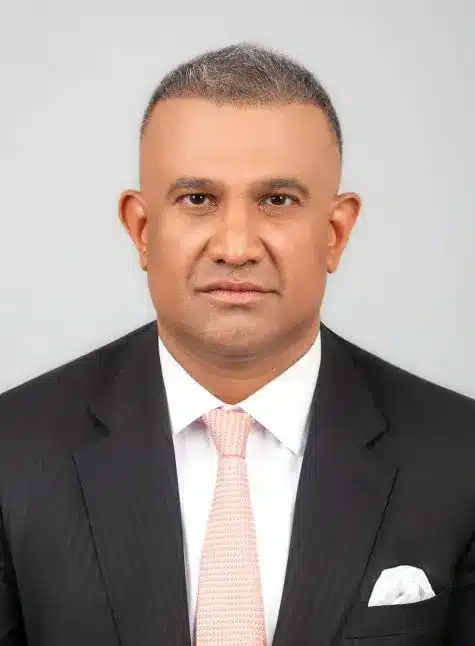
Vinoo Varghese is a veteran criminal defense attorney, former Brooklyn prosecutor, and founder of Varghese & Associates, P.C. A frequent legal commentator for national media outlets, he has taught trial advocacy at Harvard Law School and formerly served as Chair of NYCLA’s Solo and Small Firm Practice Committee.