Meghan Phelan, owner and operator of Granny NANNIES of South Florida, joins the show to share how she built a thriving, scalable business in the non-clinical elder care market. Following Larry’s opening analysis of the massive silver tsunami hitting the 2026 economy, Meghan explains how to turn demographic shifts into a self-sustaining business machine.

By 2030, an estimated 71.6 million baby boomers will be senior citizens, and a staggering 90% of them want to spend their final chapters at home. In this episode, Meghan Phelan explains how she strategically rode this demographic wave by earning a degree in Health Service Administration and stepping directly into the business side of elder care.
Meghan pulls back the curtain on running a non-clinical medical registry and managing a corporate assisted living facility. She reveals how she bypassed standard entry-level traps early in her career, why a franchise playbook can save you from making million-dollar mistakes, and how to maintain nervous system regulation when domestic emotions run high. Whether you are an aspiring entrepreneur or looking for an overlooked, high-paying major, this conversation provides a masterful blueprint for building a business “machine” that affords true time flexibility.
What We Cover:
The “Aging in Place” Mega-Trend: Why the 80+ age cohort is set to double over the next decade, driving unprecedented demand for in-home care.
Health Service Administration Demystified: How this major opens doors to hospital leadership, medical practice ownership, and lucrative elder care businesses without requiring clinical training.
Bypassing the Entry-Level Trap: How Meghan landed a director-level role straight out of college by turning her lack of experience into a clean-slate selling point.
The Power of a Franchise Playbook: Why leveraging established policy templates and existing brand recognition at Granny NANNIES cuts years off an entrepreneur’s startup phase.
Nervous System Regulation: The reality of entering high-stakes domestic environments where adult children are facing deep grief, and how to maintain a calm presence when people lash out.
Building a Business Machine: How to design a company where you are the coordinator, not the direct “talent,” allowing for true personal freedom and work-life balance.
The Limits of AI Caregiving: Why automation will transform patient monitoring but can never replace the biological necessity of human touch and social connection.
Larry Port (00:00):
Dream job or nightmare? It’s hard to know if a career that looks great on paper will actually lead you to the life you want to live. So welcome to Dream Job Cafe. I’m Larry Port. I’ll be asking different professionals the questions you won’t find anywhere else. So grab a coffee, settle in. This is Dream Job Cafe, sponsored by wastepark.co, where we help people navigate careers in a crazy world. Hi everybody. Welcome to another episode of Dream Job Cafe. And we have with us today Megan Phelan. She runs Granny NANNIES of South Florida. So it’s in this segment of business that’s taken care of people at home, the home care business. And it’s a huge growth area right now. So Megan, welcome to the program. Thank you for being here.
Meghan Phelan (00:49):
Thank you so much for having me. It’s a pleasure.
Larry Port (00:52):
Yeah. Tell me a little bit about Granny NANNIES. What do you guys do? What do you do?
Meghan Phelan (00:57):
Sure. Well, Granny NANNIES is a nurse registry here in South Florida and what that means is we preselect and vet caregivers such as home health aides and certified nursing assistants to go into the home of elderly people who are wishing to age in place in the comfort of their own home and we help them do it safely and productively.
Larry Port (01:18):
Right. So age in place for those that don’t know it, that is a big term right now. So I did a little research about this. So age in place as opposed to age in an institution, right? That’s what that means?
Meghan Phelan (01:32):
Yeah. So it’s congregate living or stay at home. Those are the two choices.
Larry Port (01:37):
Right. Okay. So picture yourself one day and if you’ve visited a grandma or something or somebody that lives in an assisted living home or a nursing home or something like that. Yeah, it can be kind of terrifying to think that that is where you’re going to spend your last days. So the statistics I read were this. I mean, this is a lot of people. So right now seniors, this is like people 65 and older. They make up 18% of the population and the biggest growing cohort are people that are going to be 80 plus that’s supposed to double in the next 10 years. And nine and 10 of them wish to age at home. So that’s like a large percentage of people. That is something like 71.6 million people by 2030 that want to age at home. So it sounds like you’re going to be busy.
Meghan Phelan (02:24):
Yeah. And 20 years ago it was one of the biggest with the baby boomers approaching retirement age. So when I started it was huge and now it’s even bigger. So yes, everybody is now I see more than ever jumping into the retirement field or into the aging field, 100%.
Larry Port (02:43):
Gotcha. Can you talk a little bit about what drew you to it? What was your career trajectory? Did you go to school for this? Are you a nurse or something or how did this all play out?
Meghan Phelan (02:53):
Sure. Yeah, that’s a good question. Actually, my path into elder care started after I graduated college. I graduated with a bachelor’s in health service administration. And so I knew off the bat I wanted to help people, but I did know also that I didn’t want to be clinical. So that’s why I went for that degree. And I went into working as a director of an assisted living facility for corporate America and then things just snowballed and here I am. So that’s the long story short. So my path in here was degree with health service administration and then starting off in an assisted living, congruent living type of institution.
Larry Port (03:35):
Gotcha. A lot of people might not know what a health service administration major is. I know one student that’s getting a master’s degree in this, so it’s the kind of thing that it’s offered at multiple levels. So if you want to maybe change directions, it’s available to you. Can you talk a little bit about what that major is or field of study is and a little bit about who goes into it and what types of careers are available to them afterwards?
Meghan Phelan (04:03):
Yeah. So a lot of people get into health service administration because they want to be in hospital administration or they want to work in open a medical office for a doctor. So those are the usual path, but now more than ever because of the aging population, people see it the way I did 20 years ago, which is I want to get into home care. I want to get into running my own business and it’s going to be geared around health and seniors.
Larry Port (04:33):
Interesting. So when you went into this 20 years ago, you had this vision that, okay, everybody’s getting older, this is where the opportunities are going to be. Was this like some sort of master plan you had the whole time?
Meghan Phelan (04:48):
My career path has been strategic, yes. But also I took opportunities when they were in front of me. So a professor spoke to me right before graduation and she had an exit interview with me and she says, “Well, where are you going after this? ” And that was when I said, “Well, I don’t know. What do you suggest?” And she’s like, “All right, with your personality, with your specific traits, I’m going to say something that none of your classmates are going to follow, but I think people should be looking into long-term care.” And I’m like, “What’s long-term care?” And so it was her. It was my professor. Don’t even remember her name because it was so long ago, but she pushed me. She said, “Look into long-term care. All your friends are going clinical, going into the hospital, but I’m telling you long-term care is where the opportunities are and you have the personality traits for it.
(05:37):
” So that’s how it started. And then I strategically made decisions within my career to wind up here where I’m at now.
Larry Port (05:48):
Okay. So that’s a good question. So what personality traits did she see in you that made it amenable to long-term care?
Meghan Phelan (05:56):
Yeah. So some of the biggest ones you need in this field is number one, empathy. You need to be able to meet people where they’re at and really feel where they’re at. So empathy is number one. Communication is huge. We’re juggling multiple family members, adult daughters, adult children, nieces, nephews, the actual elderly person we’re taking care of and a team of caregivers plus the office staff. So you need to have majorly good communication skills. Problem solving is a number three. And then behind that, patients, leadership, versatility.
Larry Port (06:31):
So patients, I would think that you’re talking about people that are maybe not the healthiest, they might be in pain, they might be in chronic pain. They might be recovering from some sort of thing. There might be family members that are freaked out by this. Am I reading between the lines here that you’re dealing with people that might be in high emotional states or is that not what you’re dealing with on a regular basis?
Meghan Phelan (06:57):
You are dead on. We are dealing with some of the biggest emotions that you’re ever going to fee in your life. My adult children, I call them the adult children. I’m working with the sons and daughters. They’re facing the biggest loss of their life. Emotions are high. Then there’s the loved one who is legitimately in their last chapter. Imagine what it feels like to be there. So you are dealing with huge emotions. You must go into every home and situation with a regulated nervous system and then be able to hold that regulated nervous system when things are flying at you and you’re about to take a beating because we do take a beating. People lash out, people get frantic. And our strength has been, and my strength has been is meet them where they’re at, bring everybody down, regulate the nervous systems and get everybody back on track.
(07:47):
But the ultimate goal is just to make sure that your loved one gets through this chapter as happy as possible. So that’s definitely, you’re dead on. We’re dealing with a
Larry Port (07:56):
Lot. Wow. Okay. So your first job out of college, was it with an assisted living facility?
Meghan Phelan (08:03):
Yes, it was with a corporate type of job. It was with an assisted living facility.
Larry Port (08:07):
Yeah. So tell me about that. Were you in an office? Because it sounds like you weren’t doing like what your professor said, it wasn’t clinical. It was like more on the … Is it fair to say the management side?
Meghan Phelan (08:17):
Yes, it was. And that was by … It’s not typical. The job I got, you need five years experience. But I walked into a facility that was overhauling their marketing team and overhauling their sales approach. And so they wanted just a clean slate, somebody that had no prior knowledge or any kind of bad habits that they would bring into their new system. So that’s where I found that’s my first big opportunity. I’m like, “Perfect. I’m fresh. I can learn this. I’ll keep my mouth shut.” So I did walk into a situation where it did require probably five years or more experience. I was a sales director. I ended up being the sales director, but timing was right and they ended up hiring me with no experience. I was willing to take anything though, CNA, MedTech, whatever they wanted to give me, I was willing to take anything, but that facility happened to have a sales position open and so I became the sales director.
Larry Port (09:17):
Interesting. Okay. So I think the important thing to point out there is for people thinking about this kind of thing is that these are businesses as well as they’re taking care of people. I think that’s something that a lot of people forget about. They have accounting departments, they have marketing departments, sales departments, all the things that a regular business has. They might not be churning out chairs or software, but they’re providing a valuable service for people. So when you’re thinking about what businesses to go into and you want to be in business, this is a business. I mean, I don’t want to sound callous about it because you are taking care of people, but I mean, it won’t work without that, correct? A
Meghan Phelan (09:59):
Hundred percent. And that’s the side that I specialize in is the business side of elder care. So you’re right, there’s departments, there’s a nursing department, there’s a sales department, there’s the billing department. If you’re working in congregate living, there’s a food department, so dietician, menu planning, chef. So there’s all the departments that a business would have within this model. Even what I do now, even with home care, I have an accounting, I have a billing, I have a scheduler, I have a recruiter, I have me, sales and marketer.
Larry Port (10:35):
So I think that’s important to keep in mind and for people to keep an open mind, because when people think about business, I think they think about maybe the financial industry and they think about maybe consulting, but it is a huge range of different businesses. So you started, you took an entry level position, which was really not an entry level position, which required five years of experience, but you stepped into the role and then what happened? Now you’re running your own business. So connect the dots for me there. Between that job and where you are right now, how did that all play out?
Meghan Phelan (11:08):
So I learned the sales side and then when you’re a director of an assisted living facility, you also need to learn the other director positions. So they put me as a backup for business office. So I learned billing and payroll. So when the billing and payroll person was out, I would come in and do it. My focus was sales. So I learned sales, marketing, how to market a business, how to sell a business, all that, learn the billing. And then I was bringing these people in on tours. I was showing them the community. They loved the facility. It was gorgeous. Everything was perfect. But the one thing I would always get as an objection would be, “Well, mom or dad loved it. They loved you, but we’re just not ready yet.” And of course you’re not ready to make a move like that. I get it.
(11:55):
But I saw an area within the facility where we were missing opportunities. And so me and my boss at the time approached the owner and said, “Hey, we’re missing all these opportunities. They love us. They’re not ready yet. What about if we open up a home care unit for you? ” And anyone that is not ready to move in yet, we could still capture and revenue generate. So I opened up their first ever home care division for that facility for one year. And then I thought, well, I can do this on my own. And the person I was with at the time, he was big into business and real estate and he has roots in Miami. And it just so happened that Granny Nanny’s territory for home care, the only territory they had was Miami. And so we just looked at it as the perfect alignment.
Larry Port (12:43):
Wait a second. So of all places in the country, they were overlooking Miami?
Meghan Phelan (12:47):
Well, that was the only territory that they had available. Every other territory in Florida, because I wanted to stay in Florida, every other territory in Florida was taken except for Miami. That’s
Larry Port (12:58):
So funny.
Meghan Phelan (12:59):
I was like, well, if this is not a sign, we want to make it down to Miami eventually to be with family, let’s do it. So that’s how it happened.
Larry Port (13:10):
That’s so exciting. And also one thing I wanted to point out is that Granny NANNIES is a franchise, correct?
Meghan Phelan (13:19):
Yeah.
Larry Port (13:20):
Right. So this is kind of an interesting thing. When people think about starting their business, a lot of times they think about just inventing something or coming up with a new concept and doing it. But franchises offer a really awesome way to start a business because what they do is they allow you to take an existing brand and you’re given a lot of the supporting materials and playbook to help run the business. So can we take a brief aside and can you tell me a little bit about your franchise journey?
Meghan Phelan (13:50):
Yes. With the franchise, so my biggest attraction to the franchise was obviously the brand, because the brand is big in Florida. It might not be … It is national. There are national franchises with Granny NANNIES, but the big bulk of the business is Florida. So that was number one brand, great name, catchy. Everybody, it’s a nanny for granny. Got it. So that was number one. And then the secondary thing is they’ve been open for 40 years at the time, 25 or so, but they’ve already made all the mistakes that I could have possibly make and they have a solution for it already. So the playbook thing was a big thing for me. They already have all the contracts. They already have all the risk and the management of that part. They’ve already been through the trenches. So that was the biggest attraction for me was the brand and the fact that they’ve been in the trenches, they’ve made the mistakes.
(14:41):
I don’t have to make all those mistakes. They already did. Tell me how to do it.
Larry Port (14:47):
One of the big things, because I built my own software business and one of the biggest things we had to do in order to start really generating revenue and get out of that startup phase was standardized procedures. Do they have standardized procedures that they give you guys or how does that work?
Meghan Phelan (15:04):
Yeah, we have templates. We got templates for everything we have to do for the state license. We’ve got templates. They had policy and procedures. They had the basics for us. We had to fill in our local stuff and we had to look up our local laws and our local res, but for the most part, the templates are there.
Larry Port (15:23):
Okay. Well, that’s very exciting and congratulations. And you’ve been running it for a while now, huh?
Meghan Phelan (15:30):
Yes. We’ll hit 15 years in December.
Larry Port (15:32):
Congratulations. That’s fantastic. Let me ask you a question. Do you have open headcount right now? Are you hiring people or no?
Meghan Phelan (15:41):
So in the caregiver front, we are always looking for good quality caregivers. That’s an ongoing recruitment project. And actually in the office we are looking for entry level schedulers and that takes a very special personality. So that has been my biggest challenge is to find good schedulers and good client service people that are going to be able to listen and be empathetic and have the problem solving skills and proactivity to avoid problems. So we are actually hiring in the office.
Larry Port (16:11):
Well, there you go, people. It’s 2026. All you’re reading about is how it’s impossible to find a job. And Megan here with Granny NANNIES has open positions. Can you talk about those two different routes? I was doing a little bit of research about what you guys do and some of it’s like companionship, senior care, Alzheimer’s, cancer treatment, homemaking even. Can you talk about who these different types of things might be good for or attractive for? Are these people that are going to nursing school? Are these people with high school diplomas? Who do you look for and who excels in these types of careers for the people that you’re sending out into the field working with the home care?
Meghan Phelan (16:56):
All of the above. We’ve had a lot of people who have come to this country for the first time who might have been doctors or nurses in their other countries. And in order to get on the fast track to be a doctor or nurse here, they’ll start as a caregiver. So those are our biggest bulk of our caregivers are people who are just come in because we’re in South Florida too, so it’s my area. But coming into from a different country that have these fabulous degrees and all this training and they will work as a caregiver to work their way up here in this country. They’re one of my best caregivers. And then nursing students, we have a nursing student that several that have started as caregivers that are non RNs. I have a nursing student in my office that worked her way through nursing school who’s now an RN.
(17:46):
So those are probably some of the biggest ones, but definitely somebody who, like I said, going back to empathy, likes people, likes taking care of people. Otherwise, you’re not going to like it being in the field.
Larry Port (18:01):
Right. Okay. And what about in terms of health service administration, what are your thoughts about that career for people to go into? Is it a good major for them to explore? Without talking salaries, can you talk in generalities if that degree’s going to lead to a comfortable living or so on?
Meghan Phelan (18:23):
Yes. I do think it’s a huge opportunity for a very lucrative career and I think elder care is often overlooked as something that’s depressing. So a lot of people push it off the table, but if you look at the numbers and I were to show you the numbers, you would see that this field is incredibly lucrative for the right personality type and the right skillset. So a hundred percent you live a very upper middle class, if not more than that lifestyle, if you’re good at this industry and that major.
Larry Port (18:59):
Wow. Very cool. So you would have no hesitancy encouraging your children to go into this field,
Meghan Phelan (19:06):
For example. I hope they do. I hope they take over the biz.
Larry Port (19:10):
Yeah. I used to want my kids to go into the software business, but now I’m like, okay, maybe not.
Meghan Phelan (19:18):
Yeah, it’s very comfortable. And the bigest thing that people are coming in now, this generation behind us is they value more than just the dollar and what this lifestyle, this major and this career path that I took affords me is time. I have time for myself, for my family, for my health and the flexibility to make my own schedule and that’s what this career and major brought me way more than what’s in my bank account.
Larry Port (19:46):
So the work-life balance aspect of things was like a major plus. Tell me a little bit more about that. Is it because it’s like, well, now you’re running your own business, you can set your own hours, but I guess even before then, you’re not working investment banking hours. Is that why? Can you talk a little bit about that?
Meghan Phelan (20:04):
Yeah. So when I worked in the congregate living, assisted living, that was a little bit more structured because I was under corporate America, but still it was still very, very flexible. There was always staff there twenty four seven, always somebody to fill in for you. And of course you have to meet the parameters of your job, but it’s a 24-hour machine and if you’re in a director position, it’s often run the machine without you. So you could take off a week or two weeks. I can’t walk away from my business for a long time, but I do have the flexibility in either position corporate assisted living or what I do now.
Larry Port (20:45):
I think that’s something that a lot of people miss when they think about their careers. If you’re a doctor and you want to become a medical practitioner and you run your own business, if you are not working, you are not making any money. So your vacation is just like you have to adapt for that. There’s a lot of careers that are like that. But if you do it right and it sounds like you have and you know how to delegate and you know how to rely on others, then that’s the ticket to freedom.
Meghan Phelan (21:15):
Yeah. I’m not the talent. I’m not the doctor. I’m not the realtor. I’m not the one … It’s a literal machine that I just put together and I tweak the machine when it’s not working or I’ll step in when there’s a fire and put it out, but I’m not the core of the business. The core of the business is many people running this machine that just works together and that’s the benefit.
Larry Port (21:38):
Wow. Okay. That’s phenomenal. All right. Well, this is all good stuff. Any other recommendations? Do you have any thoughts for people in the job market at this time right now, like how to think about things or what is your personal perspective on the state of the world when it comes to this at least?
Meghan Phelan (21:59):
I do think AI is going to touch our market just like it’s going to touch every other market. I would either look at the human side of elder care where you’re working directly with the family or the AI side. So what are the tools that are coming out here to monitor patients better to improve communication and problem solving? So either or AI that’s going to help these elderly people stay home or stay safe or the human side of caregiving because I know there’s robots that are coming out there to do laundry to drive cars, but nothing’s going to replace the human side of caregiving and that is a social aspect, the touching, the human connection That won’t be replaced by AI and that is needed for an optimal health, you need a human touch, a human connection, a human body. So look in those sides.
(23:04):
AI problem solving, what’s it going to take to keep these people home longer, cheaper, faster, safer, and the actual human touch of caregiving, clinical.
Larry Port (23:15):
Wonderful. Megan, Phelan, thank you so much for being with us today. Her company is Grandy Nannies of South Florida. Thank you very much.
Meghan Phelan (23:23):
Thank you. Thank you so much.
Larry Port (23:24):
If you like this episode, please like it or send it to your friends. And if you can, be grateful for something today. Thanks for listening. Don’t forget to like and subscribe to Dream Job Cafe on Spotify, Apple Podcasts, or wherever you listen. And don’t forget to check out Wayspark.co, where we help people navigate careers in a crazy world.

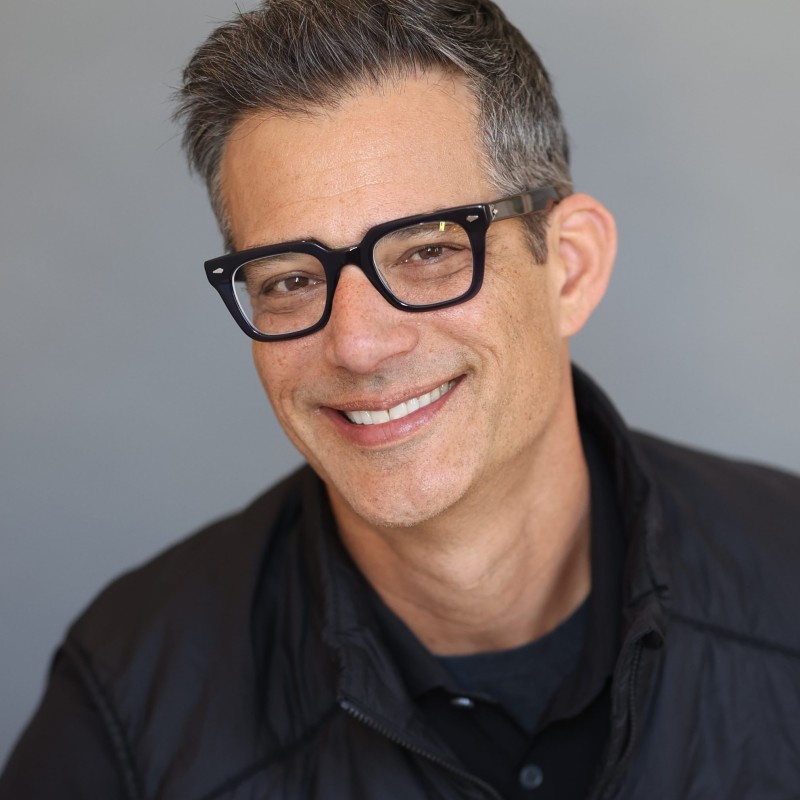
Meghan Phelan is the owner and operator of Granny NANNIES of South Florida, a premier nurse registry matching certified care providers with seniors. She holds a degree in Health Service Administration and brings nearly 15 years of franchise ownership experience to scalable elder care systems.