Ally Middleton, a veteran Licensed Massage Therapist and founder of Lifelong Massage, joins the show to discuss why the “human touch” is more valuable than ever in the 2026 labor market. Following Larry’s opening thoughts on industries resistant to AI, Ally breaks down the rigorous 600-hour training and clinical expertise required to thrive in therapeutic bodywork.

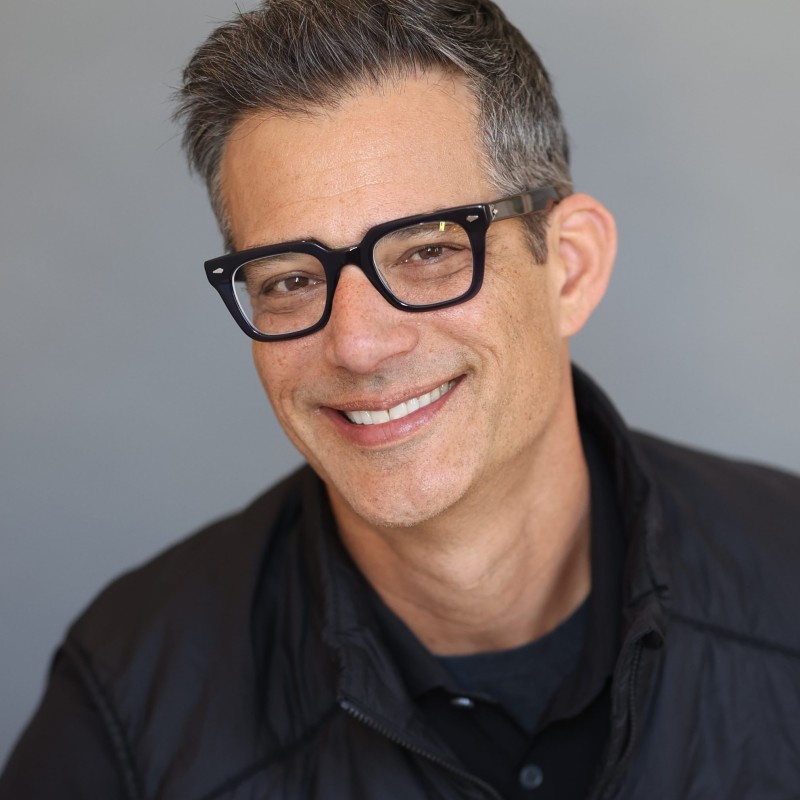
In the 2026 labor market, the human touch is more valuable than ever. While many industries are being disrupted by automation, the field of massage therapy remains fundamentally human-centric. This episode features Ally Middleton, who shares her “windy” career path—transitioning from an aspiring opera singer to a Medical Massage Practitioner and business owner with 16 years of experience.
The conversation debunks the myth that massage is just a “vacation luxury” and explores its critical role in rehabilitating surgery patients, managing chronic conditions like lymphedema, and optimizing professional athletic performance. Ally explains the rigorous schooling requirements—including 600 hours of anatomy, kinesiology, and pathology—and why passing the MBLEx is a non-negotiable hurdle for any aspiring therapist.
Whether you are looking for an entrepreneurial path with high schedule flexibility or a career that provides “instant gratification” through helping others, this episode offers a comprehensive roadmap to the world of therapeutic bodywork at Lifelong Massage.
What We Cover:
The Problem-Solving Mindset: Using soft tissue work on muscles, tendons, and the nervous system to achieve specific clinical health goals.
The Olympic Effect: How global events bring massive public awareness to specialized modalities like cupping.
Licensing and Schooling: Navigating state requirements and the national MBLEx exam for professional certification.
Medical Specializations: Exploring niche areas like Manual Lymphatic Drainage for edema and scar tissue management.
Longevity and Ergonomics: The vital importance of body mechanics and table height to prevent therapist burnout.
The Economics of Touch: Understanding why a “full-time” workload in this field typically tops out at 22 clients per week.
AI Resistance: Why the therapeutic relationship built between a human therapist and a client is fundamentally “un-automatable.”
Learn more about Ally and Lifelong Massage:
Larry Port (00:00):
Dream job or nightmare? It’s hard to know if a career that looks great on paper will actually lead you to the life you want to live. So welcome to Dream Job Cafe. I’m Larry Port. I’ll be asking different professionals the questions you won’t find anywhere else. So grab a coffee, settle in. This is Dream Job Cafe. Sponsored by Wayspark.co, where we help people navigate careers in a crazy world. Hello, everybody. I’m Larry Port with another episode of the Dream Job Cafe. And this episode, we have somebody who has probably the most AI-proof career that I can think of. We have Ally Middleton with us. She is a licensed massage therapist and she is the founder and co-owner of her business, Lifelong Massage. So welcome, Ally. How are you?
Ally Middleton (00:47):
I’m good. Thanks so much for having me, Larry.
Larry Port (00:49):
So Ally, you’re a licensed massage therapist. I’m guessing most people kind of have a general idea of what that is, but not everybody’s had a massage. So just tell me a little bit about what it is that you do.
Ally Middleton (01:03):
So my job as a licensed massage therapist is to have you as a client come in and you tell me what is your goal for the day? Do you want just some chill time on the table and you just want to relax or do you have some sort of problem that we are wanting to solve? Or maybe you’re trying to postpone surgery. You’ve just had surgery and we need to rehab, you sprained your ankle. Whatever the situation is, my job is to help you achieve that goal through soft tissue work. So I can work with muscles, tendons, ligaments, fascia. And then by proxy, I also end up working with your nervous system.
Larry Port (01:43):
Right. So there’s a lot to that, right? There’s different purposes of massage. It’s not just something that you get when you’re on a vacation or something. It’s something that is directly related to health outcomes. It’s something that professionals use to optimize their performance. So there’s a lot there. And I assume you’re a entrepreneur, so you probably also have business stuff to take care of, whether it’s marketing or bills and stuff.
Ally Middleton (02:12):
Yeah. And that’s the thing. One of the greatest things about being a massage therapist is that you can pick and choose where you want to go. I’ve worked everywhere from a dental office to an athletic club, to working with professional athletes, to working with chiropractors and physical therapists, athletic trainers, to owning my own practice. So there’s a lot of different things that you can do. And certainly if you’re wanting to live on some fantastic white sand beach and be the person that gets those vacationers, then yeah, you can do that. Or you can work with a certain population, maybe it’s oncology or senior citizens, kids. There’s a million different things that you can do within the field of massage therapy.
Larry Port (03:01):
Okay. So very cool. So when you were in high school, did you make a beeline towards this career or was it kind of windy? Can you talk a little bit about your career development?
Ally Middleton (03:12):
So when I was in high school, I thought that I was going to be an opera singer and I am not.
Larry Port (03:18):
Okay.
Ally Middleton (03:19):
I still sing, but I’m not an opera singer. And my parents,
Larry Port (03:22):
I was- I was going to ask. Yeah. Do you sing in your spare time or do community theater or anything like that?
Ally Middleton (03:27):
So I do sing in a community chorus, but we’re certainly not singing for our supper anymore.
Larry Port (03:32):
But
Ally Middleton (03:33):
I was in my early 20s and my parents had the classic sit down conversation with me of like, “Look, you got to figure out how you’re paying bills because you’re not right now. So how are you doing this? ” And I drove past a massage school every single day and I thought, “We’re going to see what this is about. ” So I went and took a tour of the school and got so much information about what you can do as a massage therapist. It’s not just working on cruise ships or in luxury day spas. And then I thought, well, shoot, I’ve got a built-in clientele of other musical people that could all use massage. This is going to be great. Great. So I signed up for classes. Within three weeks, I thought, “Oh no, we’re supposed to do the other thing. We need to flip this.
(04:23):
” So I completely changed my mindset to becoming a massage therapist full-time. And then I just sang in community aspects. I’ve been a massage therapist since 2010. So I’ve been doing this for 16 years. I’ve been doing a long time and I’ve kind of morphed as I’ve found new skillsets or some sort of new research comes out that allows for a new modality or a new modality becomes more open to the public. So my favorite example is always with the Olympics. Every summer Olympics, there’s always something new that comes out. And it’s usually with the volleyball players and the swimmers where Michael Phelps and Rio all of a sudden had all these cupping marks. And
Larry Port (05:05):
Then
Ally Middleton (05:06):
I’m getting phone calls like, “What is cupping? Can I have cupping? What does it do? ” And so that brings a lot of public awareness to what it is that we can do in the field of massage.
Larry Port (05:17):
Yeah, that’s pretty interesting because the swimmers, you see everything pretty much. You know what I mean? So I remember when cupping first came out, I remember seeing those marks and being curious what those were. So what’s school like? I know I asked this when we interview nurses and stuff like that and I’m like, “Oh my God, what was … ” I’m not good at memorizing things. Do you have anatomy classes? I’m assuming you have to understand musculatures, the skeleton, all that kind of stuff. Can you talk a little bit about what the schooling is like?
Ally Middleton (05:50):
Yeah. So schooling for massage therapy, we don’t have a national standard. So each state is in charge of setting those education requirements. When I was in school in 2010, the state of Texas, where I’m originally from, was 400 hours. Now here we are 16 years later, most states require about 600 hours. So depending on how often you’re going to school, whether you’re going full-time or you’re just going like a night program, you can usually be done in somewhere like nine months to a year. Going back to what is in that program, there’s a lot of anatomy, physiology, kinesiology, knowing where muscles are is great, but you have to know what they do. And then there’s also a huge emphasis on pathology. If a client comes in and they’ve got a laundry list of conditions, medications, we have to know what’s safe. Can I do deep tissue?
(06:53):
Can I do cupping? Making sure that they have good skin integrity. So there’s a lot of pathology emphasis, so that way we can make sure that we’re not hurting the general public.
Larry Port (07:06):
Right. Because older people or burn victims, or there are people that come in with all sorts of different conditions, you got to know exactly probably what touch to use. And in fact, I think my sister did some massage therapy at one point and I think she did specialize on Vern victims, which kind of leads me to a question, which is that, can you talk a little bit about the specialization that some people tend to pursue after they go into massage therapy work?
Ally Middleton (07:33):
Yeah. So there’s all sorts of different certificate programs that you end up with. So for example, for myself, I went down the route of a medical massage practitioner. It gives me additional skillsets. It really did a good job of teaching further about how do I actually do a really good assessment? How do I actually document pain? How do I document goals and progress, better palpation skills, range of motion, orthopedic tests. And it gave me a skillset where I can work better with chiropractors, physical therapists, surgeons, plastic surgeons, orthopedists, sports medicine. And that’s how massage can really kind of segue into actual healthcare as opposed to, not that there’s anything wrong with it, but as opposed to just hanging out in the spa world, which is fine. But even outside of medical massage, you can go into manual lymphatic drainage, you can do myofascial release, you can do craniosacral therapy.
(08:39):
And they’re all just kind of additional skill sets, additional certifications that you carve out a little niche. So my clients know that if you just want to come and see me for a 60-minute Swedish, we’re just chilling on the table massage, I’m really not your best option.That’s not
Larry Port (09:00):
What
Ally Middleton (09:01):
I do. So you’d be better off to see someone else. The one thing
Larry Port (09:04):
That you mentioned, like lymphatic release, that’s like when for edema and people who maybe they don’t have … So people who can’t clear their lymphatic systems out, so it gets very specific, right?
Ally Middleton (09:18):
Yeah. So manual lymphatic drainage is when your lymph system is not operating at the highest level that it can, and that could be for various reasons. Maybe it’s you had surgery and you’ve ended up having lymph nodes removed. So maybe you had cancer and we removed some lymph nodes or maybe you were burned. And so now you have a lot of really dense, thick scar tissue that’s sitting on top of that lymph and it can’t move very well. So now you have a specialized therapist that can come in and move that lymph along so that you don’t deal with lymphedema.
Larry Port (09:55):
Wow. So there’s a lot to this. So let me circle back around to the schooling question. How long typically does it last?
Ally Middleton (10:05):
The actual school progress, it depends on how often you’re going. It’s usually like six months. Most programs are going to finish in at least under a year. Oh,
Larry Port (10:16):
They will. Okay. Okay.
Ally Middleton (10:18):
It’s an
Larry Port (10:19):
Hours-based
Ally Middleton (10:20):
Program.
Larry Port (10:21):
It’s an hours-based program. And I’m assuming that it’s also like, I don’t know if they call it a practicum or the actual hands-on, like you got to learn how to actually do that. There must be somebody that you’re massaging who grades you then, right?
Ally Middleton (10:36):
So it used to be, and again, each state is in charge of how they do this. So it used to be that you would be in school and then you would have to go, at least when I was at school, you had to go to the Capitol and schedule with somebody on the massage board. You had to bring your own client. And then it’s almost kind of like looking through a two-way mirror where they would say, “Do efflorage of your quadratus lumborum.” And so you would have to know what efflorage means and where is your quadratus lumborum, and then you would have to perform that stroke. Now, for the most part, states have said, “We’re going to put that in the hands of the schools and we’re going to let them have an instructor have a director that is in charge of that clinical experience.” You do have to have clinical hours in order to graduate.
(11:28):
So you have to work with the general public, usually for at least 50 to 75 hours before you finish school. And then you also have to take what is called the MBLEX, which is the massage and body work licensing exam. If you don’t pass that exam, then you cannot apply to the state for your license to be a licensed massage therapist. And without that, you can’t work.
Larry Port (11:54):
Gotcha. So for the core curriculum, you can probably do it in less than a year, maybe six months.
Ally Middleton (12:01):
Yep.
Larry Port (12:02):
Okay. And then what about some of these additional ones? I’m assuming they require additional time. This certification that you talked about where you work with medical facilities, is that an additional year or how does that work?
Ally Middleton (12:18):
Everything is still based on hours. Everything in the massage therapy world is based on hours. So the program that I did was an additional 50 hours. So realistically, it’s two weekends.
Larry Port (12:29):
Oh, okay. So it’s not too bad. Nope. And talk to me a little bit about what the work is like. I mean, you’re with people. I think you may be one of the first people that I’ve spoken with where, I mean, there is kind of an ergonomic factor here. How do you do it so that you don’t get exhausted or weigh yourself out? Or is that a factor in it?
Ally Middleton (12:52):
Oh, it’s absolutely a factor. So body mechanics is what we call, how are we using our body effectively so that we don’t hurt ourselves? Making sure that the table is adjusted to the right height. I taught massage therapy for a little bit. And my favorite question was always, how do you figure out, based on how tall your client is, how do you figure out how you set your table? It doesn’t matter how tall your client is. You’re not working on them vertically, they’re horizontal. So your table height pretty much stays the same unless you get a client that is really thick, like they’ve got a lot of tissue, or you get somebody that is really thin, and then I don’t want the table as low. Maybe I want to bring the table up a little bit higher. And it also depends on what type of work you’re doing.
(13:44):
If you’re doing, for example, manual lymphatic drainage or if you’re doing craniosacral therapy, you’re going to use a really, really light touch. So you don’t need to be able to put your whole body weight into it. So maybe you want the table a little higher so that way you don’t have as much available leg and core strength to put into that work. Whereas if you’re doing deep tissue, you’re doing myofascial release, you want that table low so that way you have all of your body available to work. So when I taught and when you’re in school, body mechanics is huge because if … I always called it the turtle. If you look like a turtle where you’ve got that very rounded back, you’re going to go home hurting at the end of the day because you’re not using your body effectively and efficiently. When we say that … Most people think I have an eight-hour workday.
(14:39):
I work nine to five. I may be in my office for eight hours, but I’m not seeing eight clients. There’s no way. A full week for me is I’m probably seeing maybe 20 to 22 clients and that’s it. I may be in my office for 32 to 35 hours a day, but I’m not seeing that many clients.
Larry Port (15:07):
32 to 35 hours a week probably, right?
Ally Middleton (15:10):
Yeah. Yeah. Did I say day?
Larry Port (15:14):
And also I’m guessing for the most part, some of these people are probably asleep, but some of them probably talk to you. Is it one of these kind of jobs where you really got to be able to … I’m guessing you’re talking a lot to your clients, maybe even the whole time.
Ally Middleton (15:28):
And it kind of depends on what type of work you’re doing. If you’re in a spa environment, then a lot of times people will go in and they just kind of fall asleep on the table. The type of work that I do where we’re trying to rehab injuries, we’re trying to postpone surgery, maybe you did have a surgery and we’re trying to rehab you a little bit, and yeah, we need to talk. And it’s not necessarily like I’m asking, how’s your day? How’s the weather? How’d your baseball team do? It’s at what point are we reaching that end barrier where you have pain with this movement? Is this comfortable? Okay, now do that movement on your own, see if we can get more range of motion. It’s a very collaborative time. I don’t work on bodies, I work with my clients.
Larry Port (16:18):
Got you. Okay. So it’s really interesting because it seems like it’s much more … Before this conversation, I didn’t realize the breadth of this career and all the different functions that it had. Now, where does it leave off? Because there’s stuff that kind of surrounds it. I see time massage or Reiki or other things like that. And I don’t know if these things are part of the discipline or if they’re around the discipline or if they’re not related at all. Can you help shed light on that?
Ally Middleton (16:47):
So definitely time massage, ashiatsu where they’re using the bars that are on the ceiling and they’re massaging with their feet. Acupressure, trigger point, those are all different skillsets or different modalities under the larger umbrella of massage therapy. Reiki ends up kind of getting lumped in with massage. There are a lot of Reiki practitioners that also are massage therapists, but there are two separate things. Reiki, you are not actually physically touching the body. It is just energy work. So you’re not touching them, and so therefore you don’t actually need a license to touch them. So there’s a lot of different caveats with that where it gets lumped in, but it’s really an entirely different thing like Reiki is. But all those other modalities all fall under massage therapy.
Larry Port (17:56):
Okay. So Ally, let’s talk a little bit about work-life balance. You’re running your own business, so I’m guessing that confers a lot of flexibility because … And so maybe when you’re answering this, if you can talk about what it’s like for somebody who’s established like you are, you’ve been doing it for 16 years, got your own firm, or maybe somebody who’s fresh out of school. Okay. But what I like to do is we do the family dinner tests. So the question is, on a scale of one to 10, how likely are you to be able to enjoy a family dinner?
Ally Middleton (18:28):
That’s like a 10. That’s a 10.
Larry Port (18:29):
Okay.
Ally Middleton (18:31):
So I will say in my household, we’re not, and this is for me, I work evenings. Most of my client base, we’re still juggling kids’ schedule, work schedules. So I work three out of five evenings a week, but otherwise, my household, we’re a breakfast household. Everybody sits down at my household. We all eat breakfast together, but there’s a lot of balance that you can have. And if you’re running your own show, you can set your own hours. And if you’re an independent contractor, a lot of times you can set your own hours. If you are an employee somewhere, the beauty of that is you get benefits, you get paid time off. Maybe you’re getting a 401k match within a lot of these really high end day spas and franchises. Those are options. You want to run your own business, you got to run your own business, and maybe you get to the point to where you can grow and you can hire employees, and then maybe you’re offering benefits and paid time off and sick leave and all those fun things for you and your employees.
(19:42):
But if it’s just you, for me, it’s myself and my business partner, and it’s great. I mean, I’m gone kind of whenever I want. That’s
Larry Port (19:52):
Great.
Ally Middleton (19:53):
If I want to randomly just close my book for a Saturday, I can. I don’t have to run it past anybody. Now you have to be smart and think, okay, if I’m going to close my book for this day and normally I see four or five people on this day, where are they going to go? And are you also okay to lose that revenue? Because if you don’t have a client on the table, you’re not getting paid.
Larry Port (20:18):
So that brings up the thing with … So vacations can be … Are they tricky then? Because if you take a vacation, you get to take a vacation, but then at the same time, it’s not like when you work in a corporate America setting where you have paid time off, you’re just not getting paid.
Ally Middleton (20:33):
Yeah. So prime example, I’m gone for 10 days really soon and I’m super excited, but I’m not going to get paid because there’s nobody on my table and I own my own business and I’m not going to pay myself because there’s nobody on my table.
Larry Port (20:51):
Yes. But it’s not unusual though because if … Listen, if you’re going to be in a career where you’re going to be working for a corporation or something where there is a paid time off policy, that’s one thing. But massage therapy, and we talked to a home healthcare nurse who works in a similar fashion where you’re just booking hours, but other jobs that are trade-based jobs where you get paid by the hour, they kind of fall under that same category. Even primary care physicians, they take a vacation, they’re not getting paid.
Ally Middleton (21:26):
And you just
Larry Port (21:26):
Have to plan
Ally Middleton (21:27):
For it. It’s not the end of the world. You just have to plan for it.
Larry Port (21:31):
Right. Yeah. And I think that’s like, as long as you’re able to understand the whole structure of how you want to live your life and how this is going to fit in, you can really make it happen. It’s probably when you’re just like this … You can’t really be off the cuff planning things because you have your reputation and you have your reliability from the perspective of your clients to think about and things of that nature. Yeah.
Ally Middleton (21:58):
Yeah. If you’re really established and you’ve got a really nice client book, then yeah, maybe you’re planning things out at least three to four months in advance. If you’re just starting out, maybe you don’t have that client book that is as full. And so maybe you’re looking at your schedule, but even I do this now. If I’m looking at my schedule for three weeks out and there’s a Tuesday that nobody’s booked or I have one appointment, I may let it sit for a couple days and just kind of keep an eye on it. And if nobody books, I just close. And I ask that one person that’s on there, I’m like, “Hey, I got the same time on Thursday. Could we move you over there?” “Oh yeah, sure that works, HAlly. That’s fine. Great. Move it over. Now I have Tuesday off. “You have to learn how to optimize your schedule, how to optimize your time.
(22:47):
And there’s some flexibility that is allotted to you because you’re in charge of your own schedule, but it’s also not smart to look at that and say,” Oh, it’s two weeks out. I only have one appointment that’s booked. Let me close the day and then let me take a day trip somewhere. “But you haven’t seen any clients in the past three weeks. Well, that’s not very smart. Just trying to figure out how are you scheduling your people? How are you clustering everybody together to make the most out of your time?
Larry Port (23:16):
So in terms of automation, I mean, I don’t even know what to say about massage therapy. I mean, it seems like it’s the kind of field that’s going to be impervious to that because even if a robot could view a massage and there’s massage chairs now that you see in the mall in the airport, people want a human the same way they want a human caretaker. Agree, disagree. Is there even conversation around this in your field, Ally?
Ally Middleton (23:43):
So I wholeheartedly agree, and we are definitely living in a society that is undertouched. Our brains and our bodies are hardwired that we need physical contact. And there’s not a lot of that happening in a therapeutic base. I mean, think about it. If you live by yourself, how many times are you getting a hug? Probably not a lot. There is a robotic massage thing. It currently lives in New York City. It is really, really expensive to get a massage from this little robot guy, and you can give it feedback and it’ll adjust, but it’s never going to be able to replace a human. It’s never going to happen. And I think one of the greatest things about what I get to do is that I build relationships with people. How many times in a healthcare type of setting do you actually get to spend … Even my shortest appointment is 30 minutes.
(24:51):
How many times are you spending 30 minutes with your PCP? You’re not. I know more about some of my clients’ lives than I should know, but it’s because I’ve been seeing them for six, seven years, and I know exactly what’s going on. Especially you see people on a weekly basis or a biweekly basis, you know a lot about what’s going on in their lives and everybody’s always so happy to see me. They’re always so happy. Nobody is mad that they’re walking through my door. It’s great. You talk about the family dinner test, nobody is mad that they’re coming
Larry Port (25:21):
Into my mind. That’s so exciting.
Ally Middleton (25:23):
And I really don’t have bad days. I really don’t. Everybody’s happy to see me. I get to do what I love. I do good work. People pay me for it and I get to live my life. It’s great. Great. But you need to be a people person. You have to be a people person. If you don’t enjoy people, this is not the space for you.
Larry Port (25:44):
All right. You kind of anticipated the question because I always ask people who should think about maybe going into this career that maybe isn’t thinking about it or what kind of skillsets would be successful in this career and who should run screaming in the opposite direction?
Ally Middleton (26:01):
Yeah. So people that should come running towards massage therapy, people that love people and people that don’t mind the TMI. You’re going to get a lot of extra information that you would never anticipate in a day-to-day kind of conversation with someone, but then all of a sudden you put somebody on the table and it just kind of … I call it word vomit. Everything just comes out about whyever they are there. Does it relate to their shoulder? Does it relate to childbirth? Does it relate to grief? There’s a million different reasons why people show up on my table. And so you need to be prepared for all of that. So the TMI, you have to be okay with it and you have to love people and you have to be willing to be a continuous learner. There is education and research that is coming out all of the time that relates to our field.
(26:57):
And so you have to be willing to change your mind about old information. Folks that should not be a massage therapist, if you don’t enjoy people, if you don’t enjoy making small talk at the grocery store, this is not for you. This is not for you. If you’ve always been the person that’s like, oh, I’m not the touchy-feely person, also not for you. You’re going to touch people. You’re going to touch people’s feet. You’re going to be in people’s armpits. You need to be okay with touching people.
Larry Port (27:27):
Okay. Well, that’s very good. That’s very good. So I think people who don’t like feet are sufficiently warned, but it sounds like such a rewarding career. Is it growing? Do you have a sense of … It seems like maybe more people are open-minded to getting massages than they were maybe 10 years ago. Maybe that’s just me or my observation, but I don’t know what it looks like from your perspective. Do you think it’s-
Ally Middleton (27:54):
You
Larry Port (27:54):
Are
Ally Middleton (27:55):
100% right. People are looking for alternative or integrative or complimentary methods that they can use to improve their mental health, improve their physical health, and massage is at the forefront of that. There are way more massage therapy jobs than there are massage
Larry Port (28:14):
Therapists. Really?
Ally Middleton (28:15):
So COVID was really hard for massage therapy. It took a lot of massage therapists a long time to go back to their studio space. And then there were just a lot of massage therapists that were like, “You know what? I was thinking about maybe calling it quits in the next couple of years. I’m done.” And going back to that, we’re such an undertouched society during COVID, nobody touched anybody at all. And so then coming back from COVID, now we have this huge population that just their bodies just need to be rehardwired and kind of retrained that touch is okay. As a society, we need that community, especially if we think about the frail, the elderly, those that are sick, those are folks that historically as a society, we kind of push those people to the side and be like, “Okay, we don’t need to hang out with you anymore.” Well, no, actually we do.
(29:18):
We still need to hang out with them. They’re still valued members of society and they still deserve the dignity that everyone deserves.
Larry Port (29:26):
I would also think though that with the aging population, because I mean, this is one of these things, when I talk about people looking for careers, one of the things I say is look at what’s happening in society. And one of the biggest things that’s happening is this demographic trend where you have people living longer and longer, and we’re not having as … There’s way more older people than there are younger people, and older people tend to have more disposable income. So I would think that the amount of massage required, I Over the next, especially 10 to 20 years would be considerable.
Ally Middleton (30:05):
Correct. Right. Correct. I would say the average age of the clients that I see in my practice, now again, my little niche is more medically based, so I’m seeing a lot of folks surgical and injury related, but I’m seeing mostly 55 to 65. That’s your
Larry Port (30:29):
Wheelhouse. That’s
Ally Middleton (30:30):
My wheelhouse of the folks that I’m seeing.
Larry Port (30:32):
Oh, great. And then I guess I don’t like to talk Turkey on this kind of show. And up until recently, I used to ask people about Disney World vacations, but then I found out how much a Disney World vacation actually cost. So I guess let’s put it this way. In general, you go on vacation. Are you able to afford a vacation? Are you able to go on vacation and stay at a budget hotel? Can you stay at the medium hotel or can you splurge and go for the fancy hotel? And I suppose it depends whether or not you have your own business or not, but how would you answer that one?
Ally Middleton (31:14):
So yes, you can go on vacation. And I would say that you could probably say it like the medium budget.
Larry Port (31:19):
Okay, good.
Ally Middleton (31:21):
Yeah. I mean, my family, we take two. We probably take two vacations a year. We’re Airbnb folks. We are too. Hotel … Yeah, Airbnbs are so much better. But we stay at Airbnbs and we’re gone for 10 days at a time.
Larry Port (31:38):
Oh, that’s nice. That’s real nice.
Ally Middleton (31:40):
Yeah. All
Larry Port (31:41):
Right. Well, Allison, any other closing remarks about your career as a massage therapist for those thinking about if it might be possible career for them?
Ally Middleton (31:50):
I really like to emphasize that if you are into instant gratification, massage therapy is an option. You make a big impact really fairly quickly when we start talking about how do we improve someone’s quality of life and helping them achieve goals that they have. You can make an impact really very quickly and you get to make relationships with people. So if you love people and you like doing really good work and getting quick results that last and are actually meaningful for people’s lives and not just slapping a bandaid on, massage therapy is the way to go.
Larry Port (32:28):
Ally, well, thank you so much. This is a really exciting contribution to our healthcare series. And I hope you all like this conversation today. If you enjoyed this podcast, please like it or share it with your friends. And if you can, be grateful for something today. Thank you so much, Ally. Thank you. Thanks for listening. Don’t forget to like and subscribe to Dream Job Cafe on Spotify, Apple Podcasts, or wherever you listen. And don’t forget to check out Wayspark.co, where we help people navigate careers in a crazy world.
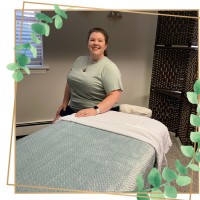
Ally Middleton is a Licensed Massage Therapist, Medical Massage Practitioner, and the founder of Lifelong Massage. With over 16 years of experience across dental offices, athletic clubs, and surgical settings, she is a leading voice on the intersection of therapeutic bodywork and patient rehabilitation.