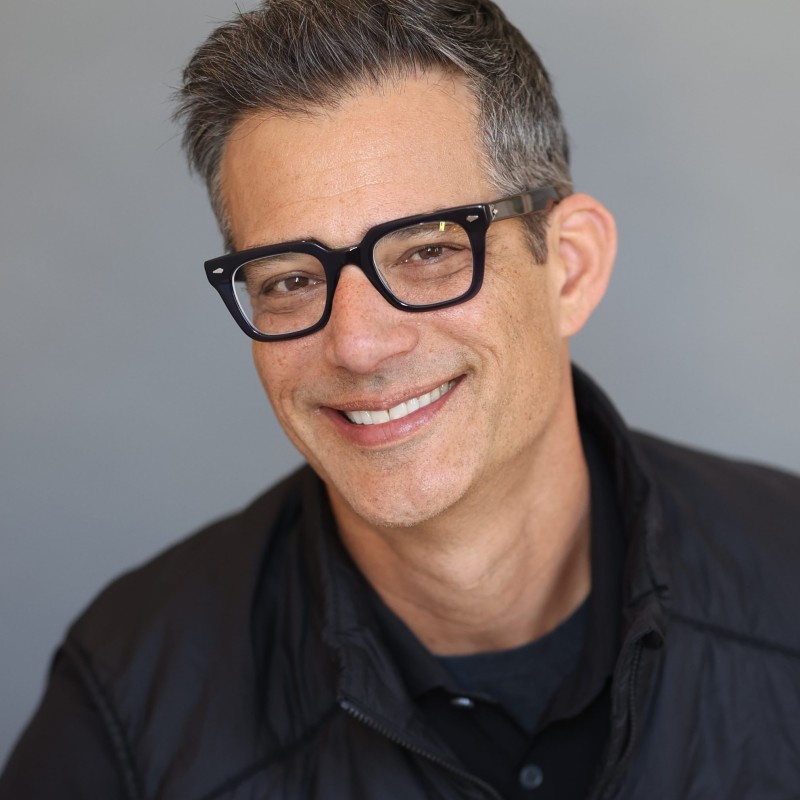
Paul Schlader, co-founder and COO of Birch Coffee, joins the show to share the raw operational truths and execution errors that shaped his journey in building a global coffee brand. Following Larry’s commentary on the value of keeping fixed costs lean, Paul breaks down why real-world resilience and authentic face-to-face connection are sparking a modern workplace renaissance.

Building a highly successful brand in a hyper-competitive landscape requires far more than just a great product; it demands radical operational transparency and a commitment to human service. Paul Schlader pulls no punches when discussing the brutal financial realities and early execution errors of scaling Birch Coffee. From an overstaffing blunder in their first month that forced them to lay off half their staff to surviving a five-year commercial lease in Manhattan, Paul outlines how keeping fixed costs low gave them the literal runway to make mistakes, learn the ropes, and survive.
The conversation delivers an operational masterclass on retail optimization, detailing why Birch Coffee chose to eliminate entire kitchens and popular food lines to focus strictly on high-margin, small-batch coffee roasting in Long Island City. Moving into the current 2026 economy, Paul shares a fascinating workplace shift: an influx of job applicants holding advanced technology degrees whose roles have been upended by automation and AI. This episode highlights why authentic face-to-face service is experiencing a massive renaissance and why human connection remains completely irreplaceable by corporate tech.
What We Cover:
The Bedrock of Service: Why Paul and his partner Jeremy intentionally structured their entire corporate culture around community service rather than product profit.
Chasing the Perfect Brew: The story of the single cup of Ethiopian Amaro Ghaile coffee at Coffee Fest that redefined Paul’s career trajectory in 2007.
The First-Month Firing Crisis: Managing the emotional toll of laying off half of an over-hired workforce due to initial transaction miscalculations.
Killing the Kitchens: The strategic financial decision to shut down profitable food operations to maximize high-margin coffee revenues.
The Long Island City Pivot: Overcoming the logistical and architectural nightmares of establishing an industrial coffee roastery inside New York City limits.
The Lean Post-COVID Machine: How Birch Coffee scaled back from a bloated 12-person corporate office down to a highly optimized, profitable leadership squad.
The Tech-to-Service Migration: Why retail brands are experiencing a surge in applications from highly credentialed tech workers displaced by AI and automation.
The Anatomy of a Pivoter: Why rigid professionals fail in entrepreneurship, and why thriving requires an intense tolerance for constant fire-fighting.
Larry Port (00:00):
Dream Job or Nightmare. It’s hard to know if a career that looks great on paper will actually lead you to the life you want to live. So welcome to Dream Job Cafe. I’m Larry Port. I’ll be asking different professionals the questions you won’t find anywhere else. So grab a coffee, settle in. This is Dream Job Cafe sponsored by wastepark.co, where we help people navigate careers in a crazy world. Hi everybody. Welcome to another episode of the Dream Job Cafe. Today it is my pleasure to talk to somebody that has a job that I’ve always kind of thought that I might want to do. So this is Paul Schlader. He is the co-founder and COO of Birch Coffee, which has a number of locations in New York City and actually around the world. So Paul, welcome to us at the Dream Job Cafe Podcast.
Paul Schlader (00:51):
Thanks Larry. It’s great to be here.
Larry Port (00:52):
So Paul, talk to me. What do you do at Birch Coffee? You run the place or I guess you started the place? I’m so interested in this. What do you do on a day-to-day basis?
Paul Schlader (01:03):
Oh my gosh, Larry. I mean, how long do we have today? Is it six hours, six and a half hours for the pot? So in answer to your first question, yes. I’m one of the co-founders. And as far as day-to-day, so as operations, I mean, pretty much all things within the business touch what my hands are kind of involved in. So as far as how stores are functioning, their day-to-day operations back at our roasting facility in Queens, so I’m involved in all of our coffee sourcing, our QC on our roasting, ensuring everything is leaving the roastery customer ready. All of those things that involve the day-to-day operations of the business, I’m very involved in. Both Jeremy, my business partner, and myself are pretty hands-on with our stores. And so we’d love to get into the minutiae of the day-to-day.
Larry Port (02:12):
Wow. Well, talk to me, I guess we should back up. What the vision of Birch Coffee when you first started it? Because there’s a lot of coffee shops out there. There’s some that are rather, rather big that I can think of off the top of my head. So when you went to go about this, how did you conceive of it and is it still like that same kind of vision to this day?
Paul Schlader (02:39):
Well, it’s a really good question. So the idea behind it was creating a space for us to enjoy our work. That’s really where it came from. And it was Jeremy’s vision very much at the beginning. This was his idea of I want to work for myself. I want to have my own place, be my own boss, be able to do a crossword. I’m using Jeremy’s words. And that was the initial intent of it. And it came from spending time within coffee shops around the city and what was happening in the very early 2000s and what that coffee shop scene kind of represented in New York City at that time. And Jeremy’s vision around that was, I want to have a place that’s more reflective of me. Jeremy and I met in a program of recovery. And so what became foundational pretty early on was that we were going to build something that was reflective of service.
(03:49):
And service needed to be the foundation of what we do. And I don’t mean service and here’s your cup of coffee, but anything that touches the customer or the employee experience, that’s our place to be of service to these individuals. And so that very much became the bedrock of what we built Birch on. And coffee came very closely second behind as far as the level of quality and things of that nature as we started to really dig in to the building process of starting a coffee shop.
Larry Port (04:25):
Well, are you a big coffee fan? Did you hang out in a lot of coffee shops? I mean, I’m majorly of that kind of sort. So is that where you were?
Paul Schlader (04:36):
Yeah. I mean, especially in kind of early sobriety for me, I mean, coffee shops became the place and that’s where we would tend to hang out the most after gatherings and stuff like that. The idea of creating something that I was spending time in was exciting. The coffee part of it didn’t come until after he and I went to a coffee convention. And I mean coffee focus as in really wanting to dig into the product itself until after we went to that convention in 2007 in Washington DC. We went to a convention called Coffee Fest. And at Coffee Fest, I had this cup of coffee that was brewed on a clover machine, which you can’t get anymore unless you go to one of the big retailers that owns the IP for this brewing method. But this was in 2007 in Washington DC. And I had a Ethiopian Amaro Gaile brewed on this clover machine, which brews a single cup of coffee.
(05:58):
And are you familiar with Aeropresses or Chemexes, things of that nature of how to brew single cups?
Larry Port (06:04):
I’ve seen the Chemex. It’s like a
Paul Schlader (06:06):
Pour over
Larry Port (06:06):
Kind of
Paul Schlader (06:06):
Device. So you can think of it in kind of that capacity, except there was pressure that was involved in this as well. And this thing served no purpose like being on a bar of a coffee shop because you can brew one cup of coffee every 90 seconds and it’s a two foot by two foot block that just would sat on a bar. There’s no utility for this thing to be in a place in New York City at all. But I had this cup of coffee and it was very much this, do I say – Religious experience. Well, I was just going to say, do I say spiritual experience? Because that’s not far from it, right? Because I had never had anything taste like that before. And I got really excited, really excited at the prospect of like, “Oh, I can do this. I can give others this experience.” And that has been the unicorn that I’ve been chasing the last 17 years.
Larry Port (07:06):
Wow. So let me ask you a question. So we talked a little bit about this before the show that you started out in a musical theater conservatory and then you ended up here. And so along the way, I’m thinking to myself, geez, if I’m opening a coffee shop in New York City, I got to figure out how many cups of coffee I need to serve in order to pay the rent and do all this stuff. How did this journey take place?
Paul Schlader (07:33):
Yeah. Well, as far as the backstory for me, I went to a musical conservatory in New York City and very much felt that I was on the track to want to be in the performing arts. I was passionate about it, loved it and went through the conservatory, graduated. And then went on my first few auditions and quickly realized this was not going to be for me. What is it? The grind of… Oh boy, terrible analogy.
Larry Port (08:18):
You got it on the brain. Well, one thing I was going to say is that I remember I used to walk around New York City because I used to live there and I would se all these people waiting in line for auditioning.
Paul Schlader (08:30):
And it’s
Larry Port (08:30):
Like, you think when you go see a Broadway show, the job is like, okay, you get up and you have this amazing experience where you’re performing in front of people, but that’s only part of the job, right?
Paul Schlader (08:40):
Yeah.
Larry Port (08:40):
Part of it is auditioning all the time.
Paul Schlader (08:42):
Well, that’s the biggest part of it. That is the job is selling yourself to doing that. And so I realized that that was very much not for me. And I went back to working in restaurants. I’ve been working in restaurants since I was 15 years old. I very much understood that type of work and service and I enjoyed it for the most part. And so it became kind of just going back to what was understanding what I understood to be just typical normal work was something that I was going to go back into. And then from there, when I went into recovery and met my business partner and he was working on, as I said, on the coffee shop project that he was working on at the time and had no desire at all to be working with anybody else. And he and I were talking about, just as friends, what do you have going on?
(09:43):
And he told me he was working on this coffee shop project. And I said, “Oh, that’s cool.” I said, “Do you need any assistance with that? Any help?” And he’s like, “No, good.” It’s like, “Okay, cool.” And this conversation between the two of us happened multiple times where he would just be kind of working on this thing.
(10:00):
There seemed to be progression, but it was slow and steady on that. And finally, one time when I had brought it up again, he said, “Actually, you know what? Why don’t you work on this and go research these refrigerators for me? ” And I remember that vividly because the moment that he did that, I called my girlfriend at the time and I said, “I’m starting a business with Jeremy.” And this was in 2007. Now, let’s be clear. He asked that refrigerator. Correct.
Larry Port (10:39):
Okay. And
Paul Schlader (10:39):
I took that as the very open invitation to let’s do this together. But that truly was it. That was the seminal moment for us of really digging in and doing the thing. As far as the earlier, to get back to your question about the early research, the building out, Jeremy was really diligent in trying to understand the economics of this space. What is required to be profitable in a business? How many cups of coffe do we have to sell? Do we need to sell food? What does that food need to be? So all of these things were part of the building process of our first store. And when we opened our first store in 2009, it very much had the vibe of two individuals that really wanted to try hard and that cared a lot about wanting to do service, but maybe they didn’t really have the resources to be doing what they were doing, but boy, were they ever trying.
(11:37):
And it very much had – What was the store? The store was on… Do you remember the Gershwin Hotel? It was on 27th between 5th and Madison. It had these protruding white, they were called flames that came out of it. And it was a very kind of eclectic looking hotel. At any rate, we were in the lobby of that hotel and we were there for just under three years. That was our first space. And we got a sweetheart of a deal on rent, which was the reason that we were able to make the mistakes early on that we made, go through the muddiness of opening a new business in New York City and trying to understand how to run a business. We were able to do that had we had to pay what would’ve been typical rent at that time, we would’ve been out of business pretty quickly because we were just so inexperienced in what we were doing.
Larry Port (12:42):
What was the commitment? Because I think what a lot of people who think about businesses don’t realize is that a lot of times you have to commit to three to five years. It’s not like an apartment lease.
Paul Schlader (12:52):
Yeah. If I remember correctly, it was a five-year lease.
Larry Port (13:01):
There was a commitment. Oh
Paul Schlader (13:02):
Yeah. Yeah. There was
Larry Port (13:03):
A commitment. It was a low… But I wish this was kind of like a business podcast because that’s how we were able to thrive too, is that we kept our costs down. And like you said, it just gives you all… The biggest mistake people make is they go out, they spend all this cash and the next thing you know, they’re out of money. But you had all this space where you could experiment and figure out your shit and make it happen.
Paul Schlader (13:26):
To be clear, Larry, we did not have money and we were running out of money quickly. There was an instance in the first month we had way overstaffed, way overstaffed. We had hired assuming that we were going to be doing six to 700 transactions a day. We were doing not 100 and we were staffed for that. And of course we’re not paying ourselves, so that’s not even a part of this equation. But we in the first month realized that we had to fire half of our team or we were going to go out of business because there was no money in the account to make payroll. And so we did. We had to let half of our team go. And
Larry Port (14:22):
That’s not easy. That’s tough.
Paul Schlader (14:25):
I mean, I had had experience in management of doing that, of letting people go, but not on my dime. And so everything changes and is such an elevated experience for personally when you’re having to let people go because of your own errors. And so that hit hard for us and we had to make some strong decisions on the onset.
Larry Port (14:51):
Well, I think that’s something to keep in mind is that look, there’s a lot to, if anybody’s thinking about going into food service, there’s a lot to think about. But anytime you run any business, it’s on you if you screw up. And if you have to downsize, then it’s on you and you have to let people go. Letting people go part of the job. So it is something to think about. If you think about whether it’s now or whether it’s along the journey, what are your favorite parts of working at Birch?
Paul Schlader (15:30):
Well, so that has all evolved. And so at the beginning, it was just the pride of having a small business and having a single store and people coming in, seeing the work and watching others. Revel is too strong a word, but let’s say be modestly impressed with what’s being achieved. And then it was from there, that evolves into, oh, I’m pretty good at serving coffee. My shots of espresso are tasty. And people are telling us that our shots of espresso are tasty. Our coffee tastes good. And so then that becomes something that’s really exciting. It’s like, okay, now I can continue to build in and make that better, improve there.
(16:20):
As I said, at the very early iteration, we had kitchens in our stores and we had these sandwiches, these grilled cheese sandwiches that people would line up for every afternoon at lunch. We’d have a line out the door of people getting our grilled cheese sandwiches. And so that became exciting. Then we learned that food is something we did not want to continue with. And so we killed all of our kitchens and just focused on coffee, knowing that the margin there is so much better for us. When we got into roasting, and that was something that I was pretty passionate about early days of getting into the business is that I wanted to roast and I wanted to source coffee. I thought that having a hand in… And you have to keep in mind too that back in, this would now be early 2010, 2011, it was newer in the industry.
(17:12):
There wasn’t a lot of small batch roasters in the city. So that was a new thing mostly because finding space in New York City for roasting is challenging. Because being able to do it in the city in Manhattan is next to impossible. So you have to be in Queens, you have to be in Brooklyn, you have to be in the Bronx. You have to be somewhere where there’s enough commercial space to have your stack run out for your exhaust. There’s so many things that you have to consider in doing that. And because the roasting technology was such at the time that everything was very much just kind of more oar and rudder than it is now. So you had limitations within that. And so for us or for me personally wanting to get into that, that became the big thing that got me really excited was getting into roasting.
(18:06):
We were able to build out a roastery in Long Island City. We had bought our first roaster and went through the excitement of that. Learning to roast, learning to grade green coffee. These were all things that just got me super amped that I was able to really sink my teeth into it and try to become a greater level professional in our industry. And again, with the north star throughout all of this is how does this make me more of service to others? How does that tie to this thing? And now being in the role that I’m in running all of operations, the thing that brings me joy, excitement to your question is working with younger people. So I’m going to be 48 in two weeks and I’ve had some time in the industry now. And now there’s a new crop of young individuals who have very different work ethics than I did and that my business partner did when we started out.
(19:16):
And so learning to adapt again to a new generation of a workforce and making sure that we’re building something for the future that the next generation can come into and very much share and be a part of, that gets me very excited right now.
Larry Port (19:32):
That’s so exciting to hear. And I think for the young people listening to this podcast who are looking for career options, just the same reason I’m doing what I’m doing and Paul’s expressing what dissatisfaction of his part of his career is that as much as you are looking for a mentor, there are people that want mentees. There are people that want to help the next generation of people that are coming out of school. Because I mean, I don’t know about you Paul, but we all remember what it was like. And whether it’s what we’re hearing in the news now or looking at AI or anything like that that’s in the industry or that’s happening in the economy right now, it just seems like it might be a bit of a tougher time for people. So
Paul Schlader (20:13):
There is
Larry Port (20:13):
This kind of desire, I think, to kind of help out the next generation. That’s great to hear. I’m sorry, go ahead.
Paul Schlader (20:22):
Well, the thing that’s for me that why I think that the service industry is so important is that it’s going to be very challenging for AI to replace us because there is something that we need as individuals with a human connection. And look, I’m not a scientist. I can’t dig into the, I’m not a sociologist. Well, again, performing arts conservatory, Larry. So that’s as far as we went. But I do see people and I did go through the pandemic and the things that I’ve learned from these things is how important this human connection is. I’m happy to get into conversations about other companies that are more tech focused and what that service experience is versus individuals that are coming to work with us that are looking specifically to have a forward-facing customer driven experience. And why that is, I think, so crucial now, particularly given what AI is bringing into the industry.
(21:31):
And because for us, AI is very much just a tool we get to use to help us kind of check boxes on certain tasks.
(21:43):
It’s not going to categorically change how we work because at the end of the day, this is still going to be the work that we’re doing. It’s always going to be forward facing. It’s always going to be your cup of coffee, your experience, your ability to learn to lead.That is still going to be very personal. And so the service industry I think could have a bit of a renaissance with individuals because we’re seeing it now with people aplying for us that have high level degrees in tech whose jobs have been decimated by the emergence of AI. And so it’s a really interesting time for us to be able to see, well, how can we evolve with this and really showcase the individuals that are coming from a different type of workforce now?
Larry Port (22:37):
I think you’re kind of ahead of the ballgame because my read is that it’s very similar to yours. I feel like there’s going to be this kind of like age of human flourishing. The perfect example I think is nursing. Yeah. Imagine they have robotic nurses and in Japan, they even have devices that can lift people. That’s a big problem with like… But it doesn’t matter if you have a robot that could do every single aspect of nursing. People are going to need people. People want people to do that, especially when they’re convalescing and they need to heal. So I 100% agree with you that the face-to-face human stuff is always going to take precedence in this field. And if you’re emphasizing that, then I think that’s going to be a major advantage. Let me ask you this question. If people are interested in… Is it 13 stores?
(23:35):
Is that correct?
Paul Schlader (23:36):
Yeah. Yep.
Larry Port (23:37):
Yeah. So I’m wondering what are the roles aside from the forward facing roles, like the front of the store roles? Are there back office roles too? Do you need accountants and other things that a typical business would need?
Paul Schlader (23:56):
So prior to COVID, we definitely weren’t a large back office, but there were maybe, I think there was like 12 individuals that we had from HR to wholesale. We had individuals in… There wasn’t an assistant, but there was individuals that were… I think we could say that we were a bit of a bloated staf. And then when COVID hit and everything shuttered, we had to get lean very quickly. And when we started coming back online after that first month, we had to really look at what is absolutely essential for us to function. And so having a director of finance became a focus. Having someone that really understood the nuts and bolts of that piece accounts payable, accounts receivable, very important.
(25:05):
How we lead within our stores, that’s evolve and shame. So we currently have two district managers that each oversees six of the stores. Personally, I oversee our largest revenue generating store at Monhan Train Hall. Then from there, then we have a trainer, we’re hiring a new manager of education. All of these positions are in back we have again, probably not 10, maybe 10 positions in the back office. Then everything else is in the stores is cashier starts as a cashier, barista, shift lead, and then what we call the coffee shop lead or the store manager. And so those are the positions. Again, we run a really tight ship, but we are a profitable business in New York City. The only way that you can be a profitable business in New York City is to understand what you can’t afford and knock it over your skis on bringing in positions that are going to impact negatively your bottom line.
(26:11):
I look at what happened in 2009 with having to eliminate half of our staff. Those things, they impact your decision making when it comes to who you’re hiring, what you’re hiring for, what that role is going to be, how that is going to remove work from other plates to flatten out the workload of others. So all of these things are a part of that decision making process for us.
Larry Port (26:36):
Gotcha. So if you think about the things that you’ve had to do, and I’m talking about your inherent personality skillset when running an operation like this, starting it and then running it, what kind of people or what kind of personality traits you think would thrive in this situation and what personality traits or skills do you think maybe you should seek something else or starting and running your own chain of coffee shops may not be for you?
Paul Schlader (27:11):
Yeah. The individual that I would say that should do it is someone that is okay with high level risk and wants to be face-to-face with individuals at all points of the day and being able to pivot at any point of the day within new circumstances. As an example, you have someone come into your store and says they had a really negative experience and they are pissed off about an experience. So you get the opportunity at that point to try to maintain that customer or you can tell them to piss off and that’s it. And you lose a customer and then things can spiral down from there. The levelheadedness you have to have as an owner operator I think is I can’t stress enough because at any moment during the day, I get a phone call that something is occurring and I have to be able to address whatever that thing is in any given moment.
(28:17):
So for me, I thrive in that. I feel good in that space, but I’ve seen others that work within that, that struggle greatly because it’s under so many unexpected things that can happen. Your AC goes down when it’s 98 degrees on a day and you have to address that you have a staff that is – A lot of fire put out. Overheating. And it’s all day. And so how are you getting in front of those? How are you looking to mitigate those things from happening in the first place? That’s one thing. But then there’s going to be stuff that comes up that you’re going to have to address at any moment. And so being the person that can do that well is the person that can pivot. The people that are really strict and rigid in how they work and it has to go this way and this round peg goes in this round hole and this round peg is going to…
(29:07):
I’m going to splinter it into the square hole because that’s what I needed to do. I don’t think you’ll find success. And more importantly, I don’t think you’ll find happiness in this work because it’s really hard. It’s people. It’s managing individuals all day, every day.
Larry Port (29:23):
So let me ask you, this is a follow-up. So there’s a lot of putting out fires. There’s a lot of being able to think straight when people are coming at you, guns are blazing with their complaints or whatever. And it sounds like you’re where I was where it’s like, listen, I don’t have the people skills that you have, but I did know enough after time to realize that when people are super pissed off, that’s your opportunity. That’s when you get a raving fan. Yeah. So you have to be able to see through that. I How about this? How about starting a business, you’re not paying yourself. When were you able to have the level of financial independence that you sought? Did it take a long time or has it never happened yet? I’m just
Paul Schlader (30:16):
Kidding, but I mean, what is it like? Yeah, I think it depends on what the individual… I mean, it’s such a personal thing, right? And so I can’t speak to what other individuals would for myself.
Larry Port (30:28):
Yeah.
Paul Schlader (30:28):
Some people want a
Larry Port (30:28):
Maserati. Some
Paul Schlader (30:30):
People want to
Larry Port (30:30):
Be the Wolf of Wall Street.
Paul Schlader (30:32):
I would highly recommend if you’re wanting a Maserati or to be the Wolf of Wall Street that you do not start a coffee company. That’s not a good idea. I would highly recommend any other industry outside of food service. Comfort, I would say, I don’t know if I would use the word comfort. I would say that in the last seven, eight years, things have really started to come into fruition as far as where I was hoping that we would be as far as our level of success in the business and what that’s meant for me personally. Of course, we know we’re always looking to continue to grow, but it took a good six years and then you add the pandemic into that, that happened too. So going through all of those things, coming outside of the pandemic, because we learned so many lessons going into it and could make a lot of quick changes after, that was helpful.
(31:31):
And that time we very much could look at as a reset button for our business. And from there, we’ve been able to make many more good decisions than poor ones when it comes to things that will financially impact the business.
Larry Port (31:51):
Well, first of all, I want to congratulate you on getting a business off the ground in New York City and then surviving the pandemic in a people facing business that’s a remarkable accomplishment. Yeah.
Paul Schlader (32:05):
Thank you.
Larry Port (32:07):
Well, in any case, are there any kind of closing words you might want to offer for anybody that’s thinking of a career direction or just entering the workforce right now or anything you wish somebody had told you?
Paul Schlader (32:22):
It’s interesting that you say that. As far as what I would offer to individuals is to… I have a lot of individuals that are coming to work for us and they want to grow quickly and advance within the industry. I would say to individuals to be patient and just to dig into the process of whatever your field is. If it’s in service specifically, the way that we get better in these things is time and that is always our greatest teacher. Dig in to whatever your field is and become the best you can in that because there’s so much value in being a leader in whatever that is. I know for me personally, and to be clear, Larry, I wouldn’t necessarily say that I’m a leader in this industry, but I have time and I can speak to things and I’m able to have direct conversations and hopefully help shape people one way or the other as to why you should enter this industry and be a part of it.
(33:29):
And so I’ve only been able to do that through the trials and tribulations of doing this thing over the period of time that I have. So I would encourage individuals to really just take their time and not be afraid of the failure or the ups and downs, the swings of doing this very hard job.
Larry Port (33:52):
Wow. All right. Wonderful. So Paul, I can’t thank you enough for being with us today. So if you’re listening to this podcast, if you’re traveling through Penn Station, stop at Birch Coffee because they got one at Monahan Hall or in any one of the locations around New York City or Seoul, Korea. And what’s the other one? There’s another one that’s outside
Paul Schlader (34:13):
Of the city. We have one in the LaGuardia Airport in terminal, I believe it’s Terminal C, I think. And then yeah Seoul, South Korea and then 13 in the city, 12 that are in Manhattan and one that’s in Queens at Court Square. So yeah.
Larry Port (34:31):
So there you have it. All right. Paul, thank you so much for being with us today.
Paul Schlader (34:35):
Larry, it’s my pleasure. It’s always a joy to discuss this, so thank you.
Larry Port (34:40):
Yes. And if you like this podcast, then please like it or subscribe and share it with your friends. And if you can, please be grateful for something today. Thanks for listening. Don’t forget to like and subscribe to Dream Job Cafe on Spotify, Apple Podcasts, or wherever you listen. And don’t forget to check out wastespark.co, where we help people navigate careers in a crazy world.

Paul Schlader is the co-founder and COO of Birch Coffee, a prominent specialty coffee brand with locations spanning New York City and Seoul, South Korea. With nearly two decades of food service experience, he specializes in international coffee sourcing, industrial roasting operations, and building mission-driven corporate cultures.