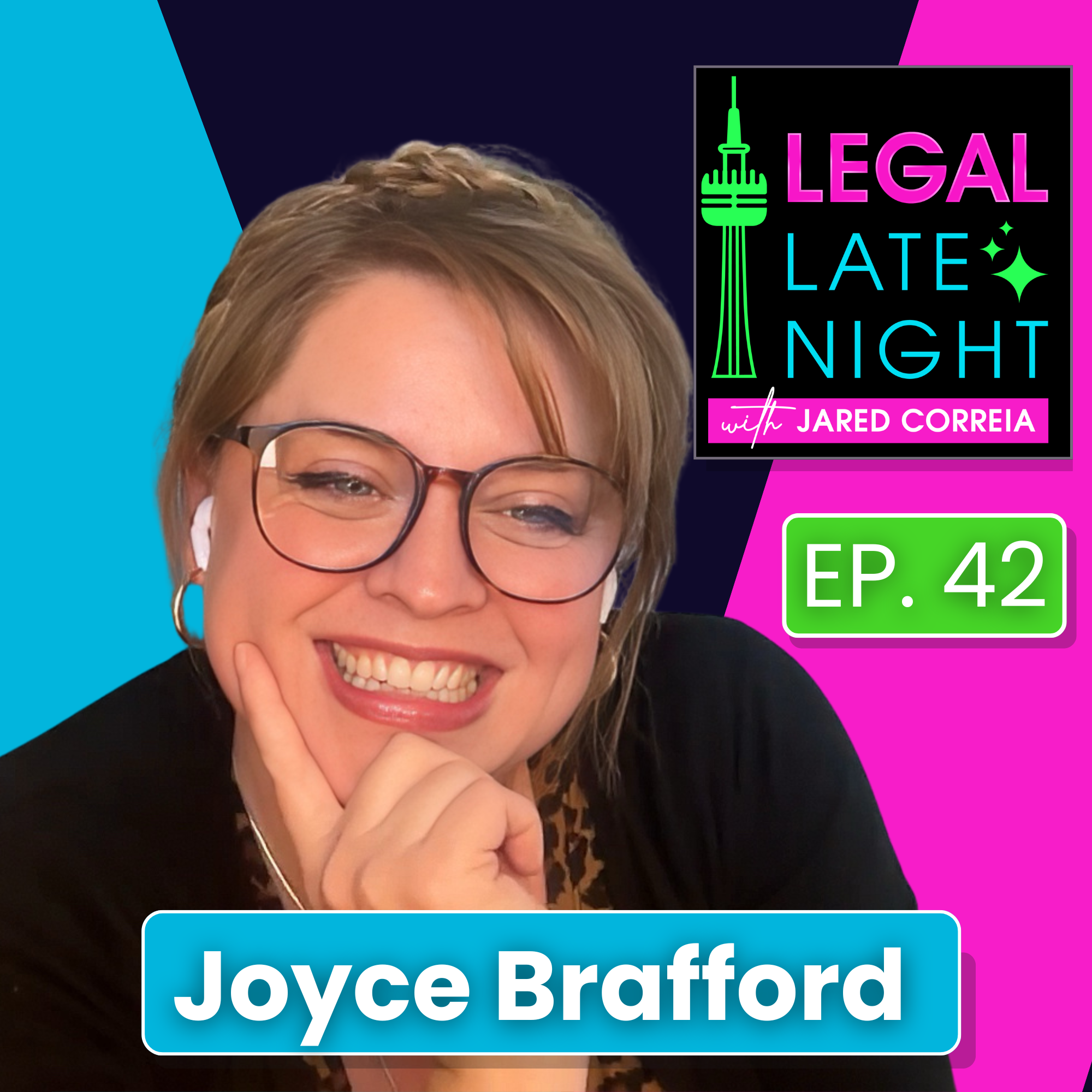
In this episode of Legal Late Night, Jared Correia explores the transformative power of AI-driven law firm automation with guest Joyce Brafford, a legal tech veteran and the founder of the Joyce Brafford Law Firm. Brafford shares her unique journey from legal technology sales to launching a modern estate planning practice, detailing how she leveraged agentic AI and specialized software to build a high-capacity solo firm from the ground up.
Jared looks ahead to the future of AI and interviews a legal tech veteran turned law firm owner.
First, in the monologue, Jared breaks down the three AI terms every lawyer needs to know going into 2026: Answer Engine Optimization (AEO), Small Language Models, and Agentic AI. He explains why these technologies are critical for automating workflows and keeping your firm competitive.
Then, we are joined by Joyce Brafford, owner of the Joyce Brafford Law Firm. Joyce shares her journey from HR and legal tech sales to launching her own estate planning practice. She reveals how she used ChatGPT to build her entire business plan, from revenue projections to SOPs.
In this interview, we discuss:
The Sales Advantage: How a background in cold calling and trade shows gave Joyce a leg up in acquiring clients.
The Tech Stack: Why Joyce chose WealthCounsel and CosmoLex to run a high-capacity solo practice.
AI as “Manifestation Software”: Why Joyce doesn’t see AI as a competitor, but as a cheerleader that validates ideas (even the dumb ones).
Pricing Strategy: Setting rates based on personal financial needs rather than market comparison.
Finally, stick around for the Counter Program: “Cryptid Corner.” Jared and Joyce explore the world of crypto-tourism. They rate destinations like the Loch Ness Center, the Mothman Museum in West Virginia, and the Roswell UFO Museum. Is Bigfoot an interdimensional being? Tune in to find out.
Jared Correia (00:00):
Hello everybody. We’ve got to show the promises to be at least mildly interesting for your listening and watching enjoyment. I’m your host, Jared Correia. I’m the CEO of Red Cave Law Firm Consulting for the monologue. I’m cracking open the dictionary and letting you know about the AI terms you really need to be aware of going into 2026. In the interview, we’ve got Joyce Brafford of the Joyce Brafford Law Firm that seems appropriate on the counter program. We’re exploring the wild, wacky world of Cryptids. Now let’s show that Encyclopedia Britannica bitch whose boss, it’s Tony Danza.
(00:45):
In 2026, artificial intelligence will remain a hot topic. Sorry, but it’s true. Don’t shoot the messenger. That’s me. So to stand on top of your lawyer game in the new year, you’ll need to have a handle on understanding AI to remain competitive. Now, if you’re a little late to the party and haven’t even tested the generative AI tools yet, go try Chad, GPT, Google, Gemini, anthropic, Claude, and Microsoft copilot or any one of their ilk to see how that all works. Then come back here and listen to the rest of this. Generative AI is so 2025 y’all. So let’s get into three AI terms you’ll need to know as an attorney in 2026. Number one, answer engine optimization. What is it? Answer engine optimization often abbreviated to a EO is a strategy for appearing in outputs from prompts to generative AI tools or AI-based search engines.
(01:42):
Why do you need to know what this is? Even if you haven’t noticed yet? It’s objectively true that more and more consumers are locating service providers via AI tools, including both standard generative AI programs like those I just mentioned, as well as embedded generative AI features in Microsoft, Bing copilot and Google AI mode, which is really Google, Gemini, and AI search engines like perplexity. Business owners who want to get ahead of the curve then are not only thinking about how to appear in traditional search results, but also how to appear in the answer engine results. The good news is that content marketing is still an effective pathway for doing that, but you also need to figure out how to craft fresh content that AI will serve up during queries. Number two, small language models. What is it? There are AI models, particularly notebook softwares, where users can control the data that the model utilizes in generating answers.
(02:41):
Why do you need to know what this is? Programs like Google Notebook, LM and Microsoft copilot notebooks built into software platforms you’re probably already using are great for targeted projects with these products. You’ll input specific data sets for analysis, and these programs can be great for working of specific projects like case overviews on files you haven’t touched for a while. Organization of Discovery materials, analyzing law firm financial data for trends and even more studio attributes allow users to render input data under various models, including audio overviews, AI generated podcasts or video overviews. That’s exciting. Number three, a agentic artificial intelligence. What is it? If you’ve utilized generative ai, you know that they can provide answers to your prompts, sometimes reasonably complete and erudite responses, but if you want to engage the ai, again, you need to iterate with it, essentially have a conversation. Agen AI allows you to effectively automate workflows using ai.
(03:48):
It is probably the most compelling use case for artificial intelligence for lawyers coming into 2026. Why do you need to know about it? The most efficient law firms tend to make the most money, and the law firms that are most efficient are the ones that are heavily process oriented. Manual workflows are a starting point for that, but automated workflows are even better beyond automated workflows or AI generated processes where you can leverage the judgment that artificial intelligence can deploy to replace or surface human decision-making capabilities. For example, you could go beyond traditional generative AI use cases with a custom GPT. Instead of getting a draft blog post. You can have an AI management entire marketing campaign for your law firm while adding a human in loop at certain checkpoints to review and authorize output. Agen AI use cases are broad and staggering, and so it makes sense to at least dip your toe into building custom GPTs in the new year.
(04:47):
If you haven’t really started using artificial intelligence in your law practice every further day you wait, you’ll drift further behind given the pace of development of this technology. And even if you don’t end up using every tool you test, you should keep abreast of technology developments like these that could improve the running of your business, and that’s why we’re all here, isn’t it? Speaking of definitionally obscure, it’s time to talk to my friend Joyce Brafford of the Joyce Brafford Law Firm who knows a thing or three when it comes to just about everything legal. She’s next. Well, I’ve effectively run out of things to say, which is awkward because this is a podcast. So I’ll now practice tying my shoes. I know I can get it this time. Actually, that sounds horrible and pathetic. I know how to tie my shoes, obviously. So let’s bring on our next, our guest today is the one and only Joyce Brafford, the owner of the Joyce Brafford Law Firm in the Raleigh Durham area of North Carolina Choice. Welcome to the show.
Joyce Brafford (06:03):
Thanks. Thanks. I will say two things. One, I’m disappointed because you did not include in my title the Incomparable, which Oh, sorry. That’s just part of how I should always be introduced. No, I’m really excited to be here. Jared, I love podcasting with you.
Jared Correia (06:19):
Joyce Bradford noted Disney hater. I’m just throwing it out there.
Joyce Brafford (06:25):
Hateful.
Jared Correia (06:25):
Hateful.
Joyce Brafford (06:26):
That was a private conversation.
Jared Correia (06:28):
She loves Disney, Walt. It’s all right. So Joyce, you remember the tenacious D song about the greatest song in the world? Tribute?
Joyce Brafford (06:38):
The Tribute, yeah.
Jared Correia (06:39):
Where basically the song is like, we played the greatest song in the world for the devil, and we beat the devil, but we forgot it, so we can’t play it again. I just want to let people know that this is our second time recording this podcast, and the first episode may have been the greatest podcast episode ever, but it is lost
Joyce Brafford (06:59):
Ever in the history of podcasts.
Jared Correia (07:00):
It is lost to time. So you, for the first time ever, are our podcast guest on this show who’s gotten a sneak peek of what we’re going to be talking about. So I’m sure you will use that to your advantage.
Joyce Brafford (07:15):
Honestly, I’ve dreamed about what I’ve said and how I could refine it and how I could enlighten people a little bit more if only I had one more opportunity. So I’m grateful to be here.
Jared Correia (07:25):
Take two. Okay, so I will ask you again, how did you get here to the law firm? Because people may, I dunno if everybody knows, but you’ve had a twisting interesting career in the legal space. Do you want to talk about what you’ve done?
Joyce Brafford (07:46):
Yeah, yeah. So I started in the legal space most of us do in law school. I honestly had no intention of ever practicing law, wanted to be in human resources. I thought that I would change the world by making organizations more people friendly, and I ended up getting an internship at the North Carolina Bar Association.
Jared Correia (08:07):
We’ve gone the other way. No,
Joyce Brafford (08:09):
Yeah, we have in fact. So I ended up forming some connections with the HR department at the North Carolina Bar Association, and when I went to law school, I ended up getting a job there again, just by virtue of those connections. So when I graduated, because I did not honestly know what I wanted to do or close to graduation, I reached out and I said, Hey, executive director, do you know any law firms that are hiring that I could start out with? And he said, actually, we have a position here in our Center for Practice Management. And I ended up working with truly probably the smartest person I have ever worked with. And that’s Eric Matzo and the Center for Practice Management at the North Carolina Bar Association. Yeah, Jared, you know him
Jared Correia (08:56):
Know well, G of the practice management space,
Joyce Brafford (08:58):
I would say OG. Yeah. And he’s not super well known outside of our very niche practice management industry. But man, if you want to know how software should function together, if you want an insightful conversation about what’s happening right now and then what’s likely to happen five years from now, and some really accurate predictions, there is nobody better than Eric. I mean, he is just a shark. I love him. I’m so blessed to have worked with him. And that’s not a word
Jared Correia (09:26):
Originally, a Boston guy I might add.
Joyce Brafford (09:29):
Oh, Boston. Yeah. Yeah, he’s a transplant. He’s a transplant. But no, he’s absolutely incredible. So I worked with Eric for a while and then I got tired of working at an organization like the Bar Association where you just don’t make a lot of money. And I thought I’d move into sales. I’m a trade show person. I
Jared Correia (09:47):
Still worked for a bar association. I worked for a bar association about a year, and I always used to say, we really put the non and nonprofit aggressively
Joyce Brafford (09:54):
Put the
Jared Correia (09:56):
So you were like,
Joyce Brafford (09:56):
But the don’t get paid in the nonprofit.
Jared Correia (10:00):
So you were like, let me get paid to do shit. Okay.
Joyce Brafford (10:03):
And
Jared Correia (10:04):
Then you moved on.
Joyce Brafford (10:05):
I moved on into an organization, yes. And so Jared and I, for listeners out there, we met when we were both at our bar association, so we’ve known each other a while now. And then I worked for an org that created telemarketers for legal tech. So law firms out there who were listening right now, when you get those cold calls from someone trying to sell you e-discovery software or practice management software, there’s some possibility. I’ve trained one of those people, so I’m sorry. Yeah.
Jared Correia (10:42):
So it was fun calls. That was me.
Joyce Brafford (10:46):
That was me. That was me. But if they knew what they were talking about, that was also because of me. Instead of asking you stupid questions, I worked really hard to make sure people ask good questions and understood the legal industry from a legal tech perspective using my bar association experience. And then I ended up working for one of those companies directly doing direct sales, managing people, going to trade shows, doing all kinds of fun stuff, spent a lot of time in legal tech, went through several private equity recaps, and ended up after a while realizing I really just need to start my own law firm and take what I know. And that’s what I’m doing now.
Jared Correia (11:29):
Why’d you go to law school in the first place? I’m always interested in that question. Was it just like, I dunno what else to do?
Joyce Brafford (11:36):
Okay, so in the world of human resources where I worked, fun story, let me back up. I worked for this wonderful regional staffing agency and a huge part of our job was recruitment and then employee relations, just dealing with that on behalf of these organizations like warehouses and stuff like that. So these were low paid individuals, very, very high turnover positions. And I kind of worked with some really awful people who didn’t pay their taxes, who regularly underpaid their staff, who qualified people all the time. So they did not have to pay overtime or benefits or all sorts of things. And I’m like, these are the people who were in charge of people’s livelihoods and their benefits and whether or not they can afford to go to the hospital, I can do better and I’m going to have more authority and the ability to better affect this world if I have a jd. And so I just was
Jared Correia (12:33):
Trying to help people. It was the raw power.
Joyce Brafford (12:35):
The raw power
Jared Correia (12:37):
To help others,
Joyce Brafford (12:38):
Help others. It was honest to God, it was honest to God, I thought I was doing something good for the world and thought I was going to be able to help people through human resources. I’ll never work at human resources.
Jared Correia (12:55):
That’s awful. You’re like Superman, super woman.
Joyce Brafford (12:58):
Yeah, I’ve got my glasses on, just my disguise. Yes.
Jared Correia (13:04):
Now you start a law firm. And that’s always interesting to me because sometimes I joke around with my consulting clients and I’m like, you better hope I never start a law firm because I’ll fucking destroy you. So why did you decide to launch a law firm? I mean, it seems logical in some ways, but also maybe not.
Joyce Brafford (13:26):
Yeah, yeah. Well, one, I wanted a job where I had more control over what I was doing every day. I wanted a job where I could actually spend time with my family. I wanted to be able to make good money so I can support them because my child loves horses. And you’ve got a kid who loves a horse. My tin bull loves.
Jared Correia (13:45):
I made the mistake of buying horses a horse. Never do that.
Joyce Brafford (13:48):
Right? And I’m worried, and I needed a career that would enable me at some point to buy a horse.
Jared Correia (13:54):
Oh, hell yeah. Now we’re talking, I got some advice for you. Again, don’t do it.
Joyce Brafford (14:00):
Solid advice. Solid advice, but no, so I started this firm because I wanted money and I wanted control. So we’re moving away from this altruistic position to money and control, and I love, I’ve
Jared Correia (14:14):
Love it. I think it’s a great move.
Joyce Brafford (14:15):
Yeah, it’s a great move. Power moves, baby. Yeah.
Jared Correia (14:19):
So how’s it been going so far? Killer.
Joyce Brafford (14:21):
You
Jared Correia (14:21):
Joined the clients killer. Good. Okay,
Joyce Brafford (14:23):
Love it.
Jared Correia (14:23):
Why’d you pick the practice area? You, I think you’re doing exclusively estate planning, is that right?
Joyce Brafford (14:29):
Exclusively. Exclusively estate planning. That is the only thing that I do. I wanted clients who recognized that they needed an attorney and recognized that it was going to cost something. I don’t want to fight people over hourly fees. I don’t want to fight people about my worth. I want to say, this is what you’re going to pay. If you don’t want to pay it, then get out of my office.
Jared Correia (14:49):
So you were like, let me leverage the fear of death to found my new business.
Joyce Brafford (14:55):
Yeah. I leverage the fear of death. I leverage the fear of abandonment. I leverage the fear of bad gift giving. Yeah, I’ll leverage. I’ll leverage anything I can all day long. That’s sales babe. That’s sales. This is why I can do this so effectively now.
Jared Correia (15:16):
That’s awesome. Okay, so let me ask you this piece of it, which you’ve had all these experiences in kind of legal related fields, now you’re a practitioner. Do you think the stuff you’ve done previously gives you a competitive advantage over attorneys who do not have that kind of experience?
Joyce Brafford (15:35):
Yes. Yes. I absolutely do. When you start a practice and you’ve not been practicing, everybody starts at the same level in terms of knowledge. The knowledge is acquire. You’ve got CLEs, you’ve got bar associations, you have all of these resources and tools to learn the information. What is much harder to do is at the same time that you’re scaling your knowledge, your actual industry knowledge, your practical day-to-day usefulness for your clients, it’s really hard at the same time to scale your marketing knowledge and your business acumen. And if I can come in with that already established, then I’m ahead of the game because I already know how to include call to action in all of my marketing material, how to have an appeal to emotion in all of my marketing appeal material, how to do something that’s going to catch somebody’s eye, and more importantly, not be afraid to close with someone. So if someone is saying, oh, I don’t know, that’s kind of expensive to know. I can walk away from that. And being okay with accepting a no means I’m not chasing down a client that’s never going to pay me. So
Jared Correia (16:40):
There’s
Joyce Brafford (16:40):
Just a lot that I’ve learned from sales, a lot that I’ve learned from marketing, from trade shows, because honestly, it’s hard. It’s hard to market to people and learn everything that you have to learn, especially as a solo attorney and you are your only source of income. I mean, I’ve got a tremendous amount of respect for every person that started a law firm before me.
Jared Correia (17:01):
It’s hard to do. Yeah,
Joyce Brafford (17:02):
But
Jared Correia (17:02):
You’re right. I think lawyers like to get the close no matter what. And I think the fact that you’re holding out to be like, oh, this is the value of the work. A lot of people don’t or won’t do that. Okay, so I don’t want to sound like an asshole, but that’s never stopped me before. So I tell people this all the time in estate planning process. I’m like, it’s not that hard. You’re not designing rocket ships. There’s templates out there. You can learn how to do it. Would you say that that’s the case? Because if I remember correctly, you hadn’t practiced on your own and you hadn’t done estate planning before, but you picked it up, right? Yeah. Was that process terrible or did you coast through that?
Joyce Brafford (17:45):
There’s a difference between being insurmountable and intimidating. Going from zero to a hundred in a firm where you have to know everything yourself is intimidating. But in an estate planning practice, it’s not insurmountable. You just have the right forms. You invest in the right technology, you do the right CLEs. And I’ll tell you, between my incredible software that I use, my incredible malpractice insurance team that is available for all of my questions and my folks down the street that I went to law school with, who don’t mind me sounding like an idiot. I have all the resources I need.
Jared Correia (18:25):
Let’s put a pin in this software for a second. I want to ask you about tech stuff, but how has it been like being a solo attorney? You kind of alluded to this. There’s a lot of talk out there about how hard it’s to be a solo attorney. Some of what you hear coming from solo attorneys themselves, has it been difficult? Are you comfortable with it? You can try as grow as quickly as possible. What’s the deal with that?
Joyce Brafford (18:48):
I’m really comfortable with it. I do intend to grow, but I intend to grow staff, not partners in any way. I mean, I intend to grow. Well,
Jared Correia (18:57):
Partners is a different thing altogether. Why would you give up equity if you didn’t have to?
Joyce Brafford (19:00):
Why would you give up equity? But no, I don’t want to bring in another
Jared Correia (19:03):
Attorney, few attorneys that could, hell, okay, yeah, go ahead.
Joyce Brafford (19:05):
Hell no. Hell no. I don’t want another attorney at no equity trip. No, this is mine and you cannot have it. But no, I have no problem being the only attorney. But I will tell you, I was particular about where I sat at my office. This would be a lot harder if I was working only from home. It would be a lot harder if I had just some retail office space where I had a separate door to my own building and someone to interact with me had to physically come into my business to do that. Right now, I have a suite that is really lovely where I’ve got a shared door into my business. So my neighbors in my office, we include things like a masseuse, a mortgage broker, a spiritual healer, way down. On the other side, there’s some people doing pest control. But what that means is I regularly have traffic for all of those other businesses.
(20:03):
It means that when my neighbors come in, they don’t have to go out of their way to say hi to me. So I have interaction with other people all the time, and that for me is just like someone says, Hey, how are you doing today? Great. Here’s kind of what I’ve done. What have you done? And you just kind of hold each other accountable to staying focused and staying on track and building your own businesses as part of a larger community. And that has been super helpful. Yeah, I’ve got to do everything for my business, but I’ve got this whole team of people and we’re all sort of cheerleading each other all day long.
Jared Correia (20:36):
So that was part of your plan. I want to be in an office space where there are other businesses. That’s cool.
Joyce Brafford (20:42):
Yeah, it wasn’t originally that was a pivot for me. I was intending to be fully virtual, but I found that I was able to grow my business faster if I had physical space.
Jared Correia (20:52):
You’re like, Hey, Nancy, you just bought a rug. Do you know you’re going to die one day? Honestly, maybe I could come work for you.
Joyce Brafford (21:00):
I’ve gotten referrals from everyone on this hallway. And not only that, but in the people who are my other professional service providers, real estate agents that I’ve met through the Chamber, mortgage brokers, IT folks, they’re also introducing me to their clients through their closing documents and their final emails to their clients. So it’s just you build that community and it becomes an important part of who you are and making your stamp in your own little neighborhood.
Jared Correia (21:31):
So the other part of running a business, it gives and takes, as you know, is that you have a family. You have kids, little kids who for some reason you want to take the Six Flags, just some bullshit instead of Disney World. But I digress. How have you been balancing that, being a mom and being a small business owner?
Joyce Brafford (21:53):
Yeah, so I take appointments from 10 to three Monday through Thursday. I have no appointments on Friday, and I will occasionally do an appointment on a Saturday morning or on a Monday or a Wednesday evening between six and seven, depending on sort of what my clients need. But I have very specific times in which I’m available to respond. I have very specific times in which I will take a meeting and I hold true to those because my time with my kids is my time with my kids. You cannot have it. It is the most valuable thing that I have. And if I honor that and I am not distracted by other things, I tend to say a lot more focused at work. I tend to say, Nope, this is when we’re going to get it done. And it’s shocking. It is shocking what you can get done when you eliminate the distractions between the tasks.
Jared Correia (22:43):
Absolutely. This is a good entree into the technology, but I think it’s great that you spend time with your kids like that. After rerecord, I will be spending several hours at the stables. So I
Joyce Brafford (22:54):
Yes, good for you.
Jared Correia (22:56):
So when you were setting up the firm, I think a lot of people, obviously you’ve had the experience of being a practice advisor, which helps you, but a lot of people have trouble getting over the hump of, okay, what do we need to do to build this business out? And then they start thinking about it, and it seems overwhelming. So what’d you do first? Did you do a rate sheet? Did you get your technology squared away? Did you do revenue projections? How did you kind of get your launch plan together?
Joyce Brafford (23:20):
No, the very first thing was build out a business plan. I had no idea what to charge. I had no idea what software I was going to choose. I had no idea what my SOPs were going to be. I had some vague idea. I knew that I needed all of these things.
Jared Correia (23:34):
SOPs, just so people know, standard operating procedures, processes are important. Homies
Joyce Brafford (23:41):
Processes are important. You need them, you must have them. I did not know what I was going to choose. I knew I needed these things, but I have done this long enough that I recognized I’ve got to step back and ask the questions. So I built out my entire firm, my entire business plan on chat GBT, and just kept asking,
Jared Correia (24:02):
I love it.
Joyce Brafford (24:03):
Fuck yeah. I just dug deeper and deeper on these questions until I got incredibly granular, and that enabled me to create revenue projections, to determine my rate sheet, to determine what my KPIs or going to be for me personally, to determine my success beyond just revenue. It enabled me to ask the right questions when I was selecting software. And because I figured out my rubric. I was really comfortable investing in very expensive software and not feeling like I had to go super cheap on something because I knew if I had the right tools, I could be profitable. But again, you just have to ask the right questions, and that’s just for me,
Jared Correia (24:49):
Just pumping data to chat GPT, burning water resources like crazy,
Joyce Brafford (24:55):
Like crazy man, like crazy water resources causing brownouts. But if it’s going to do that, it might as well benefit me. Right? Yeah,
Jared Correia (25:03):
Sure. Exactly. The great brownout of 2024 in North Carolina can be blamed on you. So you mentioned you want to get some kick ass software. What’d you decide to get?
Joyce Brafford (25:17):
Yeah, so my software at the core of it is built on wealth council. Again, because I did not have experience in estate planning, there is nothing that beats Wealth Council. It’s the best. You cannot beat it. It’s so good. The resources are amazing. Their marketing resources are amazing. Their community is amazing, absolutely worth every single penny that I pay month over month for wealth counsel.
Jared Correia (25:38):
And it’s not necessarily cheap. I think a lot of attorneys would be like, I don’t want to pay that dollar figure. So how did you,
Joyce Brafford (25:44):
It’s not cheap.
Jared Correia (25:45):
Yeah,
Joyce Brafford (25:46):
No.
Jared Correia (25:46):
So how did you end up justifying that? I think I have an idea, but for the people listening at home.
Joyce Brafford (25:51):
Yeah. So first and foremost, when you are practicing law, you’ve got your rule of competency. That’s rule 1.1 in every jurisdiction. You will lose your license if you are not competently practicing. And I knew that I needed something more than a template where I could ask questions and have the resources and the guidance. That is the most valuable thing for me to not lose my license. So I placed a very high, so on my rubric scale, is it necessary? Is it important? Is it urgent? Is there budget for it? Right? Yes. All of the things. Yes. That’s number one. Number two is when I’m looking at doing the work, because I focus on being an affordable law practice, and that’s one of the ways I generate business. I needed to have limited scope engagements, and I needed really high turnover in my clients. So the faster I can serve my clients, the more clients, the more capacity I have. Wealth Council gives me the ability to have a high capacity practice as a solo practitioner. So those were the main two reasons. There are lots of other things I really like about it, but it was about capacity and absolute need to be competent.
Jared Correia (27:07):
What other softwares did you bring in?
Joyce Brafford (27:10):
Yeah, so I actually used to work for Cosmo X. I didn’t know that I was going to select that software, but I ended up choosing it because it’s my accounting system, my practice management system, my Google ads provider, my intake solution, my cold marketing solution, all of those things live in my Cosmo X practice. So those are the big things. So my four big pieces of software are of course, Microsoft Office for my document creation, wealth Council for my document templating and editing Cosol X for all of my practice management and accounting needs. And then Squarespace is my website,
Jared Correia (27:55):
And
Joyce Brafford (27:55):
It worked really well for me for all of those pieces to function together.
Jared Correia (28:00):
Cosmo X, one of the few case management softwares that has full scale billing and trust accounting built in,
Joyce Brafford (28:06):
And it’s not perfect. I’m not going to tell anybody that any software is perfect. It’s not. It’s got its issues just like everybody’s got its issues. But I sold it for a long time and was very familiar. So again, when I’m looking at my learning curve
Jared Correia (28:22):
At your parents’ house or something, right, and it’s like, oh, I know there’s this weird thing that happens in the basement that sounded really bad. Let’s move on. So how did you end up setting your rates? You want to be approachable in terms of finances for the average consumer, I’m
Joyce Brafford (28:40):
Assuming? That’s right. That’s exactly right. So rather than looking at the market, I looked at what I needed, so what do I need in base level in order to pay my bills and put money in savings? Where do I need to be? That’s how much money I need to make every month, regardless of what I’m charging. That’s where I need to be.
(29:01):
And then when I break that down on what I believed my average cost of service was going to be based on the services I was providing, I looked at how many clients I thought I could reasonably get every month, week over week, and then looked at what that actually costs for an individual client, and when I backed it down from what I needed and how I’m able to scale using the other tools like the Google ads, like the marketing tools from Wealth Council, like the free social media tools, which is how you knew I had a law firm.
Jared Correia (29:40):
I knew from
Joyce Brafford (29:41):
LinkedIn, you knew from LinkedIn for, so I’m using those free tools as well. It was just a math problem. It was just breaking it down so I could charge a lot more and still be fairly competitive in my area, and I probably will raise my rates in another three months or so, but it’s way less about what your clients want to pay and what you actually just need at the end of the month and what does it cost to live.
Jared Correia (30:12):
Yeah. Last question for you.
Joyce Brafford (30:15):
Yeah,
Jared Correia (30:16):
Because when we did this before, I thought you had a really keen answer for this. Do you view AI as a competitor for you?
Joyce Brafford (30:25):
No. No. I don’t think AI is a competitor for me. I think anyone, and I don’t remember what I said before and I hate that because apparently answer it was
Jared Correia (30:32):
Brilliant. Fuck this one up. No,
Joyce Brafford (30:33):
Don’t fuck it up to quote RuPaul. No, I don’t believe that AI is a competitor for me. I think AI is a cheerleader. I think AI is
Jared Correia (30:45):
A tool that makes
Joyce Brafford (30:46):
People Oh, definitely that, yeah, it makes people feel really good about their questions and their own individual perception, but it’s not good at providing legal advice. It is not good at the actual creation and execution of a plan. It’s great about making you feel good about your own personal ideas. Anybody that actually needs a lawyer, that’s
Jared Correia (31:08):
A great way to frame it. I don’t think enough people are talking about that, honestly. What’s
Joyce Brafford (31:11):
That part?
Jared Correia (31:13):
The AI is basically just affirmation software where it’s like,
Joyce Brafford (31:17):
It’s honestly, yes, it’s a manifestation software that is literally all that it is. Okay.
Jared Correia (31:22):
I’ve never heard AI be like, that’s a stupid idea, Jared.
Joyce Brafford (31:26):
Honestly, I wish it was,
Jared Correia (31:27):
And there’s plenty of them. Let me tell you, there’s
Joyce Brafford (31:29):
So many stupid ideas. There’s so many dumb ideas. I come up with ideas all the time, all day long where AI is like, that’s a great pivot, Joyce. No, it’s not. Shut up. I just needed to write it down for a minute. But no, AI is just your own personal manifestation software where you tell it what you want and it says that’s great, and you can achieve it. If you think it, you can achieve it. Just imagine it, be it, live it, breathe it, it’s whatever. But it is really, really good at breaking down your thoughts into digestible smaller concepts. So if you need to come up with a good plan and where your goal is, AI is really helpful for helping you come up with achievable steps to get there. When it comes to creating actual legal advice, no, it’s terrible. It’s absolutely terrible for that.
Jared Correia (32:21):
And documents, right? Because you’re doing
Joyce Brafford (32:23):
Both, right? Yeah, I’ve yet, I pay for chat, GPTI have yet to have chat GPT come up with a really solid legal document that did not create a headache for me to go through and find all the problems. There are some things, boilerplate stuff like boilerplate stuff. I can absolutely
Jared Correia (32:41):
Do letters. I think it’s fine for that, but
Joyce Brafford (32:44):
It’s fine for that. But when it comes to individualized, customized documents like what I’m doing in my estate planning firm, it’s absolutely not good. Well,
Jared Correia (32:52):
If you fuck up an estate plan,
Joyce Brafford (32:54):
Just
Jared Correia (32:55):
Big problem.
Joyce Brafford (32:56):
It’s a big problem.
Jared Correia (32:57):
You’re not affirming your way out of that. That was pretty good. That was close to the answer you gave last time. No, it was it good? Yeah. I’m glad this was fun as always. Hey, can you hang around for one more segment with us?
Joyce Brafford (33:13):
Only if it is about cryptozoology
Jared Correia (33:17):
A yes. Don’t say it. Okay. We’ll be back with Joyce and cryptozoology. Welcome back everybody. It’s the counter program. Unfortunately, Joyce told you what it is because it’s the second time we’re recording this podcast, but I’m going to do my intro anyway. It’s a podcast within a podcast. This is a conversational space where we can address usually unrelated topics that I want to explore at a greater depth with my guests. Like Joyce, expect no rhyme and very little reason. That’s right. As you heard, I’m bringing you back. Crypted corner choice. Noted, cryptozoology expert. You want to tell people how you got into this and what cryptids are or what cryptozoology is?
Joyce Brafford (34:10):
Sure. I want to clarify. I don’t think I’m an expert, but I’m definitely an enthusiast.
Jared Correia (34:16):
Yeah, that’s fair. I consider you an expert, but enthusiast is probably more accurate.
Joyce Brafford (34:20):
It’s just enthusiasm. Yeah. Okay. So I love all cryptozoology, all cryptozoology. I love the idea of a good conspiracy that too many people believe, and it’s just would make you crazy to look at these facts that people present and say, oh, that’s evidence of Bigfoot. No, it’s not. Dude, that’s not Bigfoot poop. It’s quite literally bear poop. So obviously bear poop, that kind of nonsense. And it delights me. It delights me to no end when people are stupid. Oh, me too. I’m a lover of dumb comedy, and cryptozoology is just dumb comedy for me, but I absolutely adore it, so I know a whole lot. I know a whole lot about Cryptids is in so far as one can know a whole lot about things that aren’t real.
Jared Correia (35:12):
So cryptids are definitionally.
Joyce Brafford (35:16):
Oh, yeah, yeah.
Jared Correia (35:18):
Humanoids slash animals that have not been discovered or proven by science.
Joyce Brafford (35:25):
Exactly right. That’s exactly right. It’s generally speaking, an animal of some type, humanoid or otherwise whose existence cannot or has not been definitively proven by science. I don’t want to limit it to animals though, because there’s lots of cryptozoology that ends up being in the ology field, like crazy mushrooms and things like that. Yeah, so weird things happen all the time in this world. Sometimes it’s just mushrooms.
Jared Correia (36:00):
Is this the last of us? What is happening right now? No,
Joyce Brafford (36:03):
Legitimately in Chernobyl, in the reactor in Chernobyl, there is what’s called elephant foot. This is not where we were supposed to go today, and it’s listen’s a mushroom that feeds on radiation. What
Jared Correia (36:17):
Is it really? Wait, this A mushroom?
Joyce Brafford (36:20):
Yeah. Yeah. So you’ve got
Jared Correia (36:21):
Mushrooms, that crypto as well as you bullshit.
Joyce Brafford (36:23):
You have mushrooms. You have mushrooms in the reactor in Chernobyl that are fed on radiation. I am. Listen, love it.
Jared Correia (36:31):
I’ll be damned.
Joyce Brafford (36:32):
I love it so much. Mushrooms are so fucking delightful, and I think 50 years we’re going to say that’s not the chupa. Gabriel. That was a mushroom.
Jared Correia (36:41):
You’ve seen the last of us, right? Have you?
Joyce Brafford (36:43):
I’ve not seen the last of us. No.
Jared Correia (36:46):
Oh, no. You got to. I’m not a video game guy. But the last of a show, you know some mushroom apocalypse, right? Do you know that? Yeah. What? Yeah, no. Yes. It’s like a fungal epidemic and basically the mushrooms create mushroom zombie humans.
Joyce Brafford (37:06):
You
Jared Correia (37:06):
Would love this show. I right
Joyce Brafford (37:08):
Love the shit out of the show.
Jared Correia (37:10):
I would love the shit out of that. Watch it tonight. You’re going to watch the entire first season. Okay,
Joyce Brafford (37:15):
First. Okay. It’s Wednesday. All right.
Jared Correia (37:16):
Wow.
Joyce Brafford (37:17):
I don’t have to watch the traitors, so I can watch it tonight. All right.
Jared Correia (37:20):
Wow. Let’s talk about something different. Crypto tourism. Yes. Are you familiar with crypto tourism and its relation to cryptozoology? Are you a crypto tourist?
Joyce Brafford (37:34):
I wish I was a crypto tourist. As much as I love it, I think I would really enjoy it, but I am not a crypto tourist, but it’s a shame. I hope. I know. I hope that maybe over the course of the summer I can go to some cool places.
Jared Correia (37:47):
Okay. I’ve got a list for you.
Joyce Brafford (37:50):
Let’s go
Jared Correia (37:50):
Through the virtues of chat, EPT as I dissolved a reservoir in South America somewhere, getting the answers to this question, I have found the top six crypto tourism sites across the globe. Crazy. So you already know what they are from our prior episode. Do
Joyce Brafford (38:10):
You want me to be surprised, or should we just talk about them?
Jared Correia (38:12):
No, don’t be surprised. I just want you to rank them your interest in attending this crypto tourism space on a scale of one to 10. Number one, the number one most visited crypto tourism site in the world is the Lochness Center and Jacoba bike cruises in Scotland, where you can go and look for Nessie. So the Lochness monster, which is crypted that probably everybody knows. What is your interest in going to Lochness?
Joyce Brafford (38:44):
None. None whatsoever? None.
Jared Correia (38:47):
Wow.
Joyce Brafford (38:48):
It’s so thoroughly researched. It’s so thoroughly explored. It’s been so thoroughly debugged. It’s not fun anymore. I think it’s just
Jared Correia (38:57):
320,000 people a year would disagree.
Joyce Brafford (39:02):
First of all, I can just look at the population of this country and determine there are a lot more stupid people than that. So I’m honestly not surprised globally that we have that many visitors. No, I mean, did an ancient type of animal, maybe a
Jared Correia (39:17):
Mag relative Mag UK rushing to the Lochness Center,
Joyce Brafford (39:20):
MAGA uk. All the red hats like plaid red hats, no.
Jared Correia (39:26):
Blaring in the background. Yes,
Joyce Brafford (39:29):
Kid rock on the bagpipes.
Jared Correia (39:34):
Yes. Yes.
Joyce Brafford (39:35):
That’s so stupid. Please don’t hear that. Yeah.
Jared Correia (39:38):
Oh, that’s the part we’re going to air. Oh, go ahead.
Joyce Brafford (39:41):
No, I just don’t think it’s worth it. I just don’t think it’s worth it. There was probably some ancient creature, some big eel or something that at one point in time,
Jared Correia (39:48):
So I was going to say, you don’t think there’s a lochness monster of any kind?
Joyce Brafford (39:52):
I don’t believe in most scripteds. I enjoy them,
Jared Correia (39:55):
But
Joyce Brafford (39:55):
That one’s just beating a dead horse. There’s nothing fun or exciting or new to theorize on Lochness.
Jared Correia (40:04):
Okay. Number two,
Joyce Brafford (40:06):
The
Jared Correia (40:06):
International Cryptozoology Museum, which is in Bangor, Maine, which is a new location already the number two spot in the world. They have a 1000 piece Bigfoot exhibit, as well as hair samples and footprint casts, all of which I assume you think are fake. Any interest in visiting the cryptos at all museum?
Joyce Brafford (40:31):
Yes. On a scale of one to 10, like eight, I would love to do that. Oh
Jared Correia (40:35):
My God, really? Why?
Joyce Brafford (40:36):
Yes, because there’s so much stuff to take in. There’s so many little pieces to connect to come up both with new theories. Okay. So if you just take Bigfoot, there are these kind of two out there theories that are gaining popularity in Bigfoot lore, and one is that Bigfoot’s an alien, and one is that Bigfoot is an interdimensional being, which is why you can never find him. He’s not always here,
Jared Correia (41:03):
Of course,
Joyce Brafford (41:03):
Which I love.
Jared Correia (41:04):
Yes. Makes so much sense.
Joyce Brafford (41:07):
I love that so much. Why can’t you find Bigfoot? Maybe he’s in another dimension.
Jared Correia (41:13):
It’s got to be what? It’s It’s crazy.
Joyce Brafford (41:16):
It’s so good. That’s the kind of stuff that just really gets me going. I want to see the wildest, craziest most nut bag stuff that anybody can think of, and that kind of thing is definitely going to be in the Cryptozoology museum in May.
Jared Correia (41:30):
There’s actually an X-Files museum in Saratoga Springs, New York, which my wife and I attended the opening ceremony for because That’s
Joyce Brafford (41:39):
Awesome.
Jared Correia (41:39):
She’s a big X-Files fan. That’s a cool spot. Okay, number three is Point Pleasant Moth Man sites across West Virginia, including the world’s only Moth man museum and Moth man themed mini golf. Now, moth Man is one of the most famous crypts ever. Right? So I’m assuming that this would be a hotspot for you to attend, potentially
Joyce Brafford (42:05):
Moth, man, I love, yes. Yes. Nine, nine out of 10. I would go there. I think it would be so much fun.
Jared Correia (42:12):
But you have not been yet.
Joyce Brafford (42:14):
I’ve not been been,
Jared Correia (42:14):
You haven’t started your crypto tourism journey. Okay.
Joyce Brafford (42:17):
No, I should start there and then make my way up to Maine. No, Maman being a harbinger of destruction. I think it is just amazing because it’s not just a creature. It’s a fortune telling device, and I think that part’s really interesting, and I would absolutely play Moth Man mini golf.
Jared Correia (42:38):
The story behind Moth Man, right, is like people said Moth Man came out before, was it the present point? Pleasant Bridge.
Joyce Brafford (42:46):
The bridge collapsed, yeah. Yeah. That he was on the bridge.
Jared Correia (42:49):
Right? And then the bridge collapsed. Crashed,
Joyce Brafford (42:52):
Yeah.
Jared Correia (42:52):
And there’s a statue of Moth Man.
Joyce Brafford (42:57):
There is,
Jared Correia (42:57):
Which I think is the most photographed tourist destination in the United States.
Joyce Brafford (43:02):
I would believe that. I think that it is so wild that there’s this giant statue, this rocky style statue as if Moth Mans some big hero, but he made the bridge fall down. There’s just so much cognitive dissonance there. I love it. Again. Wild.
Jared Correia (43:18):
He’s like wild Mr. Glass from,
Joyce Brafford (43:20):
Yes.
Jared Correia (43:21):
What’s the unbreakable? Why can’t I think of the name? Unbreakable Man? Great. M Night, Shalon movie number four is Willow Creek in the China Flat Museum in California, which is basically labeled the Bigfoot capital of the world, the largest collection of Bigfoot artifacts and footprint casts in the world. I assume you’d be very down for this.
Joyce Brafford (43:43):
I would be very down. I think that one’s probably an eight for me because it’s only Bigfoot, but I would love to go and put wild theories together.
Jared Correia (43:50):
You want more variety in the world of cryptos.
Joyce Brafford (43:53):
I want more variety. I want more creativity in my conspiracy theories. Yeah. Okay.
Jared Correia (43:59):
Number five, the Roswell UFO Museum and Research Center in New Mexico.
Joyce Brafford (44:05):
Yeah.
Jared Correia (44:06):
Where I have actually visited, what’d you think? And I’ve told this story on the podcast before, but I met the guy who ran the funeral parlor in Roswell, who told me that he took the alien bodies and embalmed them for the Air Force or something like that, and he seemed very serious, but he also seemed like running the museum was his full-time job, so this would be in his financial interests to
Joyce Brafford (44:35):
Tell
Jared Correia (44:35):
Me this.
(44:36):
It was cool. The museum was cool and roswell’s fucking weird. We left the museum and went to get gas, and directly across the street at the gas station was a truck that was the shape of a fish with swastikas all over it, but not Nazi swastikas, like the original Indian version of the swastika, like the Native American version. Should I continue? And the podcast went off the rails when I said, not Nazi swastikas sees the good ones, guys the good swastikas. To be clear, am I convincing you to go, or are you like, now I really need to go to the Roswell Museum?
Joyce Brafford (45:22):
Okay. I don’t care BOA Museum, but I would love to go. I would love to go to Roswell and see these people riding around with fish swastika trucks.
Jared Correia (45:33):
I went in, it was like a really nice little command center thing. There was drink holders and everything.
Joyce Brafford (45:38):
That’s awesome. Yeah, no, I think it’d be really interesting. Probably on a seven. I think Roswell’s, another one of those very specific tourist sites that’s been just trodden over again and again and again, and there’s not a lot of new theory or new creativity coming out of it, and once you learn about something, it’s like how many times can you read the same history textbook? Not
Jared Correia (45:57):
That
Joyce Brafford (45:58):
Whatever. But yeah, I think probably
Jared Correia (46:01):
I’ve got one important question for you are aliens cryptids.
Joyce Brafford (46:07):
Okay, so cryptids by our definition in this podcast are animal or animal-like beans for which there is no scientific evidence yet that they are real. By that definition, aliens would be cryptids. So yes.
Jared Correia (46:26):
Okay, that’s fair.
Joyce Brafford (46:27):
I’m going, yes, based on the definition that we have here.
Jared Correia (46:29):
I got one more for you. Number six, the Cumberland Plateau in Tennessee described as a rising star in crypto tourism
Joyce Brafford (46:37):
Known
Jared Correia (46:38):
For its Tennessee crypted camp out, which by the way, Joyce is scheduled for April, 2026, so you could still go. Tourists pay to stay in active Bigfoot research areas, so apparently they’re back from different galaxies and stuff. You can do thermal night hikes and use sound alchemy to attempt to lure the creatures in from the surrounding wilderness. This sounds just dope.
Joyce Brafford (47:06):
10 out of 10, 10 out of 10. 10 out of 10. Could you imagine the nonsense these people are talking about? Could you imagine Have, have you ever gone camping in a heavily wooded area and heard a screech towel?
Jared Correia (47:22):
Oh, yeah.
Joyce Brafford (47:23):
Yeah. Okay. Camp
Jared Correia (47:24):
Will, could you imagine? Will fuck with you night.
Joyce Brafford (47:26):
Fuck with
Jared Correia (47:27):
You in the woods. Yeah,
Joyce Brafford (47:28):
It’s amazing. It’s so good. I
Jared Correia (47:30):
Hate camping, but I digress.
Joyce Brafford (47:32):
I love camping, but going out there and hearing just standard nighttime sounds and attributing them to a multidimensional bigfoot is the craziest thing. I love it. I love Appalachian Bore. I love North Carolina and Tennessee. I think they’re amazing. So yeah, 100%. Would I absolutely pay someone to be on the other side of the mountain to make weird noises? Oh
Jared Correia (48:00):
My God. Could you imagine Cletus running to go get his thermal Bigfoot detector? That’d be fucking
Joyce Brafford (48:06):
Great. Don’t make fun of my Uncle Cletus now. Okay.
Jared Correia (48:11):
Appalachia though is really gnarly, right?
Joyce Brafford (48:14):
It’s amazing. Yeah.
Jared Correia (48:16):
I talked about this a few episodes back, but I watch these YouTube videos about shit that happens in the forest and apparently whistling in Appalachia, if you like a whistle or something like that late at night.
Joyce Brafford (48:27):
Yeah, close your door.
Jared Correia (48:28):
You’re not supposed to leave. Yeah, that’s the thing.
Joyce Brafford (48:29):
Yeah, you leave. Yeah. If you hear the whistle, you just go the other way. You don’t acknowledge it and you go the other way.
Jared Correia (48:36):
What a time to be alive, Joyce. Thank you. You know what? I’m going to say it. That was better than our prior version of this recorded episode,
(48:43):
so thank you for coming back.
Joyce Brafford (48:45):
You’re welcome.
Jared Correia (48:46):
Thanks for our guest, Joyce Brafford. She’s the big boss at Joyce Brafford law firm. To learn more about Joyce and the JBLF, visit jocowills.com. That’s JOCO wills.com. Jocowills.com now, because I’ll always be a nineties kid who believes the scene where Jim Carrey emerges fully nude from the rectum of a Rhinocerous robot in Ace Ventura two, when nature calls his peak cinema, but his true passion is burning CDs for anyone who would listen. I’m now just doing the modern version of that, which is creating Spotify playlists for every episode of this podcast that I record, where the signs are tangentially emphasis on the tangentially related to an episode topic. This week’s playlist is crypted approved. It’s the monstrous playlist, and it’s huge. This is all sponsored by the Moth Man Museum in Point Pleasant, West Virginia. Well, really it’s not, I guess that’s just a free ad now. Oh, well, join us next time. When I explained to you why the Moon landing was a hoax perpetrated by Antifa. Ooh.
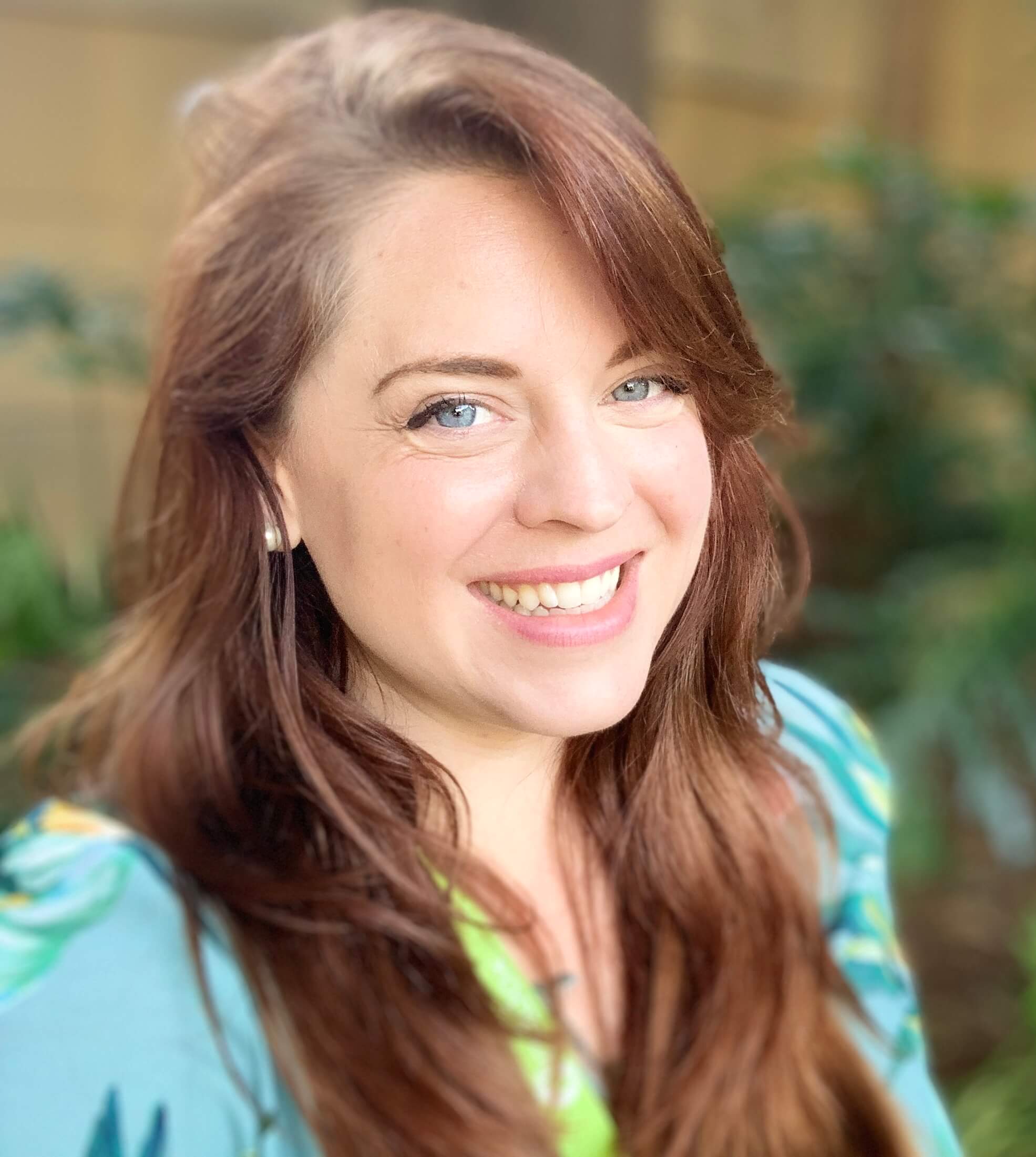
Larry Port is a visionary entrepreneur, author of “The Lean Law Firm,” and the founder of several successful legal tech ventures, including Rocket Matter, who is currently dedicated to helping professionals navigate career disruptions through his latest project, WaySpark.


